ER Gatekeepers: Mechanisms of Quality Control, Chaperone Networks, and Therapeutic Implications in Disease
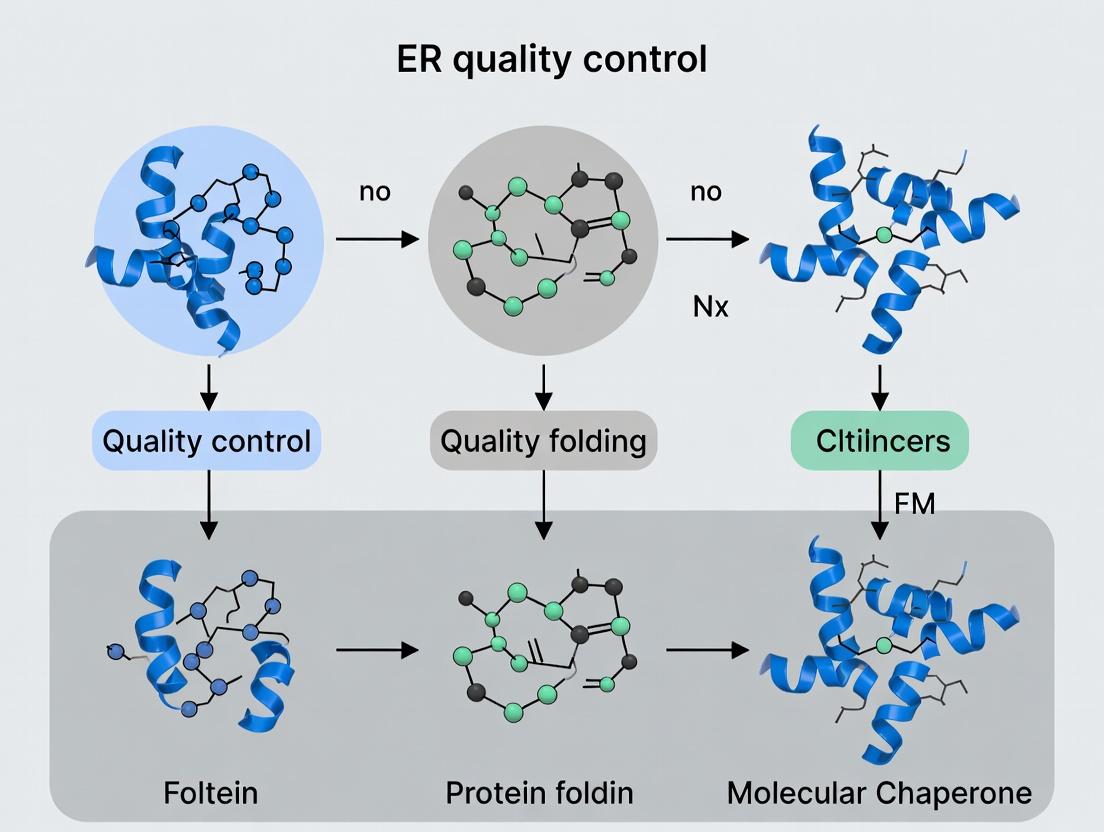
This article provides a comprehensive analysis of endoplasmic reticulum (ER) quality control (ERQC) and the molecular chaperone networks that enforce protein folding fidelity.
ER Gatekeepers: Mechanisms of Quality Control, Chaperone Networks, and Therapeutic Implications in Disease
Abstract
This article provides a comprehensive analysis of endoplasmic reticulum (ER) quality control (ERQC) and the molecular chaperone networks that enforce protein folding fidelity. Aimed at researchers and drug development professionals, it explores foundational mechanisms, including the Unfolded Protein Response (UPR) and ER-associated degradation (ERAD). It details cutting-edge methodologies for studying ER stress, outlines strategies for troubleshooting experimental challenges and modulating ERQC for therapeutic benefit, and validates approaches through comparative analysis of model systems and emerging biomarkers. The synthesis offers a roadmap for targeting ER proteostasis in neurodegenerative diseases, cancer, and metabolic disorders.
The ERQC Machinery: Decoding Chaperones, the UPR, and ERAD Pathways
The endoplasmic reticulum (ER) is the primary site for the synthesis, folding, and maturation of secreted, membrane-bound, and organelle-targeted proteins. ER proteostasis—the integrated network of pathways that controls protein homeostasis within the ER lumen—is fundamental to cellular health. This whitepaper frames the critical importance of ER proteostatic fidelity within the broader research thesis on ER quality control (ERQC) and molecular chaperone functions. Failure in these systems leads to the accumulation of misfolded proteins (ER stress), triggering the unfolded protein response (UPR) and is directly implicated in a wide array of diseases, including neurodegeneration, metabolic disorders, and cancer. For researchers and drug developers, understanding these mechanisms is paramount for identifying novel therapeutic targets.
Core Mechanisms of ER Proteostasis
ER proteostasis is maintained by a coordinated system involving:
- Molecular Chaperones (e.g., BiP/GRP78, GRP94, Calnexin/Calreticulin cycle): Facilitate proper folding, prevent aggregation, and participate in ER-associated degradation (ERAD) triage.
- ER-Associated Degradation (ERAD): Identifies terminally misfolded proteins, retro-translocates them to the cytosol, and targets them for ubiquitin-proteasome degradation.
- The Unfolded Protein Response (UPR): A signaling cascade initiated by three sensor proteins (IRE1α, PERK, ATF6) that adapts ER folding capacity to demand.
- ER-Phagy: Selective autophagy of stressed ER subdomains.
Quantitative Data on ER Proteostasis Components
Table 1: Key ER Proteostasis Machinery Components and Metrics
| Component | Primary Function | Associated Human Diseases | Approx. Substrates/Client Proteins |
|---|---|---|---|
| BiP (GRP78/HSPA5) | Master chaperone & UPR regulator | Neurodegeneration, Cancer | >20% of ER-translocated proteins |
| Calnexin/Calreticulin | Lectin chaperones for glycoproteins | Congenital Disorders of Glycosylation | ~All N-glycosylated proteins |
| EDEM1/2/3 | Mannosidases targeting proteins for ERAD | Not well characterized | Misfolded glycoproteins |
| IRE1α-XBP1 Pathway | UPR sensor / Transcription factor | Inflammatory Bowel Disease, Myeloma | Regulates ~5% of human genes |
| PERK-eIF2α Pathway | UPR sensor / Translation attenuation | Wolcott-Rallison Syndrome, Neurodegeneration | Global translation control |
Table 2: Experimental Readouts for ER Proteostasis Assessment
| Assay Type | Measured Parameter | Typical Control Value | Stressed Condition Indication |
|---|---|---|---|
| Immunoblot (Phospho-specific) | IRE1α phosphorylation, eIF2α-P | Low/Undetectable | >2-fold increase |
| qRT-PCR | BiP, CHOP, XBP1s mRNA | Baseline Ct (e.g., 25-30) | >5-fold induction |
| Luciferase Reporter | UPRE or ERSE activity | 100 ± 20 RLU | >300 RLU |
| Secretion Assay (ELISA) | Processed protein in media | Cell-type dependent | >50% reduction |
| Pulse-Chase | Protein half-life (t1/2) | Protein-dependent (e.g., 2h) | t1/2 reduced by >70% |
Detailed Experimental Protocols
Protocol 1: Assessing UPR Activation via Immunoblotting for Phospho-Proteins
- Cell Treatment: Seed HEK293 or HeLa cells in 6-well plates. Treat with 2µM Thapsigargin (SERCA pump inhibitor) or 5µg/mL Tunicamycin (N-glycosylation inhibitor) for 0, 30, 60, and 120 minutes. Include DMSO vehicle control.
- Lysis: Aspirate media, wash with ice-cold PBS. Lyse cells in 150µL RIPA buffer supplemented with phosphatase and protease inhibitors. Incubate on ice for 15 min, then centrifuge at 16,000 x g for 15 min at 4°C.
- Immunoblotting: Determine protein concentration via BCA assay. Load 20-30µg of protein per lane on a 4-12% Bis-Tris gel. Transfer to PVDF membrane. Block with 5% BSA in TBST for 1 hour.
- Antibody Probing: Incubate with primary antibodies overnight at 4°C: anti-phospho-IRE1α (Ser724, 1:1000), anti-phospho-eIF2α (Ser51, 1:1000), anti-BiP (1:2000), and anti-β-actin (loading control, 1:5000). Wash, incubate with HRP-conjugated secondary antibodies (1:5000) for 1 hour. Develop with chemiluminescent substrate and image.
Protocol 2: Monitoring ERAD Substrate Turnover via Cycloheximide Chase
- Transfection: Transiently transfect cells with a model ERAD substrate (e.g., NS-1 mutant of α1-antitrypsin, A1AT-Null Hong Kong) tagged with HA or FLAG.
- Inhibition of Translation: 24-48h post-transfection, treat cells with 100µg/mL Cycloheximide (CHX) to block new protein synthesis. Harvest cells at time points (e.g., 0, 1, 2, 4, 6h).
- Lysis and Immunoprecipitation: Lyse cells in 1% NP-40 buffer. Pre-clear lysate. Incubate with anti-HA magnetic beads for 2h at 4°C.
- Analysis: Wash beads, elute protein in 2X Laemmli buffer. Perform immunoblotting for the tag. Quantify band intensity, plot decay curve, and calculate half-life (t1/2). Co-treatment with proteasome inhibitor MG132 (10µM) should stabilize the substrate, confirming ERAD.
Visualizations
The Scientist's Toolkit: Research Reagent Solutions
Table 3: Essential Reagents for ER Proteostasis Research
| Reagent / Material | Supplier Examples | Function in Research |
|---|---|---|
| Thapsigargin | Cayman Chemical, Tocris | SERCA pump inhibitor; induces ER stress by depleting luminal Ca²⁺. |
| Tunicamycin | Sigma-Aldrich, APExBIO | N-linked glycosylation inhibitor; induces ER stress by causing glycoprotein misfolding. |
| MG132 / Bortezomib | Selleckchem, MedChemExpress | Proteasome inhibitors; used to block ERAD, causing accumulation of polyubiquitinated substrates. |
| 4μ8C / STF-083010 | Sigma-Aldrich, APExBIO | Selective IRE1α RNase domain inhibitors; used to dissect IRE1-XBP1 pathway function. |
| ISRIB | Tocris, Sigma-Aldrich | Integrated stress response inhibitor; reverses eIF2α phosphorylation effects, probes PERK pathway. |
| Anti-BiP (GRP78) Antibody | Cell Signaling Tech (C50B12), Abcam | Immunoblotting/IF marker for UPR activation and ER chaperone localization. |
| Anti-phospho-eIF2α (Ser51) Antibody | Cell Signaling Tech (119A11) | Key readout for PERK pathway activation via immunoblotting. |
| XBP1 Splicing Reporter (Plasmid) | Addgene (plasmid #33324) | Dual-luciferase or GFP-based reporter to specifically monitor IRE1 activity. |
| Cycloheximide | Sigma-Aldrich, Cayman Chemical | Protein translation inhibitor; essential for chase experiments to measure protein half-life. |
| EndoH / PNGase F | NEB | Glycosidases; used in deglycosylation assays to monitor protein maturation state in ER vs. Golgi. |
Within the endoplasmic reticulum (ER), a dedicated quality control (QC) system ensures only properly folded proteins and correctly assembled complexes proceed along the secretory pathway. This whitepaper, framed within ongoing research into ER chaperone networks, details three core chaperone systems central to this surveillance: the Hsp70 chaperone BiP, the Calnexin/Calreticulin (CNX/CRT) lectin cycle, and Protein Disulfide Isomerases (PDIs). Their coordinated action manages nascent polypeptide folding, oligomerization, and disulfide bond formation, with dysfunction directly linked to conformational diseases and a compelling target for therapeutic intervention.
The Hsp70 Chaperone: BiP
BiP (Binding Immunoglobulin Protein), also known as GRP78, is an ER-resident Hsp70 family member. It is a central regulator of ER homeostasis, functioning as a major molecular chaperone and a master regulator of the unfolded protein response (UPR).
Mechanism: BiP interacts with hydrophobic patches exposed on unfolded or misfolded proteins. Its activity is ATP-dependent: the ATP-bound state has low affinity but high exchange rate for substrates, while the ADP-bound state has high affinity, stabilizing client interactions. Co-chaperones like ERdj proteins stimulate ATPase activity and nucleotide exchange.
Primary Functions:
- Folding: Prevents aggregation and facilitates folding of nascent chains.
- Translocation: Acts as a ratchet, pulling polypeptides into the ER lumen via the Sec61 translocon.
- UPR Sensor: Under ER stress, BiP dissociates from luminal domains of UPR sensors (IRE1, PERK, ATF6), activating them.
- ERAD: Targets terminally misfolded proteins for retrotranslocation and degradation.
Key Quantitative Data on BiP
| Parameter | Value / Measurement | Experimental Context / Notes |
|---|---|---|
| Molecular Weight | ~78 kDa | Canonical isoform; varies with post-translational modifications. |
| ATPase Activity (kcat) | 0.1 - 1.0 min⁻¹ | Highly dependent on J-domain co-chaperone stimulation (e.g., ERdj1). |
| Substrate Binding Affinity (Kd) | 1-10 µM (ADP-state) | For model peptide substrates (e.g., NR). Varies widely with client. |
| Cellular Concentration | ~10 µM (in ER lumen) | HeLa cells, measured by quantitative immunoblotting. |
| Upregulation during ER Stress | 5- to 10-fold increase | Transcriptional induction via the UPR (ATF6, XBP1s). |
Key Experimental Protocol: Co-Immunoprecipitation of BiP-Client Complexes
Purpose: To identify transient or stable interactions between BiP and its client proteins in vivo.
Methodology:
- Cell Lysis: Harvest cells (treated or untreated with stress inducers like tunicamycin or DTT) in a non-denaturing lysis buffer (e.g., 1% digitonin or CHAPS in TBS, pH 7.4, supplemented with protease inhibitors and 1-5 mM Mg-ATP to preserve native complexes).
- Pre-Clearance: Incubate lysate with control IgG and Protein A/G beads for 1h at 4°C to reduce non-specific binding.
- Immunoprecipitation: Incubate pre-cleared lysate with anti-BiP antibody (or isotype control) conjugated to beads for 2-4h at 4°C with gentle rotation.
- Washing: Wash beads 4-5 times with wash buffer (0.1% detergent in TBS).
- Elution: Elute bound proteins by boiling in 2X Laemmli SDS-PAGE sample buffer (with or without DTT to preserve disulfides).
- Analysis: Analyze by SDS-PAGE and immunoblotting for suspected clients, or by mass spectrometry for discovery-based approaches.
Title: BiP Co-Immunoprecipitation Experimental Workflow
The Lectin Chaperone Cycle: Calnexin & Calreticulin
The CNX/CRT cycle is a primary QC system for N-linked glycoproteins. It utilizes the glycan moiety as a folding tag.
Mechanism:
- Initial Trimming: Glucosidases I and II trim the nascent glycan (Glc₃Man₉GlcNAc₂) to Glc₁Man₉GlcNAc₂.
- Lectin Binding: CNX (membrane-bound) or CRT (soluble) bind monoglucosylated glycans, recruiting ERp57 (a PDI) to facilitate disulfide bond formation.
- Cycle & Release: Glucosidase II removes the final glucose, releasing the glycoprotein from CNX/CRT. If not folded, UGGT (UDP-glucose:glycoprotein glucosyltransferase) re-glucosylates misfolded glycans, re-engaging the chaperones. Properly folded proteins exit the cycle.
Key Quantitative Data on the CNX/CRT Cycle
| Parameter | Calnexin (CNX) | Calreticulin (CRT) | Notes |
|---|---|---|---|
| Localization | ER Membrane (Type I) | ER Lumen | CNX has a cytosolic tail involved in signaling. |
| Binding Specificity | Monoglucosylated N-glycan (Glc₁Man₇₋₉GlcNAc₂) | Monoglucosylated N-glycan | Both require Ca²⁺ for lectin activity (Kd ~ 1-5 mM). |
| Molecular Weight | ~90 kDa (core) | ~46 kDa | CNX migrates at ~90kDa on SDS-PAGE; CRT at ~60kDa with acidic region. |
| Client Pool | Primarily transmembrane proteins | Primarily soluble secretory proteins | Overlap exists; determined by protein proximity to membrane. |
| UGGT Specificity | Recognizes exposed hydrophobic patches on misfolded proteins. Kₘ for UDP-Glc ~ 50 µM. |
Key Experimental Protocol: Glycan Processing Assay via Lectin Blot
Purpose: To monitor the glucose trimming status of glycoprotein clients, indicative of their engagement with the CNX/CRT cycle.
Methodology:
- Pulse-Chase: Pulse-label cells with ³⁵S-Met/Cys for 5-10 min, then chase with excess unlabeled amino acids for varying times (0, 15, 60, 120 min).
- Immunoprecipitation: Isolate the glycoprotein of interest using specific antibodies.
- Lectin Precipitation: Split the immunoprecipitated sample. Treat one half with endoglycosidase H (Endo H) to remove high-mannose glycans. Alternatively, incubate lysates with Concanavalin A (ConA) or Griffonia simplicifolia lectin II (GSL-II) beads, which bind mannose or GlcNAc residues, respectively.
- Analysis: Resolve proteins by SDS-PAGE. Visualize radiolabeled bands by autoradiography. Endo H sensitivity (gel mobility shift) indicates ER localization and engagement with the lectin chaperone system.
Title: Calnexin/Calreticulin Glycan-QC Cycle
Protein Disulfide Isomerases (PDIs)
PDIs are oxidoreductases that catalyze the formation, reduction, and isomerization of disulfide bonds, a critical step for the stability of many secretory proteins.
Mechanism: PDIs contain thioredoxin-like domains with catalytic CXXC motifs. The cysteines cycle between dithiol (reduced) and disulfide (oxidized) states. ER oxidoreduction is maintained by Ero1α/β and Prdx4, which oxidize PDIs, and reduced glutathione (GSH), which reduces them.
Major Family Members: PDI, PDIA3 (ERp57, collaborates with CNX/CRT), ERp72, PDIA6 (P5), PDIA4 (ERp70).
Key Quantitative Data on Major PDIs
| PDI Family Member | Catalytic Domains | Key Partner / Function | Redox Potential (E°') |
|---|---|---|---|
| PDI (PDIA1) | a-b-b'-a' | Broad-spectrum oxidase/isomerase; binds BiP. | -0.18 V (a domain) |
| ERp57 (PDIA3) | a-b-b'-a' | Specifically recruited by CNX/CRT complex. | -0.15 V |
| P5 (PDIA6) | a-a'-a | Prefers reduced substrates; linked to ERAD. | -0.23 V (more reducing) |
| ERp72 (PDIA4) | a-a'-a-b-b'-a' | Oxidase; involved in early folding. | N/A |
Key Experimental Protocol: Redox Status Analysis of PDIs
Purpose: To determine the in vivo oxidation state of catalytic cysteines in PDIs, reflecting their activity cycle.
Methodology:
- Alkylation & Lysis: Rapidly lyse cells in alkylation buffer (e.g., 50 mM Tris-HCl pH 7.5, 1% Triton X-100, 100 mM N-ethylmaleimide (NEM) to alkylate free thiols and "trap" the redox state). Include protease inhibitors.
- Denaturation & Reduction: Remove excess NEM by acetone precipitation. Redissolve the protein pellet in denaturing buffer with SDS.
- Labeling: Treat samples with a reducing agent (DTT) to reduce all disulfides, then label newly freed thiols with a maleimide-conjugated probe (e.g., Maleimide-PEG₂-Biotin or Iodoacetyl Tandem Mass Tag).
- Detection: Immunoprecipitate the specific PDI. Resolve by non-reducing SDS-PAGE. Detect the biotin label (for shift or blot) to assess the proportion of reduced vs. oxidized catalytic sites at the moment of lysis.
Title: PDI Catalytic Cycle in ER Redox Shuttling
Integrated Chaperone Network in ER Quality Control
These systems do not operate in isolation. BiP interacts with early translocation intermediates and unglycosylated proteins. The CNX/CRT cycle engages after initial glycosylation, often recruiting ERp57. PDIs work concurrently with both. UGGT acts as the key folding sensor for the lectin cycle, while BiP release signals folding completion. Persistent engagement with any system eventually targets clients for ER-associated degradation (ERAD).
Title: Integrated ER Chaperone Network for Protein QC
The Scientist's Toolkit: Key Research Reagent Solutions
| Reagent / Material | Primary Function in Research | Example & Notes |
|---|---|---|
| BiP/GRP78 Inhibitors | Probe BiP function, induce ER stress. | HA15, VER-155008: ATP-competitive inhibitors. Pifithrin-μ: Disrupts BiP-substrate binding. |
| Glucosidase Inhibitors | Block CNX/CRT cycle; probe glycan-dependent folding. | Castanospermine (CST): Inhibits Glucosidase I/II. N-butyl-deoxynojirimycin (NB-DNJ): Inhibits Glucosidase II. |
| Thiol-Reactive Alkylating Agents | "Trap" in vivo redox state of PDIs/clients. | N-ethylmaleimide (NEM), Iodoacetamide (IAM): Irreversibly alkylate free thiols. Must be used in rapid lysis buffers. |
| ER Stress Inducers | Activate UPR, perturb chaperone function. | Tunicamycin: Inhibits N-glycosylation. Dithiothreitol (DTT): Reduces disulfides, causes oxidative stress. Thapsigargin: SERCA inhibitor, depletes ER Ca²⁺. |
| Site-Specific Antibodies | Detect chaperones, post-translational modifications. | Anti-KDEL: Detects ER-resident proteins (BiP, GRP94, PDIs). Anti-Monosaccharide: Specific for Glc₁Man₉GlcNAc₂ (e.g., clone 64-7). |
| ATPγS (ATP analog) | Stabilize BiP-substrate complexes. | Non-hydrolyzable ATP analog used in co-IP buffers to "lock" BiP in high-affinity state for client capture. |
| Recombinant Chaperones | In vitro folding/ binding assays. | Purified BiP, CNX lumenal domain, CRT, PDI. Essential for biophysical studies (ITC, SPR, fluorescence). |
| UGGT Activity Probes | Monitor UGGT activity and client reglucosylation. | Fluorescent (e.g., pyrene-labeled) or radiolabeled (¹⁴C) UDP-Glc; synthetic misfolded glycopeptides as substrates. |
The Unfolded Protein Response (UPR) is an essential adaptive signaling network activated upon endoplasmic reticulum (ER) stress, a condition characterized by the accumulation of misfolded proteins. This whitepaper details the three core signaling branches—IRE1α, PERK, and ATF6—within the context of ER quality control and molecular chaperone function research. We present current mechanistic insights, quantitative signaling dynamics, experimental methodologies, and research tools critical for advancing therapeutic targeting in proteostasis-related diseases.
The ER is the primary site for folding and maturation of secretory and membrane proteins. Disruption of ER homeostasis, termed ER stress, triggers the evolutionarily conserved UPR. The primary objective of the UPR is to restore proteostasis by attenuating protein translation, upregulating ER chaperone and folding enzyme expression, and enhancing ER-associated degradation (ERAD). Persistent, unresolved stress leads to apoptosis. The three ER transmembrane sensors, IRE1α, PERK, and ATF6, orchestrate this tripartite response through distinct but interconnected signaling pathways.
Core Signaling Pathways
The IRE1α-XBP1 Pathway
IRE1α (inositol-requiring enzyme 1α) is a type I ER transmembrane protein with dual kinase and endoribonuclease (RNase) activities.
- Mechanism: Upon dissociation of the chaperone BiP/GRP78, IRE1α dimerizes and autophosphorylates, activating its RNase domain. It splices a 26-nucleotide intron from the XBP1u mRNA, leading to a frameshift and translation of the potent transcription factor XBP1s (spliced).
- Downstream Targets: XBP1s upregulates genes involved in ERAD (Edem1, Hrd1), chaperone function (BiP, GRP94), and lipid biosynthesis.
- Regulated IRE1α-dependent Decay (RIDD): Under prolonged stress, IRE1α can also cleave and degrade a subset of ER-localized mRNAs, further reducing the protein-folding load.
Table 1: Key Quantitative Outputs of IRE1α Signaling
| Parameter | Typical Range/Value | Measurement Method |
|---|---|---|
| IRE1α Oligomerization | Dimer/Tetramer formation within 5-15 min of stress | Size-exclusion chromatography, FRET |
| XBP1 mRNA Splicing Efficiency | Can reach >80% under acute stress | RT-PCR, PAGE analysis |
| XBP1s Nuclear Translocation | Detectable within 30-60 min | Immunofluorescence, subcellular fractionation |
| Target Gene Induction (e.g., BiP) | 5- to 20-fold increase | qRT-PCR, luciferase reporter |
The PERK-eIF2α Pathway
PERK (PKR-like ER kinase) is a type I ER transmembrane protein that shares homology with IRE1α in its luminal domain but possesses a cytosolic kinase domain specific for eukaryotic initiation factor 2α (eIF2α).
- Mechanism: Upon activation via BiP release and oligomerization, PERK phosphorylates eIF2α at Ser51. This globally attenuates cap-dependent translation, reducing incoming protein flux into the stressed ER. Paradoxically, it selectively enhances translation of specific mRNAs, notably ATF4.
- Downstream Targets: ATF4 drives expression of genes involved in amino acid metabolism, antioxidant response, and apoptosis (e.g., CHOP).
Table 2: Key Quantitative Outputs of PERK Signaling
| Parameter | Typical Range/Value | Measurement Method |
|---|---|---|
| eIF2α Phosphorylation (p-eIF2α) | Rapid increase, peaks at 30-90 min | Western blot (phospho-specific antibody) |
| Global Translation Attenuation | Reduction to 20-50% of basal levels | [³⁵S]-Methionine/Cysteine incorporation |
| ATF4 Protein Induction | Detectable within 2-4 hours, peaks ~8h | Western blot |
| CHOP Induction | Detectable after 4-8 hours of sustained stress | qRT-PCR, Western blot |
The ATF6 Pathway
ATF6 (Activating Transcription Factor 6) exists as isoforms α and β; ATF6α is the major regulator. It is a type II ER transmembrane protein with a cytosolic bZIP transcription factor domain.
- Mechanism: Upon ER stress, ATF6 dissociates from BiP and translocates to the Golgi apparatus via COPII vesicles. In the Golgi, it is cleaved sequentially by Site-1 Protease (S1P) and Site-2 Protease (S2P), releasing its cytosolic domain (ATF6f, ~50 kDa). ATF6f translocates to the nucleus.
- Downstream Targets: ATF6f upregulates ER chaperones (BiP, GRP94, PDI), XBP1, and components of the ERAD machinery.
Table 3: Key Quantitative Outputs of ATF6 Signaling
| Parameter | Typical Range/Value | Measurement Method |
|---|---|---|
| ATF6 Golgi Translocation | Detectable within 15-30 min | Immunofluorescence (perinuclear pattern) |
| ATF6 Proteolytic Cleavage | Cleaved fragment appears within 1-2 hours | Western blot (anti-cytosolic domain antibody) |
| ATF6f Nuclear Localization | Detectable within 1-2 hours | Subcellular fractionation, immunofluorescence |
Experimental Protocols for UPR Analysis
Protocol: Monitoring XBP1 mRNA Splicing
Objective: To detect IRE1α activation via analysis of XBP1 mRNA splicing.
- Induce ER Stress: Treat cells (e.g., HEK293, MEFs) with 2µM Thapsigargin or 1µg/mL Tunicamycin for 2-8 hours.
- RNA Extraction: Use TRIzol reagent to isolate total RNA. Treat with DNase I.
- Reverse Transcription: Synthesize cDNA using a high-fidelity reverse transcriptase.
- PCR Amplification: Amplify the region flanking the XBP1 splice site using specific primers.
- Forward: 5'-AAACAGAGTAGCAGCGCAGACTGC-3'
- Reverse: 5'-TCCTTCTGGGTAGACCTCTGGGAG-3'
- Product Analysis: Resolve PCR products on a 3-4% agarose gel or 6% polyacrylamide gel. Un-spliced XBP1u yields a ~289 bp band; spliced XBP1s yields a ~263 bp band.
Protocol: Assessing PERK Activation via eIF2α Phosphorylation
Objective: To measure PERK activity by immunoblotting for phosphorylated eIF2α.
- Cell Lysis: Lyse control and stressed cells (e.g., with 1µM Thapsigargin for 30-60 min) in RIPA buffer supplemented with phosphatase and protease inhibitors.
- Protein Quantification: Use a BCA assay.
- Western Blotting:
- Separate 20-30 µg of total protein on a 10% SDS-PAGE gel.
- Transfer to PVDF membrane.
- Block with 5% BSA in TBST.
- Probe with primary antibodies: Mouse anti-phospho-eIF2α (Ser51) (1:1000) and Rabbit anti-total eIF2α (1:2000). Incubate overnight at 4°C.
- Incubate with appropriate HRP-conjugated secondary antibodies.
- Develop using enhanced chemiluminescence (ECL). The p-eIF2α signal (~38 kDa) should increase relative to total eIF2α upon PERK activation.
Protocol: Tracking ATF6 Activation by Immunofluorescence
Objective: To visualize ATF6 translocation from the ER to the Golgi.
- Cell Preparation: Seed cells on glass coverslips. Treat with 10µM Brefeldin A (positive control) or 2µM Thapsigargin for 1 hour.
- Fixation and Permeabilization: Fix with 4% paraformaldehyde for 15 min. Permeabilize with 0.2% Triton X-100 for 10 min.
- Immunostaining:
- Block with 5% normal goat serum for 1 hour.
- Incubate with Rabbit anti-ATF6α antibody (1:200) overnight at 4°C.
- Incubate with fluorescent secondary antibody (e.g., Alexa Fluor 488 goat anti-rabbit, 1:500) for 1 hour.
- Counterstain nuclei with DAPI.
- Imaging: Visualize using a confocal microscope. Under stress, ATF6 will show a concentrated perinuclear (Golgi) signal, distinct from the diffuse ER pattern in control cells.
Visualizing the UPR Pathways
Experimental Workflow for UPR Analysis
The Scientist's Toolkit: Research Reagent Solutions
Table 4: Essential Reagents for UPR Research
| Reagent | Function in UPR Research | Example Product/Catalog # |
|---|---|---|
| ER Stress Inducers | Pharmacologically induce defined ER stress to activate the UPR. | Thapsigargin (SERCA inhibitor, Tocris #1138); Tunicamycin (N-glycosylation inhibitor, Sigma #T7765); Dithiothreitol (DTT) (reducing agent, causes oxidative misfolding). |
| Small Molecule Inhibitors/Activators | Modulate specific UPR branches for functional studies. | IRE1α RNase Inhibitor: 4µ8C (blocks XBP1 splicing); PERK Inhibitor: GSK2606414; Integrated Stress Response Inhibitor (ISRIB): Reverses p-eIF2α-mediated translation arrest. |
| Antibodies (Phospho-Specific) | Detect activation states of UPR kinases and effectors. | Anti-phospho-eIF2α (Ser51) (CST #3398); Anti-phospho-IRE1α (Ser724) (Abcam #124945); Anti-ATF6α (for full-length & cleaved, CST #65880). |
| Antibodies (Transcription Factors) | Monitor nuclear translocation and expression of UPR TFs. | Anti-XBP1s (spliced form-specific, CST #12782); Anti-ATF4 (CST #11815); Anti-CHOP (CST #5554). |
| Reporter Constructs | Quantify UPR branch activity in live cells or lysates. | ERSE or UPRE Luciferase Reporter: Measures ATF6/XBP1 activity. CHOP-Luc Reporter: Measures PERK/ATF4 pathway output. FRET-based IRE1 biosensors. |
| siRNA/shRNA & CRISPR Libraries | For genetic knockdown/knockout of UPR components. | siRNA pools against IRE1α, PERK, ATF6, XBP1 (Dharmacon). Genome-wide CRISPR screens for ER stress resistance genes. |
| ELISA/Kits | Quantify secreted biomarkers of ER stress. | Human/ Mouse GRP78/BiP ELISA Kit (Enzo #ADI-900-214); CHOP ELISA Kit. |
| Chaperone-Specific Reagents | Study interaction between UPR and ERQC machinery. | Recombinant BiP/GRP78 protein (for binding assays); Eeyarestatin I: Inhibits ERAD; VCP/p97 inhibitor: NMS-873. |
The precise coordination of the IRE1α, PERK, and ATF6 pathways determines cell fate under ER stress. In the broader thesis of ER quality control, the UPR is the master transcriptional regulator of chaperone networks and degradation systems. Dysregulation of the UPR is implicated in neurodegeneration, diabetes, cancer, and inflammatory diseases. Current drug development efforts focus on modulating specific UPR arms—e.g., IRE1α RNase inhibitors for multiple myeloma, PERK inhibitors for neurodegeneration, and ATF6 activators for protein-folding diseases. A deep mechanistic understanding of this tripartite signaling network, as outlined in this guide, is fundamental for advancing targeted therapies that restore proteostasis.
Endoplasmic Reticulum-Associated Degradation (ERAD) is a critical component of the ER quality control (ERQC) system, a sophisticated network of molecular chaperones, lectins, and enzymes that ensures only properly folded and assembled proteins exit the ER. Proteins failing to achieve their native conformation are selected for degradation via ERAD, a multi-step process involving substrate recognition, retrotranslocation to the cytosol, ubiquitination, and proteasomal degradation. This process is intimately linked with the function of molecular chaperones such as BiP/GRP78 and Hsp70 family members, which not only assist in folding but also participate in the triage decisions of client proteins. Research into ERAD mechanisms provides fundamental insights into cellular proteostasis, with direct implications for diseases ranging from cystic fibrosis and neurodegeneration to cancer and diabetes.
Core Mechanisms of ERAD
Recognition and Targeting (ERAD-L, M, and C)
ERAD substrates are classified based on the location of their lesion: ERAD-L (lumenal), ERAD-M (membrane), and ERAD-C (cytosolic). Recognition is mediated by a suite of factors that act as sensors of misfolding.
Key Recognition Factors:
- ERAD-L: Lectin-like chaperones (e.g., OS-9, XTP3-B) recognize mannose-trimmed glycans (Man8/Man9→Man5/Man6) on misfolded glycoproteins. They complex with the HRD1 ubiquitin ligase via SEL1L. Non-glycoprotein recognition involves BiP and its co-chaperones (e.g., ERdj5, a J-domain protein and reductase).
- ERAD-M: Transmembrane domain lesions are often recognized by the E3 ligases themselves (e.g., HRD1, gp78) or specific chaperones like the Asi complex in the inner nuclear membrane.
- ERAD-C: Cytosolic Hsp70 (e.g., Hsc70) and Hsp40 co-chaperones, along with Bag6 complex, recognize cytosolic domain lesions, targeting them to the p97/VCP segregase complex.
Quantitative Data on ERAD Recognition:
Table 1: Key ERAD Recognition Complexes and Substrates
| ERAD Class | Primary Recognition Factor(s) | Example Substrate | Affinity/Kd (Approx.) | Reference Year |
|---|---|---|---|---|
| ERAD-L (Glycoprotein) | OS-9 / XTP3-B + SEL1L | Mutant α1-Antitrypsin (Null Hong Kong) | OS-9:Man8 ~ 10-50 µM | 2023 |
| ERAD-L (Non-glycoprotein) | BiP / ERdj5 complex | Misfolded pro-insulin | BiP:Substrate ~ 1-10 µM | 2022 |
| ERAD-M | HRD1 complex (Hrd1p, Hrd3p) | HMG-CoA Reductase (Yeast) | Complex-dependent | 2021 |
| ERAD-C | Cytosolic Hsp70/Hsp40 + Bag6 | TCR-α (CD3δ) | Bag6:Hydrophobic tail ~ 0.5 µM | 2023 |
Retrotranslocation and Dislocation
Once recognized, substrates are delivered to and threaded through a retrotranslocon channel for export into the cytosol. The AAA+ ATPase p97/VCP (Cdc48 in yeast) is the central motor, extracting polyubiquitinated substrates from the ER membrane. It binds ubiquitinated substrates via cofactors Ufd1-Npl4 and uses ATP hydrolysis to generate the mechanical force for dislocation.
Key Components:
- Retrotranslocon Candidates: Derlin-1, HRD1 complex, and the EMC (ER Membrane Protein Complex) have been implicated as potential channels or facilitators.
- p97/VCP Mechanism: Operates as a hexameric ring; each ATPase cycle induces conformational changes that "pull" the ubiquitinated substrate into the cytosol.
Quantitative Data on Retrotranslocation:
Table 2: Retrotranslocation Machinery Kinetics
| Component | Role | ATPase Activity (µmol/min/mg) | Extraction Rate (In Vitro) | Reference Year |
|---|---|---|---|---|
| p97/VCP | AAA+ ATPase Motor | ~ 400-600 | ~ 5-10 substrate molecules/min/hexamer | 2023 |
| Derlin-1 | Putative Channel Component | N/A | N/A | - |
| Ufd1-Npl4 | p97 Co-factor (Ubiquitin Binding) | N/A | Binds K48-linked Ub chains (Kd ~ 2-5 µM) | 2022 |
Ubiquitination
During or immediately after retrotranslocation, substrates are polyubiquitinated on cytosolic lysine residues. This serves as the proteasomal degradation signal and is required for efficient p97-mediated extraction.
Ubiquitination Cascade:
- E1 Activating Enzyme: Activates Ub with ATP.
- E2 Conjugating Enzymes (e.g., Ubc7, Ube2g2): Receives Ub from E1.
- E3 Ubiquitin Ligases: Provide substrate specificity and catalyze Ub transfer from E2 to substrate lysine. Key ERAD E3s include:
- HRD1 (Synoviolin): Central to ERAD-L/M, forms complex with SEL1L.
- gp78 (AMFR): Involved in diverse substrate degradation.
- RMA1 (RNF5): Acts on CFTRΔF508.
- TEB4 (MARCH6): Degrades apolipoprotein B.
Quantitative Data on Ubiquitination:
Table 3: Major ERAD E3 Ubiquitin Ligases
| E3 Ligase | Membrane Topology | Partner E2s | Common Ubiquitin Linkage | Key Substrates |
|---|---|---|---|---|
| HRD1 | RING, Multi-pass TM | Ubc7, Ube2g2 | K48, K11 | A1AT, HMG-R, Unassembled Ig-μ |
| gp78 | RING, Multi-pass TM | Ubc7, Ube2g2 | K48, K11 | CD3δ, ApoB100, INSIG-1 |
| RMA1/RNF5 | RING, Single-pass TM | Ubc6e, Ubc7 | K48 | CFTRΔF508, ARC |
| TEB4/MARCH6 | RING, Multi-pass TM | Ubc7 | K48 | SQLE, ApoB100 |
Experimental Protocols for Key ERAD Assays
Protocol 3.1: Cycloheximide Chase Assay for ERAD Kinetics
Purpose: To measure the half-life of an ERAD substrate in vivo. Methodology:
- Culture & Transfection: Plate HEK293 or relevant cells in 6-well plates. Transfect with plasmid encoding the ERAD substrate (e.g., CFTRΔF508-GFP).
- Inhibition of Translation: 24-48h post-transfection, add cycloheximide (CHX, 100 µg/mL) to the medium to halt new protein synthesis.
- Time-Course Harvest: Harvest cells at time points (e.g., 0, 1, 2, 4, 8h) post-CHX addition by lysis in RIPA buffer + proteasome inhibitor (MG132, 10 µM) and deubiquitinase inhibitor (N-ethylmaleimide, 10 mM).
- Analysis: Perform SDS-PAGE and Western blotting for the substrate and a loading control (e.g., Actin). Quantify band intensity.
- Data Processing: Plot relative protein level (%) vs. time. Calculate degradation half-life (t½) using exponential decay models.
Protocol 3.2: In Vitro Ubiquitination Assay
Purpose: To reconstitute ubiquitination of a purified ERAD substrate by specific E2/E3 pairs. Methodology:
- Reagents: Purified components: E1 enzyme (50 nM), E2 enzyme (e.g., Ubc7, 250 nM), E3 ligase (e.g., HRD1 RING domain, 500 nM), substrate (e.g., purified cytoplasmic domain of CD3δ, 2 µM), Ubiquitin (20 µM), ATP (5 mM), MgCl₂ (5 mM).
- Reaction Setup: Combine components in ubiquitination buffer (50 mM Tris-HCl pH 7.5, 150 mM NaCl, 2 mM DTT) on ice in a total volume of 25 µL. Initiate reaction by transferring to 30°C.
- Time Course: Stop reactions at time points (e.g., 0, 5, 15, 30, 60 min) by adding 2x Laemmli sample buffer + DTT.
- Analysis: Run samples on SDS-PAGE (4-12% gradient gel). Detect high molecular weight polyubiquitinated species by Western blot using anti-substrate or anti-ubiquitin (e.g., FK2) antibodies.
Protocol 3.3: Proximity Ligation Assay (PLA) for ERAD Complex Assembly
Purpose: To visualize in situ protein-protein interactions during ERAD (e.g., substrate-E3 ligase proximity). Methodology:
- Cell Preparation: Culture cells on chamber slides. Transfect or treat to induce substrate expression. Fix with 4% PFA, permeabilize with 0.1% Triton X-100.
- Primary Antibodies: Incubate with two primary antibodies from different hosts (e.g., mouse anti-substrate, rabbit anti-HRD1).
- PLA Probe Incubation: Add PLUS and MINUS PLA probes (secondary antibodies conjugated with oligonucleotides).
- Ligation & Amplification: Add ligation solution to join oligonucleotides if probes are in close proximity (<40 nm). Add amplification solution with fluorescently labeled nucleotides.
- Imaging: Image red fluorescent PLA signals (e.g., Cy3) via confocal microscopy. Co-stain ER with anti-Calnexin (Alexa 488). Quantify spots/cell.
The Scientist's Toolkit: Key Research Reagent Solutions
Table 4: Essential Reagents and Tools for ERAD Research
| Reagent/Tool | Supplier Examples | Function/Application | Key Considerations |
|---|---|---|---|
| Proteasome Inhibitors (MG132, Bortezomib) | Sigma, Selleckchem, Millipore | Blocks final degradation step; stabilizes polyubiquitinated intermediates to assay substrate turnover. | Cytotoxic with prolonged use. Use appropriate vehicle controls (e.g., DMSO). |
| E1 Inhibitor (MLN7243/TAK-243) | MedChemExpress, Cayman Chemical | Specifically inhibits Ubiquitin-activating enzyme, blocks all ubiquitination, confirms ERAD dependence. | Potent and global effect; control timing carefully. |
| p97/VCP Inhibitors (CB-5083, NMS-873) | MedChemExpress, Cayman Chemical | Inhibits the segregase ATPase activity; blocks retrotranslocation, causing substrate accumulation in ER. | Monitor cell viability; use multiple concentrations. |
| K48-linkage Specific Ubiquitin Antibody (Apu2) | MilliporeSigma, Cell Signaling Tech | Detects K48-linked polyubiquitin chains, the canonical proteasomal degradation signal, in pulldowns/WB. | Validate specificity; may not detect all chain types. |
| HRD1/SYVN1 siRNA/shRNA Libraries | Dharmacon, Santa Cruz Biotech, Origene | Knockdown key E3 ligase to assess its role in specific substrate degradation via CHX chase or pulse-chase. | Include non-targeting controls and rescue experiments. |
| Reconstitution Kit (E1/E2/E3, Ub) | Boston Biochem, R&D Systems, Enzo Life Sciences | Provides purified, active enzymes for in vitro ubiquitination assays to dissect mechanistic steps. | Ensure enzyme compatibility (e.g., E2-E3 pairing). |
| Endo H and PNGase F | New England Biolabs | Glycosidases to assess ERAD substrate glycan status (Endo H sensitivity indicates ER retention). | Critical for studying ERAD-L of glycoproteins. |
| PLA Kit (Duolink) | Sigma-Aldrich | Detects protein-protein proximity (<40 nm) in fixed cells; ideal for visualizing transient ERAD interactions. | Requires highly specific primary antibodies. |
The Endoplasmic Reticulum (ER) is the primary site for the synthesis, folding, and maturation of secretory and membrane proteins. ER quality control (ERQC) is a surveillance system that ensures only correctly folded proteins proceed along the secretory pathway. Historically, ER-associated degradation (ERAD) has been considered the principal route for disposing of misfolded proteins. However, recent research within the broader thesis of ERQC and chaperone function reveals that the ER proteostasis network is far more complex. When ERAD is overwhelmed or specific substrates are recalcitrant to retrotranslocation, alternative disposal mechanisms, primarily ER-phagy (reticulophagy) and other unconventional routes, are activated. This whitepaper provides an in-depth technical analysis of these pathways, their regulation, and their interplay with molecular chaperones.
The Core Disposal Pathways: ERAD, ER-Phagy, and Beyond
ERAD: The Canonical Pathway
ERAD identifies, retrotranslocates, and ubiquitinates misfolded proteins for degradation by the cytosolic 26S proteasome. It is mediated by a series of chaperones (e.g., BiP, EDEMs), lectins, and E3 ubiquitin ligases (e.g., Hrd1, gp78).
ER-Phagy: Selective Autophagy of ER Subdomains
ER-phagy is the lysosomal degradation of portions of the ER. It is activated during starvation, ER stress, or to remove large protein aggregates and misfolded proteins that are not suitable for ERAD. It is mediated by specific ER-phagy receptors that link ER subdomains to the core autophagy machinery (LC3/GABARAP proteins).
Alternative Routes: Vesicular Delivery and Secretion
Emerging evidence points to disposal via ER-derived vesicles that fuse with endolysosomal compartments or the plasma membrane, leading to lysosomal degradation or extracellular release of misfolded proteins (e.g., via exosomes).
Table 1: Key Characteristics of ER Disposal Pathways
| Pathway | Primary Degradation Site | Key Initiating Signals | Major Receptor(s) | Example Substrates | Approximate Turnover Rate* |
|---|---|---|---|---|---|
| ERAD-L/M | Cytosolic Proteasome | Unfolded protein response (UPR), Misfolded glycoproteins | Hrd1, gp78, Doa10 | CPY*, NHK-α1-AT, TCR-α | Minutes to Hours |
| ER-Phagy | Lysosome | Nutrient deprivation, Protracted ER stress, Large aggregates | FAM134B, SEC62, RTN3L, CCPG1, ATL3 | Pro-aggregogenic proteins (e.g., mutant Procollagen), Z-α1-AT aggregates | Hours |
| ER-to-Lysosome-associated Degradation (ERLAD) | Lysosome | Overloaded ERAD, Insoluble aggregates | FAM134B, SEC62 | Mutant Procollagen, GPI-anchored proteins | Hours to Days |
| Extracellular Vesicle Release | Extracellular Space / Lysosome (of recipient cell) | ERAD inhibition, Specific cargo overload | n/a | Unassembled Ig light chains, Mutant CFTR | Variable |
*Turnover rate is substrate- and condition-dependent.
Table 2: Regulatory Crosstalk Between Pathways
| Condition / Perturbation | Effect on ERAD | Effect on ER-Phagy | Effect on Alternative Routes | Experimental Readout |
|---|---|---|---|---|
| Proteasome Inhibition (MG132) | Inhibited | Induced (Compensatory) | Increased Vesicular Release | ↑LC3-II, ↑FAM134B, ↑Secretion of KDEL-tagged substrates |
| TOR Inhibition (Rapamycin) | Mild Induction | Strongly Induced | Unchanged | ↑Autophagosome formation, ↑Clearance of ER aggregates |
| ER Stress Inducer (Tunicamycin) | Induced (Early) | Induced (Prolonged) | Potentially Induced | ↑XBP1 splicing, ↑EDEM1, ↑FAM134B transcription |
| Knockdown of ER-phagy receptor (FAM134B) | Compensatory Increase | Inhibited | May Increase | Accumulation of ER sheets, ↑ERAD substrate levels |
Experimental Protocols for Key Assays
Protocol: Monitoring ER-Phagy Flux via RFP-GFP-FAM134B Tandem Reporter
Principle: The acid-sensitive GFP signal is quenched in the lysosome, while RFP is stable. The RFP/GFP signal ratio indicates delivery to lysosomes.
- Construct Generation: Clone human FAM134B into a tandem RFP-GFP-LC3 plasmid, replacing LC3 with FAM134B.
- Cell Transfection: Transfect HeLa or HEK293T cells using polyethylenimine (PEI).
- Treatment: Treat cells with ER-phagy inducers (e.g., 2h 100nM Bafilomycin A1 to block lysosomal degradation and accumulate autophagic intermediates, or 6h 1μM Torin 1).
- Imaging & Quantification: Image live cells using confocal microscopy. Calculate the ratio of RFP-positive (total autophagic structures) to GFP-positive (pre-lysosomal structures) puncta per cell using ImageJ. Increased RFP-only puncta indicate active ER-phagy flux.
Protocol: Differentiating ERAD from ER-Phagy using Cycloheximide Chase and Inhibitors
Principle: Track substrate degradation kinetics under pathway-specific inhibition.
- Pulse-Chase: Express a model ERAD substrate (e.g., HA-tagged CD3δ) and an ER-phagy substrate (e.g., Z variant of α1-antitrypsin, Z-α1-AT) in cells.
- Inhibit Protein Synthesis: Add 100 μg/mL cycloheximide to halt new protein synthesis.
- Pathway Inhibition: Aliquot cells and pre-treat with:
- DMSO (control)
- 10μM MG132 (proteasome inhibitor, blocks ERAD)
- 100nM Bafilomycin A1 (lysosome inhibitor, blocks ER-phagy)
- Combination of both.
- Harvest & Analysis: Harvest cells at time points (0, 1, 2, 4h). Perform Western blot for substrates and loading control (β-actin). Degradation resistant to MG132 but sensitive to BafA1 suggests ER-phagy involvement.
Protocol: Isolating ER-Derived Vesicles for Cargo Analysis
- Conditioned Media Collection: Culture cells expressing misfolded protein (e.g., ΔF508-CFTR) in serum-free medium for 24h.
- Differential Centrifugation:
- 300 x g for 10 min to remove cells.
- 2,000 x g for 20 min to remove debris.
- 10,000 x g for 30 min to pellet large vesicles/microsomes.
- Ultracentrifugation: 100,000 x g for 70 min to pellet small extracellular vesicles (EVs).
- Vesicle Characterization: Resuspend EV pellet in PBS. Analyze by:
- Western Blot: Probe for EV markers (CD63, TSG101, Alix), ER markers (Calnexin), and protein of interest.
- Nanoparticle Tracking Analysis (NTA): Determine vesicle size and concentration.
Pathway and Workflow Diagrams
Title: Decision Logic for Misfolded Protein Disposal from the ER
Title: ER-Phagy Flux Assay Workflow
The Scientist's Toolkit: Key Research Reagent Solutions
Table 3: Essential Reagents for Studying Alternative ER Disposal
| Reagent / Material | Supplier Examples | Function / Application | Key Considerations |
|---|---|---|---|
| Tandem Fluorescent Reporter Plasmids (RFP-GFP-LC3, RFP-GFP-FAM134B) | Addgene, custom synthesis | Visualizing and quantifying autophagic flux specifically for ER. | Choose receptor carefully (FAM134B for sheets, RTN3L for tubules). |
| Pathway-Specific Chemical Inhibitors (MG132, Bafilomycin A1, Torin 1, Eeyarestatin I) | Sigma, Cayman Chemical, Tocris | Pharmacologically dissecting pathway contributions. | Titrate carefully; assess off-target effects and cytotoxicity. |
| siRNA/shRNA Libraries targeting ER-phagy receptors, ERAD components | Dharmacon, Sigma MISSION | Genetic validation of pathway specificity for substrate disposal. | Use pooled siRNAs and rescue constructs to confirm on-target effects. |
| ER Stress Inducers (Tunicamycin, Thapsigargin, DTT) | Sigma, Enzo Life Sciences | Activating the UPR and challenging ERQC capacity. | Dose and time course vary by cell type; monitor cell viability. |
| Anti-LC3B Antibody | Cell Signaling Technology (#3868), MBL International | Standard marker for autophagosome detection via WB/IF. | Distinguish between LC3-I (cytosolic) and LC3-II (lipidated, autophagosome-associated). |
| Selective ERAD Substrate Reporters (e.g., TCR-α-GFP, CPY*-HA) | Custom expression constructs | Monitoring canonical ERAD efficiency independently. | Use cycloheximide chase assays for degradation kinetics. |
| Extracellular Vesicle Isolation Kits (ExoQuick, Total Exosome Isolation) | System Biosciences, Thermo Fisher | Enriching vesicles from conditioned media for cargo analysis. | May co-isolate non-vesicular material; validate with markers. |
| Proteasome Activity Assay Kit (Fluorogenic substrate Suc-LLVY-AMC) | Boston Biochem, Cayman Chemical | Confirming effective proteasome inhibition in MG132-treated controls. | Perform in parallel with degradation assays. |
Tools of the Trade: Assays, Model Systems, and Drug Discovery Applications
Within the broader research on ER quality control and molecular chaperone functions, monitoring endoplasmic reticulum (ER) stress is a fundamental task. The unfolded protein response (UPR) is a critical adaptive signaling network that restores proteostasis. This technical guide details three core methodologies for quantifying ER stress activation: reporter gene assays, analysis of XBP1 mRNA splicing, and measurement of CHOP expression. These techniques are indispensable for dissecting UPR pathways in basic research and for screening compounds that modulate ER stress in therapeutic contexts.
Core Signaling Pathways
The UPR is initiated by three ER-resident sensors: IRE1α, PERK, and ATF6. Their activation leads to a coordinated transcriptional and translational response.
Diagram Title: UPR Signaling Pathways Leading to XBP1 and CHOP
Reporter Assays for ER Stress
Reporter assays provide a quantitative, high-throughput measure of UPR pathway activation.
Common Reporter Constructs
- ERSE/UPRE Reporters: Plasmids containing Firefly luciferase under the control of ER stress response elements (ERSE) or UPRE (Unfolded Protein Response Element).
- CHOP Promoter Reporters: Firefly luciferase driven by the promoter of the DDIT3 (CHOP) gene.
- Dual-Luciferase Systems: Co-transfection with a Renilla luciferase control plasmid (e.g., pRL-TK) for normalization.
Detailed Protocol: Dual-Luciferase Reporter Assay
- Cell Seeding: Plate HEK293 or HeLa cells in 24-well plates 24 hours prior to transfection.
- Transfection: Co-transfect cells with 400 ng of the ER stress reporter plasmid (e.g., pGL4-UPRE-luc) and 40 ng of the Renilla control plasmid (pRL-TK) using a suitable transfection reagent (e.g., Lipofectamine 3000).
- Induction: 24 hours post-transfection, treat cells with ER stress inducers (e.g., Tunicamycin 2 µg/mL, Thapsigargin 300 nM) or test compounds for 6-16 hours.
- Lysis and Measurement: Lyse cells with Passive Lysis Buffer. Measure Firefly and Renilla luciferase activity sequentially using a dual-luciferase assay kit on a luminometer.
- Data Analysis: Calculate the ratio of Firefly to Renilla luciferase activity for each sample. Normalize results to the untreated control.
Table 1: Common ER Stress Inducers and Reporter Response
| Inducer | Primary Target | Typical Working Concentration | Expected Fold-Increase (UPRE Reporter)* | Time to Peak Response |
|---|---|---|---|---|
| Tunicamycin | N-linked glycosylation | 1 - 5 µg/mL | 8 - 15x | 12 - 18 hours |
| Thapsigargin | SERCA ATPase (Ca2+ depletion) | 100 - 500 nM | 10 - 25x | 6 - 10 hours |
| Dithiothreitol (DTT) | Disulfide bond reduction | 1 - 5 mM | 5 - 12x | 6 - 8 hours |
| Brefeldin A | ER-Golgi transport | 5 - 20 µM | 4 - 8x | 8 - 12 hours |
*Fold-change can vary significantly by cell line.
Monitoring XBP1 mRNA Splicing
The endoribonuclease activity of activated IRE1α catalyzes the unconventional splicing of XBP1 mRNA, a definitive marker for the IRE1 pathway.
Detailed Protocol: RT-PCR Analysis of XBP1 Splicing
- RNA Extraction: Treat cells and harvest total RNA using TRIzol or a column-based kit. Treat with DNase I.
- Reverse Transcription (RT): Synthesize cDNA using 1 µg of total RNA, oligo(dT) primers, and a reverse transcriptase (e.g., M-MLV).
- PCR Amplification: Amplify the XBP1 cDNA fragment using a standard PCR mix and primers flanking the splice site.
- Forward Primer (Human): 5'-CCT GGT TGC TGA AGA GGA G-3'
- Reverse Primer (Human): 5'-CCA TGG GAA GAT GTT CTG GG-3'
- Gel Electrophoresis: Resolve PCR products on a 3-4% agarose gel. The unspliced XBP1u yields a 289 bp product, while the spliced XBP1s yields a 263 bp product. The presence of both bands indicates partial splicing.
- Quantification (Optional): Use densitometry software to calculate the XBP1s/XBP1u ratio.
Diagram Title: XBP1 mRNA Splicing Mechanism by IRE1α
Measuring CHOP Expression
CHOP (C/EBP homologous protein, encoded by DDIT3) is a key transcription factor induced by the PERK-ATF4 arm and promotes apoptosis under prolonged stress.
Methods and Protocol Highlights
- qRT-PCR (Gold Standard for mRNA):
- Prepare cDNA as in Section 2.
- Perform qPCR using SYBR Green or TaqMan chemistry.
- Primers (Human CHOP):
- Forward: 5'-GGAAACAGAGTGGTCATTCCC-3'
- Reverse: 5'-CTGCTTGAGCCGTTCATTCTC-3'
- Normalize to housekeeping genes (e.g., GAPDH, ACTB). Calculate fold-change via the 2^(-ΔΔCt) method.
- Western Blot (Protein Level):
- Harvest cells in RIPA buffer with protease inhibitors.
- Separate 20-40 µg protein by SDS-PAGE and transfer to PVDF membrane.
- Block, then probe with primary antibodies: Anti-CHOP (e.g., L63F7, Cell Signaling #2895) and loading control (e.g., Anti-β-Actin).
- Use HRP-conjugated secondary antibodies and chemiluminescent detection.
Table 2: CHOP Induction Dynamics Under Common Stresses
| Stress Inducer | CHOP mRNA Peak (Fold Change)* | CHOP Protein Onset | Primary Upstream Signal |
|---|---|---|---|
| Thapsigargin (300 nM) | 20 - 50x | 4 - 6 hours | PERK-ATF4 |
| Tunicamycin (2 µg/mL) | 15 - 40x | 6 - 8 hours | PERK-ATF4, ATF6 |
| DTT (2 mM) | 10 - 30x | 3 - 5 hours | PERK-ATF4 |
*Highly cell line dependent.
The Scientist's Toolkit: Research Reagent Solutions
Table 3: Essential Reagents for ER Stress Monitoring
| Reagent / Material | Function / Description | Example Product/Catalog # |
|---|---|---|
| Tunicamycin | Induces ER stress by inhibiting N-linked glycosylation. | Sigma-Aldrich, T7765 |
| Thapsigargin | Induces ER stress by inhibiting SERCA, depleting ER calcium stores. | Cayman Chemical, 10522 |
| Dual-Luciferase Reporter Assay System | Quantifies Firefly and Renilla luciferase activity for reporter assays. | Promega, E1910 |
| UPRE-Luciferase Reporter Plasmid | Reporter construct containing UPR response elements. | Addgene, #11976 |
| TRIzol Reagent | Monophasic solution for total RNA isolation. | Thermo Fisher, 15596026 |
| RNeasy Mini Kit | Column-based RNA purification. | Qiagen, 74104 |
| PrimeScript RT Reagent Kit | High-efficiency cDNA synthesis for RT-PCR/qPCR. | Takara, RR037A |
| CHOP (L63F7) Mouse mAb | Monoclonal antibody for detecting CHOP protein by Western blot. | Cell Signaling, 2895 |
| XBP1 Primers (Human) | PCR primers for detecting spliced/unspliced XBP1. | See sequences in Section 2. |
| RtcB Ligase | Essential enzyme for ligating XBP1 exons post-IRE1 cleavage. | NEB, M0458S |
This whitepaper, framed within a broader thesis on endoplasmic reticulum (ER) quality control (ERQC) and molecular chaperone functions, details advanced imaging technologies for dissecting the spatial and temporal dynamics of proteostasis networks. The ERQC system, comprising chaperones, lectins, and degradation factors, ensures only properly folded proteins proceed through the secretory pathway. Real-time visualization of these processes is crucial for understanding disease mechanisms, such as those underlying alpha-1 antitrypsin deficiency and neurodegenerative disorders, and for developing targeted therapeutics.
Core Technologies for Dynamic ERQC Imaging
Fluorescent Timers (FTs)
FTs are engineered fluorescent proteins that change emission color over time, enabling temporal analysis of protein expression, trafficking, and turnover within the ERQC system.
Key Experimental Protocol: Analyzing ERAD Substrate Turnover with FTs
- Construct Design: Fuse an FT (e.g., d2GFP, Fast-FT) to the C-terminus of an ERAD model substrate (e.g., null Hong Kong variant of alpha-1 antitrypsin).
- Cell Transfection: Transfect the construct into a suitable cell line (e.g., HEK293, HeLa) using lipid-based methods.
- Live-Cell Imaging: Conduct time-lapse confocal microscopy (e.g., every 30 minutes for 24-48 hours) post-transfection. Acquire images in both the "young" (e.g., blue, 450/50 nm) and "mature" (e.g., green, 525/50 nm) emission channels.
- Data Analysis: Calculate the mature-to-young fluorescence intensity ratio for regions of interest (ROI) encompassing the ER. A decreasing ratio at a specific locus indicates recent protein arrival; a stable high ratio indicates older, accumulated protein. Correlate with proteasome inhibition (e.g., MG132) to confirm ER-associated degradation (ERAD).
Table 1: Characteristics of Common Fluorescent Timers
| Timer Name | Young Color (Time) | Mature Color (Time) | Maturation Half-time | Primary Use in ERQC |
|---|---|---|---|---|
| Fast-FT | Blue (<1h) | Green (1-24h) | ~1.5 hours | Short-term trafficking, rapid ERAD |
| Slow-FT | Green (<5h) | Red (5-48h) | ~7 hours | Long-term folding/retention |
| d2GFP | Green (<2h) | Stable Green | ~2 hours (decays) | Protein half-life measurement |
FRET-Based Biosensors
Förster Resonance Energy Transfer (FRET) biosensors report on conformational changes or protein-protein interactions in real-time, ideal for monitoring chaperone-client interactions or second messenger dynamics (e.g., Ca²⁺) in the ER lumen.
Key Experimental Protocol: Monitoring Calreticulin-Client Interaction via FRET
- Biosensor Design: Use a tandem construct: calreticulin (CRT) fused to a donor fluorophore (e.g., Cerulean), a flexible linker, a client peptide (e.g., from glycosylated protein), and an acceptor fluorophore (e.g., Venus).
- Transfection & Imaging: Transfect into cells and image using a confocal microscope equipped with sensitive spectral detectors.
- FRET Measurement: Perform acceptor photobleaching FRET. Acquire pre-bleach donor and acceptor images. Bleach the acceptor (Venus) in an ROI. Acquire post-bleach donor image. Calculate FRET efficiency:
E = (Donor_post - Donor_pre) / Donor_post. - Stimulation: Treat cells with stressors (e.g., DTT, thapsigargin) to perturb ER folding and monitor changes in FRET efficiency, indicating altered chaperone-client engagement.
Super-Resolution Microscopy (SRM)
SRM techniques (STED, SIM, PALM/STORM) break the diffraction limit, allowing visualization of ERQC machinery organization at the nanoscale.
Key Experimental Protocol: STED Imaging of ER Exit Sites (ERES) and QC Compartments
- Sample Preparation: Immunostain fixed cells for an ERES marker (Sec31) and an ER chaperone (BiP/GRP78) using primary antibodies and secondary antibodies conjugated with suitable dyes (e.g., Atto 647N for Sec31, Abberior STAR 580 for BiP).
- STED Imaging: Use a gated STED microscope. Acquire confocal and STED images sequentially. Deplete the Atto 647N emission ring with a 775 nm STED laser and the STAR 580 with a 595 nm STED laser.
- Analysis: Perform co-localization analysis (e.g., Pearson's coefficient on SRM images) to quantify the spatial relationship between chaperone clusters and ERES, revealing if QC factors are actively retained at export sites.
The Scientist's Toolkit: Research Reagent Solutions
Table 2: Essential Reagents for Imaging ERQC
| Reagent / Material | Function in ERQC Imaging | Example Product / Target |
|---|---|---|
| ER-Tracker Dyes | Live-cell, selective ER membrane labeling | ER-Tracker Red (BODIPY TR glibenclamide) |
| Fluorescent Timer Plasmids | Kinetics of protein expression and turnover | pFast-FT, pSlow-FT (Addgene) |
| FRET Biosensor Plasmids | Real-time detection of conformational changes or interactions | pcDNA3-CRT-Cerulean-linker-Venus (custom) |
| Super-Resolution Compatible Antibodies | Nanoscale immunostaining of ERQC components | Chromeo-tagged antibodies, Abberior STAR dyes |
| ER Stress Inducers | Perturb folding to probe QC response | Thapsigargin (SERCA inhibitor), DTT (reducing agent) |
| Proteasome & Autophagy Inhibitors | Block degradation pathways to visualize substrate accumulation | MG132 (proteasome), Bafilomycin A1 (autophagy) |
| Molecular Chaperone Constructs | Overexpression/Knockdown to study function | pCMV-BiP-HA, siRNAs against EDEM1 |
| HDR Substrates | Model proteins to monitor folding vs. degradation | Alpha-1 antitrypsin variants (Z, NHK), CFTR-ΔF508 |
Pathways and Workflows
Diagram 1: ERQC Pathway & Imaging Integration (100/100 chars)
Diagram 2: Generic ERQC Imaging Workflow (79/100 chars)
The integration of fluorescent timers, FRET biosensors, and super-resolution microscopy provides a multi-dimensional view of ERQC, from the kinetics of client-chaperone interactions to the nanoscale organization of QC microdomains. This technical guide outlines practical methodologies to apply these tools, advancing research into ER proteostasis and its therapeutic manipulation.
This technical guide, framed within the broader context of ER quality control and molecular chaperone functions research, details contemporary proteomic strategies for defining chaperone-client networks and interactomes.
Molecular chaperones, such as Hsp70, Hsp90, and GRP78/BiP, are critical for endoplasmic reticulum (ER) quality control, ensuring proper protein folding, preventing aggregation, and targeting terminally misfolded proteins for degradation. Defining their transient, dynamic interactions with client proteins is a central challenge. Interactomics—the large-scale study of protein-protein interactions (PPIs)—provides the toolkit to map these networks, revealing mechanisms of proteostasis and identifying targets for diseases like neurodegeneration and cancer.
Key Quantitative Methodologies
The following table summarizes the core quantitative proteomic approaches for chaperone-client mapping.
Table 1: Quantitative Proteomic Approaches for Chaperone-Client Mapping
| Method | Principle | Key Metric | Typical Scale (Clients Identified) | Temporal Resolution | Key Advantage for Chaperones |
|---|---|---|---|---|---|
| Affinity Purification-MS (AP-MS) | Isolation of chaperone complexes via tagged bait, followed by identification by MS. | Spectral Counts, Label-Free Intensity | 50-500 interactors | Steady-state/snapshot | Identifies stable, co-purifying complexes. |
| Proximity-Dependent Biotinylation (e.g., BioID, APEX) | Enzymatic biotinylation of proximal proteins (<10 nm), followed by streptavidin capture and MS. | Biotinylation Peptide Counts | 100-1000 proximal proteins | Snapshots over 1-30 min labeling | Captures weak/transient interactions in living cells. |
| Crosslinking-MS (XL-MS) | Covalent stabilization of PPIs via chemical crosslinkers, MS identification of crosslinked peptides. | Crosslink Spectral Counts | Direct interaction sites | Snapshot (ms-s crosslinking) | Provides direct, residue-level interaction interfaces. |
| Stable Isotope Labeling (SILAC) with Pulse-Chase | Metabolic labeling with heavy amino acids, combined with immunoprecipitation over a time course. | Heavy:Light Ratio over time | 50-300 dynamic clients | Minutes to hours | Quantifies client binding/release kinetics. |
| Co-fractionation MS (CF-MS) | Chromatographic or electrophoretic separation of native complexes, followed by MS of fractions. | Correlation of Abundance Profiles | Hundreds of complex members | Steady-state | Maps native complex stoichiometry and composition. |
Detailed Experimental Protocols
Proximity Labeling with TurboID for ER Chaperone Networks
This protocol maps the immediate environment of an ER-resident chaperone (e.g., GRP78) in living cells.
A. Reagent Preparation:
- Construct: GRP78-TurboID-ER retention signal (e.g., KDEL) in a mammalian expression vector.
- Biotin Solution: 500 µM biotin in PBS (freshly prepared).
- Lysis Buffer: 50 mM Tris-HCl pH 7.5, 150 mM NaCl, 1% SDS, 1% Triton X-100, protease inhibitors.
- Streptavidin Beads: High-capacity, magnetic streptavidin-coated beads.
B. Procedure:
- Transfection & Labeling: Transfect cells with GRP78-TurboID construct. At 24h post-transfection, add 500 µM biotin to culture medium. Incubate for 10-30 minutes at 37°C.
- Quenching & Lysis: Remove medium, wash cells rapidly with cold PBS containing glycine. Lyse cells in pre-heated (95°C) lysis buffer to denature proteins and inactivate TurboID.
- Capture & Washing: Clarify lysate by centrifugation. Incubate supernatant with pre-washed streptavidin beads for 2h at RT. Wash beads sequentially with: i) Lysis buffer, ii) 1M KCl, iii) 0.1M Na2CO3, iv) 2M Urea in 10mM Tris-HCl pH 8.0, v) 1x PBS.
- On-Bead Digestion: Reduce and alkylate proteins on beads. Digest with Trypsin/Lys-C overnight at 37°C.
- MS Analysis: Desalt peptides and analyze by liquid chromatography-tandem mass spectrometry (LC-MS/MS). Identify biotinylated proteins versus untransfected or catalytically dead mutant controls.
Quantitative AP-MS with SILAC for Dynamic Client Binding
This protocol quantifies changes in Hsp90-client interactions upon inhibitor treatment.
A. Reagent Preparation:
- SILAC Media: Heavy media (Lys8, Arg10) and Light media (Lys0, Arg0).
- Lysis/IP Buffer: 40 mM HEPES pH 7.4, 120 mM NaCl, 1 mM EDTA, 0.3% CHAPS, protease/phosphatase inhibitors.
- Elution Buffer: 0.5% TFA or 2x Laemmli buffer.
B. Procedure:
- Metabolic Labeling: Culture two populations of cells stably expressing tagged Hsp90: one in Heavy SILAC media, one in Light media for 6-8 cell doublings.
- Treatment & Lysis: Treat the "Heavy" population with an Hsp90 inhibitor (e.g., 17-AAG, 1µM, 6h). Treat the "Light" population with vehicle (DMSO). Mix cell pellets 1:1 by protein weight. Lyse in IP buffer.
- Affinity Purification: Incubate lysate with anti-tag antibody resin for 2h at 4°C. Wash stringently 3-5 times with IP buffer.
- Sample Processing: Elute bound proteins. Separate by SDS-PAGE, excise gel lanes, and perform in-gel tryptic digestion.
- MS & Data Analysis: Analyze peptides by LC-MS/MS. Use software (e.g., MaxQuant) to quantify Heavy:Light ratios for each identified protein. Significantly enriched proteins in the Light sample (ratio << 1) are clients released upon inhibitor treatment.
Visualization of Workflows and Pathways
Diagram Title: Comparative Workflows for AP-MS and TurboID Interactomics
Diagram Title: ER Chaperone-Mediated Quality Control Decision Pathway
The Scientist's Toolkit: Research Reagent Solutions
Table 2: Essential Reagents for Chaperone Interactomics
| Reagent Category | Specific Example | Function in Experiment |
|---|---|---|
| Chaperone Constructs | GRP78/BiP-TurboID-KDEL, FLAG/HA-tagged Hsp90α | Engineered bait protein for affinity purification or proximity labeling. |
| Proximity Enzymes | TurboID, APEX2 | Genetically encoded enzymes that catalyze biotinylation of proximal proteins in living cells. |
| Crosslinkers | DSSO (Disuccinimidyl sulfoxide), DSG (Disuccinimidyl glutarate) | MS-cleavable or non-cleavable reagents to covalently stabilize transient PPIs for XL-MS. |
| Affinity Beads | Anti-FLAG M2 Magnetic Beads, Streptavidin Sepharose High Performance | Solid-phase support for isolating tagged bait or biotinylated proteins with low non-specific binding. |
| Mass Spectrometry Tags | TMTpro 16plex, DiGly Antibody (K-ε-GG) for Ubiquitin Remnants | Enable multiplexed quantitative comparison of samples or detection of specific PTMs on clients. |
| Bioinformatics Tools | SAINTexpress, CRAPome, Cytoscape | Statistical scoring of interactors, filtering of common contaminants, and network visualization. |
| Chaperone Modulators | 17-AAG (Hsp90 inhibitor), VER-155008 (Hsp70 inhibitor), IRE1α inhibitors | Pharmacological tools to perturb chaperone function and study dynamic network changes. |
The endoplasmic reticulum (ER) is a central organelle for protein folding, maturation, and quality control (ERQC). Molecular chaperones, including BiP/GRP78, calnexin, and calreticulin, are essential for these processes, assisting in proper folding and identifying terminally misfolded proteins for ER-associated degradation (ERAD). Disruption of ER homeostasis leads to the accumulation of unfolded proteins, triggering the unfolded protein response (UPR). The UPR, mediated by three principal sensors—IRE1α, PERK, and ATF6—aims to restore proteostasis but can induce apoptosis under chronic stress. Dysregulated UPR is implicated in neurodegenerative diseases, diabetes, and cancer. This whitepaper, framed within a broader thesis on ERQC, examines key pharmacological modulators: ISRIB and TUDCA, and explores novel UPR-targeting compounds.
Core Modulators: Mechanisms and Quantitative Data
ISRIB (Integrated Stress Response Inhibitor)
ISRIB is a potent, selective inhibitor of the integrated stress response (ISR) downstream of PERK. It reverses eIF2α phosphorylation-induced translation attenuation by stabilizing the eIF2B guanine nucleotide exchange factor.
Key Quantitative Data:
- IC₅₀ for ISR inhibition: ~5 nM in cell-based assays.
- Half-maximal effective concentration (EC₅₀) for eIF2B activation: ~80 nM.
- Improvement in cognitive function in mouse models of traumatic brain injury observed at 2.5 mg/kg (i.p.).
- Plasma half-life in mice: ~1.5 hours.
TUDCA (Tauroursodeoxycholic Acid)
TUDCA is a hydrophilic bile acid that acts as a chemical chaperone, mitigating ER stress by stabilizing protein conformations and inhibiting apoptosis pathways.
Key Quantitative Data:
- Effective concentration in vitro: 50-500 µM for cytoprotection.
- Common in vivo dose in rodent models: 50-500 mg/kg/day (oral or i.p.).
- Reduction in apoptosis markers (e.g., CHOP) by up to 60-70% in hepatic and neuronal cells under tunicamycin stress.
- Clinical trial doses (e.g., for ALS): 1-3 g/day orally.
Novel UPR-Targeting Compounds
Emerging compounds target specific UPR arms with high specificity.
- IRE1α Modulators: KIRA8 (Kinase-Inhibiting RNase Attenuator 8) allosterically inhibits IRE1α RNase activity (IC₅₀ ~10 nM). MKC-3946 is another potent inhibitor.
- PERK Inhibitors: GSK2606414 and its successor GSK2656157 inhibit PERK autophosphorylation (IC₅₀ ~0.4 nM and 0.9 nM, respectively).
- ATF6 Activators: AA147 and AA263 activate the ATF6 transcriptional program by targeting specific ER-resident palmitoyl-transferases.
Table 1: Quantitative Profile of Key UPR Modulators
| Compound | Primary Target | Key Mechanism | Potency (IC₅₀/EC₅₀) | In Vivo Typical Dose | Key Experimental Outcomes |
|---|---|---|---|---|---|
| ISRIB | eIF2B | Stabilizes eIF2B, reverses translational inhibition | ~80 nM (eIF2B EC₅₀) | 2.5 mg/kg (i.p., mouse) | Restores protein synthesis; improves memory in TBI models |
| TUDCA | Multiple/Chaperone | Chemical chaperone, inhibits apoptosis | 50-500 µM (Cytoprotection) | 500 mg/kg/day (mouse, oral) | Reduces CHOP, caspase-3; improves cell viability by ~50% |
| KIRA8 | IRE1α RNase | Allosteric IRE1α RNase inhibitor | ~10 nM | 50 mg/kg (i.p., mouse) | Reduces XBP1 splicing by >90%; mitigates apoptosis in vitro |
| GSK2606414 | PERK kinase | ATP-competitive kinase inhibitor | ~0.4 nM | 50 mg/kg (oral, mouse) | Blocks p-eIF2α; inhibits tumor growth in xenografts |
| AA147 | ATF6 pathway | Activates ATF6 via PPT1 inhibition | ~3 µM (cellular EC₅₀) | 10-40 mg/kg (i.p., mouse) | Induces ATF6 target genes (BiP, HERP); protects from ischemia |
Experimental Protocols for Key Assays
Protocol: Assessing ISR Inhibition by ISRIB via Luciferase Reporter Assay
Purpose: Quantify ISR activity in cells.
- Cell Seeding: Seed HEK293T-ATF4-luciferase reporter cells in 96-well plates.
- Stress Induction & Treatment: Pre-treat cells with ISRIB (0.1 nM - 10 µM) or DMSO for 1 hr. Induce ER stress with 1 µM thapsigargin for 6-16 hrs.
- Luciferase Measurement: Lyse cells with Passive Lysis Buffer. Add Luciferase Assay Reagent and measure luminescence immediately.
- Data Analysis: Normalize luminescence to DMSO (no stress) control. Calculate IC₅₀ using non-linear regression (log(inhibitor) vs. response).
Protocol: Evaluating Chemical Chaperone Activity of TUDCA by Immunoblotting
Purpose: Measure reduction in UPR marker expression.
- Cell Treatment: Treat HepG2 or primary neurons with Tunicamycin (Tm, 2 µg/mL) ± TUDCA (500 µM) for 8 hrs.
- Protein Extraction: Lyse cells in RIPA buffer with protease/phosphatase inhibitors.
- Immunoblotting: Resolve 30 µg protein on 4-12% Bis-Tris gels, transfer to PVDF membrane. Block with 5% BSA.
- Antibody Incubation: Probe with primary antibodies: anti-BiP (1:1000), anti-CHOP (1:500), anti-β-actin (1:5000). Incubate with HRP-conjugated secondary antibodies.
- Detection: Use ECL substrate and quantify band intensity via densitometry. Normalize CHOP/BiP to β-actin.
Protocol: Testing IRE1α RNase Inhibition Using RT-qPCR Splicing Assay
Purpose: Quantify inhibition of XBP1 mRNA splicing by KIRA8.
- Treatment: Treat HEK293 cells with Tm (2 µg/mL) ± KIRA8 (0-1000 nM) for 4 hrs.
- RNA Extraction: Isolate total RNA using TRIzol.
- cDNA Synthesis: Synthesize cDNA using a high-capacity reverse transcription kit.
- qPCR for XBP1 Splicing: Use primers flanking the IRE1α cleavage site. Run qPCR with SYBR Green. The spliced (XBP1s) and unspliced (XBP1u) products differ in size and can be distinguished by melt curve analysis or gel electrophoresis of products.
- Analysis: Calculate % splicing = [XBP1s / (XBP1s + XBP1u)] * 100. Plot against inhibitor concentration.
Visualizations
UPR Signaling Pathways & Pharmacological Modulation
Workflow for Testing UPR Modulators In Vitro
The Scientist's Toolkit: Research Reagent Solutions
Table 2: Essential Research Reagents for UPR/ER Stress Studies
| Reagent/Catalog Item | Supplier Examples | Function in Research |
|---|---|---|
| Thapsigargin (Tg) | Tocris, Sigma-Aldrich, Cayman Chemical | SERCA pump inhibitor; induces robust, reproducible ER stress by depleting luminal Ca²⁺. |
| Tunicamycin (Tm) | Tocris, Sigma-Aldrich | N-linked glycosylation inhibitor; induces ER stress by causing accumulation of misfolded glycoproteins. |
| ISRIB | Tocris, Sigma-Aldrich, Cayman Chemical | Small molecule inhibitor of the integrated stress response (ISR) downstream of p-eIF2α. |
| TUDCA | Sigma-Aldrich, Cayman Chemical, MilliporeSigma | Chemical chaperone; used to mitigate ER stress and reduce apoptosis in cellular and animal models. |
| GSK2606414 / GSK2656157 | Tocris, Selleckchem | Potent and selective PERK kinase inhibitors for probing PERK-specific UPR signaling. |
| KIRA6 / KIRA8 | MedChemExpress, Cayman Chemical | Allosteric inhibitors of IRE1α RNase activity, used to block the IRE1-XBP1 pathway. |
| ATF4 & CHOP Antibodies | Cell Signaling Technology, Abcam, Santa Cruz | Essential for immunoblotting to monitor PERK pathway activation and pro-apoptotic output. |
| BiP/GRP78 Antibody | Cell Signaling Technology, Abcam | Standard marker for general UPR induction and ER chaperone expression. |
| Phospho-eIF2α (Ser51) Antibody | Cell Signaling Technology | Key readout for PERK and other eIF2α kinase activity. |
| XBP1 Splicing Assay Primers | Published sequences; custom synthesis | Detect the spliced (active) form of XBP1 mRNA via RT-PCR or qPCR to monitor IRE1 activity. |
| ATF4-Luciferase Reporter Plasmid | Addgene, commercial kits | Allows sensitive, quantitative measurement of ISR/PERK pathway activity in live cells. |
| CellTiter-Glo / MTT Reagent | Promega, Sigma-Aldrich | Measure cell viability as an endpoint for cytoprotective or cytotoxic effects of modulators under stress. |
The endoplasmic reticulum quality control (ERQC) system is a critical cellular network of chaperones, lectins, and enzymes that ensures the proper folding, assembly, and degradation of secretory and membrane proteins. Dysregulation of ERQC is a fundamental pathogenic mechanism across diverse diseases, including neurodegeneration, cancer, and diabetes. This whitepaper, framed within the broader context of ERQC and molecular chaperone function research, details the translational strategies targeting this system for therapeutic intervention. We present current data, experimental protocols, and essential research tools.
Table 1: Key Quantitative Data on ERQC Dysregulation in Disease
| Disease | Key ERQC Effector(s) | Observed Change in Disease (vs. Healthy) | Associated Clinical/Molecular Outcome | Key Supporting Study (Year) |
|---|---|---|---|---|
| Alzheimer's Disease | ERAD efficiency, IRE1α signaling | ↓ ERAD activity by ~40-60%; ↑ IRE1α oligomerization | Tau hyperphosphorylation, Aβ plaque accumulation | Scheper & Hoozemans (2015); Duran-Aniotz et al. (2017) |
| Parkinson's Disease | GRP78/BiP, PERK activation | ↓ GRP78 binding to α-synuclein; ↑ p-PERK in neurons | Lewy body formation, dopaminergic neuron death | Hoozemans et al. (2007); Credle et al. (2015) |
| Type 2 Diabetes | IRE1α-XBP1s, PDIA4 | ↑ IRE1α activity in β-cells; PDIA4 upregulation 3-5 fold | β-cell apoptosis, insulin deficiency | Hassler et al. (2015); Tsuchiya et al. (2018) |
| Multiple Myeloma | XBP1s, Proteasome load | XBP1s splicing >90% efficient; ↑ proteasome demand | Secretory overload, susceptibility to proteasome inhibitors | Bagratuni et al. (2020) |
| Solid Tumors | GRP78 surface expression, ATF6 | Surface GRP78 ↑ 10-50 fold in various cancers; ATF6 activation | Tumor progression, chemoresistance, angiogenesis | Zhang et al. (2021) |
Experimental Protocols for Key ERQC Assays
Protocol: Measuring ERAD Substrate Turnover via Cycloheximide Chase
Objective: Quantify the degradation rate of an ERAD substrate (e.g., mutant α1-antitrypsin NHK) to assess ERAD efficiency. Materials: HEK293T or relevant cell line, expression plasmid for substrate, cycloheximide (CHX), proteasome inhibitor (MG132), lysis buffer, antibodies for immunoblotting. Procedure:
- Seed cells in 6-well plates and transfert with substrate plasmid.
- 24h post-transfection, treat cells with CHX (100 µg/mL) to halt new protein synthesis. For inhibition control, pre-treat with MG132 (10 µM) for 1h before CHX addition.
- Harvest cells at time points (e.g., 0, 1, 2, 4, 8h) after CHX addition.
- Lyse cells, quantify protein, and perform SDS-PAGE and immunoblotting for the substrate.
- Quantify band intensity, normalize to loading control, and plot residual substrate vs. time to calculate half-life.
Protocol: Monitoring UPR Branch Activation by Immunoblotting
Objective: Assess activation of the three UPR sensors (IRE1α, PERK, ATF6) in disease models. Materials: Tissue or cell lysates, RIPA buffer, phosphatase/protease inhibitors, antibodies: p-IRE1α (Ser724), XBP1s, p-PERK (Thr980), p-eIF2α (Ser51), ATF6-p50. Procedure:
- Prepare lysates from control and treated/stressed samples.
- Resolve 20-40 µg protein on 4-12% Bis-Tris gels. Include a positive control (e.g., tunicamycin-treated cells).
- Transfer to PVDF membrane, block, and incubate with primary antibodies (1:1000) overnight at 4°C.
- Develop with HRP-conjugated secondary antibodies and ECL. Key indicators: IRE1α phosphorylation & XBP1s splicing, PERK phosphorylation & eIF2α phosphorylation, cleaved ATF6 (p50) nuclear accumulation.
Protocol: FRET-Based ER Ca²⁺ Flux Assay
Objective: Measure ER luminal Ca²⁺ dynamics, a critical factor for chaperone function, using a cameleon sensor. Materials: pcDNA3-D1ER (cameleon FRET sensor), transfected cells, fluorescence plate reader or microscope, ionomycin, thapsigargin. Procedure:
- Transfect cells with D1ER plasmid for 24-48h.
- For plate readers, measure emission ratios (535 nm / 480 nm) upon excitation at 430 nm. Baseline is recorded first.
- Apply ER stress inducers (e.g., thapsigargin, 1 µM) or disease-relevant compounds.
- Calculate ΔRatio (R - R₀)/R₀ to quantify Ca²⁺ release. Calibrate with ionomycin (5 µM) and EGTA (10 mM) for max/min values.
Pathway Diagrams (Generated with Graphviz/DOT)
Title: Core UPR Signaling in ERQC
Title: Therapeutic Targeting of ERQC in Disease
The Scientist's Toolkit: Research Reagent Solutions
Table 2: Essential Reagents for ERQC Research
| Reagent / Material | Provider Examples | Function in ERQC Research |
|---|---|---|
| Tunicamycin | Sigma-Aldrich, Cayman Chemical | N-linked glycosylation inhibitor; induces canonical ER stress by disrupting protein folding. |
| Thapsigargin | Tocris, Abcam | SERCA pump inhibitor; depletes ER Ca²⁺ stores, inducing ER stress and UPR. |
| 4μ8C | MilliporeSigma, Selleckchem | Selective IRE1α ribonuclease domain inhibitor; blocks XBP1 splicing and RIDD. |
| ISRIB | Tocris, Sigma | Integrated stress response (ISR) inhibitor; reverses p-eIF2α-mediated translation attenuation. |
| HA15 | MedChemExpress | Small molecule inhibitor targeting the ATPase activity of GRP78/BiP; induces ER stress in cancer cells. |
| MG132 / Bortezomib | Peptides International, Selleckchem | Proteasome inhibitors; used to block ERAD and study substrate accumulation. |
| Anti-KDEL Antibody | Abcam, Santa Cruz | Detects ER resident chaperones (GRP78, GRP94, PDI) via the KDEL retrieval sequence. |
| Anti-XBP1s Antibody | Cell Signaling Technology | Specific antibody for the spliced, active form of XBP1; key UPR activation marker. |
| D1ER Cameleon Plasmid | Addgene (Palmer/Tsien lab) | Genetically encoded FRET biosensor for quantifying ER luminal Ca²⁺ dynamics. |
| Seahorse XFp Analyzer | Agilent Technologies | Measures cellular metabolic flux (glycolysis, mitochondrial respiration) linked to UPR activation. |
Navigating Experimental Challenges: Artifacts, Induction, and Specificity
Abstract Within the research framework of endoplasmic reticulum (ER) quality control and molecular chaperone functions, the induction of ER stress is a fundamental technique. Chemical inductors like thapsigargin (Tg), tunicamycin (Tm), and brefeldin A (BFA) are indispensable but are often applied sub-optimally, leading to inconsistent results. This technical guide details the mechanisms, common pitfalls, and best-practice protocols for these inductors, providing researchers and drug development professionals with a robust reference for experimental design.
1. Mechanisms of Action and Comparative Analysis Each compound disrupts ER homeostasis via a distinct primary target, activating the unfolded protein response (UPR) through specific sensors (PERK, IRE1α, ATF6). Understanding these differences is critical for model selection.
Diagram: Mechanisms of ER Stress Induction by Tg, Tm, and BFA
Table 1: Core Characteristics of Common ER Stress Inducers
| Parameter | Thapsigargin (Tg) | Tunicamycin (Tm) | Brefeldin A (BFA) |
|---|---|---|---|
| Primary Target | SERCA ATPase (Ca²⁺ pump) | UDP-GlcNAc:dolichol-phosphate GlcNAc-1-P transferase (GPT) | ADP-ribosylation factor guanine nucleotide exchange factor (Arf-GEF) |
| Primary ER Insult | Rapid depletion of ER luminal Ca²⁺ stores | Inhibition of N-linked protein glycosylation | Disruption of ER-Golgi anterograde/retrograde transport |
| UPR Sensors Activated | Predominantly PERK, IRE1α | PERK, IRE1α, ATF6 | PERK, IRE1α, ATF6 |
| Key Molecular Readouts | ↑ p-eIF2α, CHOP, BiP; ↓ Ca²⁺ER | ↑ p-eIF2α, CHOP, BiP, XBP1 splicing | ↑ BiP, CHOP; Golgi structure dispersal |
| Typical Working Concentration | 50 nM - 2 µM | 0.5 - 10 µg/mL | 0.1 - 10 µM |
| Typical Treatment Duration | 1 - 24 hours | 4 - 24 hours | 0.5 - 6 hours |
| Reversibility | Largely irreversible | Irreversible (new synthesis required) | Reversible upon washout (short-term) |
| Major Off-Target Effects | Can affect other Ca²⁺-dependent processes | Can induce general transcriptional inhibition at high doses | Broad disruption of secretory pathway & endosomal trafficking |
2. Common Pitfalls and Mitigation Strategies Pitfall 1: Inappropriate Dosage & Timing. Using a single concentration from literature without a dose-response curve is widespread. High doses can induce rapid apoptosis, bypassing the adaptive UPR. Mitigation: Conduct time- and dose-dependent assays (e.g., BiP/CHOP western blot, XBP1 splicing) for each new cell line. Pitfall 2: Misinterpretation of Secondary Effects. Tg's cytosolic Ca²⁺ spike can activate calpains, NFAT, and apoptosis independently of UPR. Tm's block of glycosylation can affect substrate receptors beyond chaperone clients. BFA's Golgi disintegration broadly disrupts secretion. Mitigation: Include appropriate controls (e.g., Ca²⁺ chelators for Tg) and use orthogonal inductors to confirm UPR-specific observations. Pitfall 3: Cell Line-Specific Variability. Expression levels of UPR components, chaperones, and drug transporters vary greatly. Mitigation: Validate induction efficiency in your specific model using multiple readouts before proceeding to functional assays. Pitfall 4: Solvent & Handling Errors. Tg and Tm are light- and moisture-sensitive. DMSO stocks must be stored anhydrously. Tm is poorly soluble; sonication and careful vehicle controls are mandatory. Mitigation: Prepare fresh aliquots, use appropriate solvent controls (e.g., DMSO, NaOH/EtOH for Tm), and protect from light.
3. Detailed Experimental Protocols Protocol 1: Standardized Dose-Response for UPR Activation (Western Blot).
- Cell Seeding: Seed cells in 6-well plates to reach 60-70% confluence at treatment.
- Compound Preparation:
- Thapsigargin: Dilute from 1 mM DMSO stock into pre-warmed medium to final concentrations (e.g., 0, 50, 100, 250, 500 nM).
- Tunicamycin: Dilute from 5 mg/mL DMSO/NaOH/EtOH stock into medium (e.g., 0, 0.5, 1, 2.5, 5 µg/mL). Sonicate briefly if needed.
- Brefeldin A: Dilute from 10 mM DMSO stock into medium (e.g., 0, 0.1, 0.5, 1, 5 µM).
- Treatment: Aspirate medium, add 2 mL/well of compound-containing medium. Incubate (e.g., Tg: 6h; Tm: 12h; BFA: 3h) at 37°C, 5% CO₂.
- Lysis & Western Blot: Harvest cells in RIPA buffer with protease/phosphatase inhibitors. Resolve 20-30 µg protein on SDS-PAGE. Probe for p-eIF2α (S51), total eIF2α, BiP/GRP78, CHOP, and β-actin loading control.
Protocol 2: XBP1 Splicing Assay (RT-PCR).
- Treatment: Treat cells as in Protocol 1, using optimized concentration/time.
- RNA Extraction: Use TRIzol or column-based kits. Ensure DNase I treatment.
- RT-PCR: Use high-fidelity reverse transcription. Perform PCR with primers flanking the IRE1α-mediated splice site (26 nt intron).
- Gel Analysis: Resolve products on 3-4% agarose or polyacrylamide gel. Un-spliced XBP1 (uXBP1): ~289 bp; Spliced XBP1 (sXBP1): ~263 bp.
Table 2: Quantitative Profiles of UPR Marker Induction (Representative Data)
| Inducer (Concentration) | Time Point | p-eIF2α Increase (Fold vs. Ctrl) | BiP mRNA Increase (Fold vs. Ctrl) | CHOP Protein Peak (Fold vs. Ctrl) | sXBP1/uXBP1 Ratio |
|---|---|---|---|---|---|
| Thapsigargin (250 nM) | 4 h | 3.5 - 5.0 | 2.0 - 3.5 | 1.5 - 2.5 (early) | 0.2 - 0.5 |
| 8 h | 4.0 - 6.0 | 3.0 - 5.0 | 8.0 - 15.0 | 0.5 - 2.0 | |
| Tunicamycin (2 µg/mL) | 8 h | 2.5 - 4.0 | 3.0 - 4.5 | 5.0 - 10.0 | 1.0 - 3.0 |
| 16 h | 3.0 - 5.0 | 5.0 - 8.0 | 20.0 - 30.0+ | 3.0 - 10.0+ | |
| Brefeldin A (5 µM) | 2 h | 1.5 - 3.0 | 1.5 - 2.5 | ~1.0 | 0.1 - 0.3 |
| 6 h | 2.0 - 4.0 | 2.5 - 4.0 | 4.0 - 8.0 | 0.5 - 1.5 |
4. The Scientist's Toolkit: Essential Research Reagents
| Reagent/Material | Function & Application Note |
|---|---|
| Thapsigargin (Calbiochem/MilliporeSigma) | High-purity SERCA inhibitor. Use for rapid, Ca²⁺-mediated ER stress. Store at -20°C, protected from light. |
| Tunicamycin (Streptomyces sp.) | N-linked glycosylation blocker. Induces "pure" protein misfolding stress. Check solubility and use vehicle control. |
| Brefeldin A | Arf-GEF inhibitor. Disrupts ER-Golgi trafficking. Ideal for studying ER stress related to secretory block. Reversible. |
| Anti-BiP/GRP78 Antibody (C50B12, CST) | Classic ER chaperone marker. Primary readout for UPR activation (ATF6 & IRE1 pathways). |
| Anti-phospho-eIF2α (Ser51) Antibody | Marker for PERK pathway activation. Must be normalized to total eIF2α. |
| CHOP (DDIT3) Antibody (L63F7, CST) | Marker for prolonged/pro-apoptotic ER stress. Low basal expression, high signal-to-noise. |
| XBP1 Primers (Human/Mouse) | For RT-PCR splicing assay. Forward: 5'-AAACAGAGTAGCAGCTCAGACTGC-3', Reverse: 5'-TCCTTCTGGGTAGACCTCTGGGAG-3'. |
| 4-Phenylbutyric Acid (4-PBA) | Chemical chaperone used as a negative control or rescue agent to alleviate ER stress. |
| Dantrolene Sodium | Ryanodine receptor inhibitor. Can be used to mitigate Tg-induced cytosolic Ca²⁺ waves, isolating UPR-specific effects. |
Workflow Diagram: Decision Pathway for ER Stress Inducer Selection
Conclusion The judicious selection and application of Tg, Tm, and BFA are paramount for generating reliable data in ER quality control research. By understanding their distinct mechanisms, respecting their pharmacological profiles, and implementing rigorous controls and validation protocols, researchers can avoid common pitfalls. This ensures that observations of chaperone function and UPR dynamics accurately reflect the specific ER stress paradigm under investigation, thereby strengthening conclusions drawn within the broader thesis of ER proteostasis.
Within the broader thesis of endoplasmic reticulum (ER) quality control and molecular chaperone functions, the protein CHOP (CCAAT/-enhancer-binding protein homologous protein, also known as DDIT3) occupies a critical and paradoxical node. Canonically, CHOP is described as a terminal, pro-apoptotic transcription factor induced by the Unfolded Protein Response (UPR) during severe or prolonged ER stress. However, emerging research complicates this interpretation, revealing that CHOP also regulates adaptive genes involved in autophagy, amino acid metabolism, and antioxidant responses. Misinterpreting its signal—designing therapies to universally inhibit CHOP versus modulating its specific downstream programs—risks significant off-target effects in diseases ranging from neurodegeneration to cancer. This whitepaper provides a technical guide to dissecting CHOP's dual roles, emphasizing experimental strategies to distinguish its terminal from its adaptive outputs.
Core Signaling Pathways: The Induction and Actions of CHOP
CHOP is primarily transcribed under ER stress via the PERK-ATF4 arm of the UPR. Its activity is further modulated by post-translational modifications and cross-talk with other pathways, such as the integrated stress response (ISR).
Diagram 1: CHOP Induction and Downstream Signaling Network
Quantitative Data: Distinguishing CHOP-Associated Phenotypes
Table 1: Contrasting Terminal vs. Adaptive Outcomes Linked to CHOP Activity
| Parameter | Terminal/Pro-Apoptotic Signature | Adaptive/Pro-Survival Signature | Key Measurement Assays |
|---|---|---|---|
| Primary Function | Commitment to apoptosis; irreversible cell cycle arrest. | Restoration of ER homeostasis; metabolic reprogramming. | Annexin V/PI FACS; clonogenic survival. |
| Key Gene Targets | DR5, BIM, PUMA, ERO1α, CHAC1 | GADD34, ATF5, HERPUD1, SESN2 | qRT-PCR, RNA-Seq, ChIP-Seq. |
| Metabolic Shift | Increased ROS production; depletion of cellular antioxidants. | Upregulation of amino acid transporters (SLC7A11); glutathione synthesis. | Glutathione assay; LC-MS metabolomics. |
| ER Capacity | Oxidative folding overload (via ERO1α); irreversible proteotoxicity. | Enhanced ER-associated degradation (ERAD); autophagy flux. | ER tracker dye; LC3-II/p62 immunoblot. |
| Canonical Stimulus | Prolonged ER stress (>12-24h); high-dose tunicamycin/thapsigargin. | Mild/transient ER stress; nutrient deprivation. | Time-course & dose-response studies. |
| CHOP Dynamics | Sustained high-level nuclear accumulation. | Transient expression or specific subcellular localization. | Immunofluorescence; nucleo-cytoplasmic fractionation. |
Experimental Protocols for Functional Dissection
Protocol: Time-Resolved Transcriptional Profiling of CHOP-Dependent Genes
Objective: To delineate early adaptive vs. late terminal gene programs controlled by CHOP.
- Cell Model: CHOP knockout (KO) and isogenic wild-type (WT) mouse embryonic fibroblasts (MEFs).
- Stress Induction: Treat cells with 2µg/mL tunicamycin (ER stressor). Include vehicle (DMSO) control.
- Time-Course: Harvest total RNA at 0, 2, 4, 8, 12, and 24 hours post-treatment (n=3 biological replicates per time point).
- RNA-Seq Analysis: Perform poly-A selected library prep and 150bp paired-end sequencing (30M reads/sample). Map reads to reference genome (e.g., GRCm39).
- Bioinformatics:
- Identify differentially expressed genes (DEGs) in WT cells at each time vs. t0 (adj. p < 0.01, FC > 1.5).
- Subtract DEGs found in CHOP KO cells under the same condition to define the "CHOP-dependent" gene set.
- Cluster CHOP-dependent genes by expression trajectory (e.g., k-means clustering). Early, transient clusters represent adaptive programs; late, sustained clusters represent terminal programs.
- Validate top candidates via qRT-PCR.
Protocol: Assessing Cell Fate via Live-Cell Imaging
Objective: To correlate single-cell CHOP expression dynamics with eventual cell fate (death vs. survival).
- Reporter Cell Line: Generate a CHOP promoter-driven fluorescent reporter (e.g., CHOP-mVenus) stably expressed in HeLa or U2OS cells.
- Imaging Setup: Seed cells in a 96-well glass-bottom plate. Prior to imaging, add 100nM thapsigargin in complete media. Use an incubator-equipped confocal microscope (37°C, 5% CO2).
- Image Acquisition: Capture mVenus (CHOP signal) and a far-red nuclear stain (e.g., SiR-DNA) every 30 minutes for 48 hours. Include a membrane-impermeable DNA dye (e.g., Sytox Red) in the media to mark dead cells.
- Image Analysis: Use cell tracking software (e.g., CellProfiler, TrackMate). For each cell, extract:
- CHOP-mVenus nuclear intensity over time.
- Time from stimulus to CHOP peak.
- Duration of CHOP signal above a defined threshold.
- Binary outcome: Sytox Red positive (dead) or negative (survived) at 48h.
- Statistical Modeling: Perform logistic regression to determine which CHOP dynamic parameters (peak intensity, time-to-peak, signal duration) are most predictive of cell death.
The Scientist's Toolkit: Key Research Reagent Solutions
Table 2: Essential Reagents for Investigating CHOP Function
| Reagent/Catalog # | Provider (Example) | Function in CHOP Research |
|---|---|---|
| Tunicamycin (Tm) | Sigma-Aldrich (T7765) | N-linked glycosylation inhibitor; potent inducer of ER stress and CHOP expression. |
| Thapsigargin (Tg) | Cayman Chemical (10522) | SERCA pump inhibitor; induces ER calcium depletion and robust UPR/CHOP. |
| CHOP/DDIT3 KO MEFs | ATCC (CRL-2973) | Isogenic cell line pair for definitive genetic dissection of CHOP-dependent phenotypes. |
| Anti-CHOP (L63F7) mAb | Cell Signaling Tech (2895S) | High-specificity monoclonal antibody for immunoblotting and immunofluorescence. |
| Phospho-eIF2α (Ser51) Ab | Cell Signaling Tech (3398S) | Marker of PERK/ISR activation, the primary upstream pathway inducing CHOP. |
| CHOP (D46F1) XP Rabbit mAb | Cell Signaling Tech (5554S) | Validated for chromatin immunoprecipitation (ChIP) to identify direct CHOP target genes. |
| GADD34 (D18C2) Rabbit mAb | Cell Signaling Tech (10449S) | Key CHOP-regulated adaptive protein; marker for negative feedback on the UPR. |
| Incucyte Annexin V Green Dye | Sartorius (4641) | Enables kinetic, label-free measurement of apoptosis in live cells, correlatable with CHOP dynamics. |
| SLC7A11/xCT Antibody | Proteintech (26864-1-AP) | Marker for CHOP-mediated adaptive amino acid metabolism and antioxidant response. |
| ISRIB | Sigma-Aldrich (SML0843) | Integrated stress response inhibitor; blocks eIF2α signaling downstream of PERK, used to validate CHOP induction pathway. |
Pathway Logic for Experimental Design and Interpretation
Diagram 2: Decision Framework for Interpreting CHOP Signals
Within the framework of ER quality control research, chaperone-client interactions are fundamental. Co-immunoprecipitation (Co-IP) is a critical technique for validating these interactions. However, non-specific binding remains a pervasive challenge, leading to false positives and data misinterpretation. This whitepaper provides an in-depth technical guide for optimizing chaperone-client Co-IP to achieve high-specificity results, crucial for both basic research and drug discovery targeting proteostasis pathways.
The Challenge of Non-Specific Binding
Non-specific binding in Co-IP can arise from multiple sources: hydrophobic interactions with agarose beads, ionic interactions with antibodies, or sticky proteins that bind indiscriminately. In the crowded ER lumen, with chaperones like BiP/GRP78, GRP94, calnexin, and calreticulin interacting with a vast array of clients, specificity is paramount.
Key Factors Contributing to Non-Specificity:
- Lysis Buffer Stringency: Insufficient salt or detergent concentrations.
- Wash Stringency: Inadequate number or stringency of wash steps.
- Bead Type: Non-optimized solid support (e.g., Protein A vs. G, agarose vs. magnetic).
- Antibody Quality: Cross-reactivity of primary or secondary antibodies.
- Protein Concentration: Overloading of lysate or antibody.
Optimized Experimental Protocols
Protocol 1: Pre-Clearing and Controlled Lysis for ER Chaperones
Aim: To reduce non-specific background before immunoprecipitation.
- Cell Lysis: Harvest cells expressing the chaperone and putative client. Use a modified RIPA buffer with increased stringency: 50 mM Tris-HCl (pH 7.4), 150-300 mM NaCl (optimized), 1% NP-40 or 0.5% Deoxycholate, 0.1% SDS, 1 mM EDTA, supplemented with 1x protease inhibitor cocktail. For ER-focused work, include 1-2 mM PMSF and avoid harsh detergents that disrupt ER membranes if studying transmembrane chaperones like calnexin.
- Pre-Clearing: Centrifuge lysate at 12,000 x g for 15 min at 4°C. Incubate supernatant with 30-50 μL of plain agarose or control IgG-bound beads for 1 hour at 4°C with rotation. Pellet beads and retain supernatant.
- Protein Quantification: Use a Bradford or BCA assay. Do not overload; typically use 500-1000 μg of total protein per IP.
Protocol 2: Optimized Co-Immunoprecipitation
Aim: To specifically isolate the chaperone-client complex.
- Antibody-Bead Coupling: Incubate 1-5 μg of high-specificity, validated anti-chaperone antibody (e.g., anti-BiP, anti-calnexin) with 25 μL of pre-washed Protein A/G magnetic beads in PBS for 1 hour at room temperature. Magnetic beads often yield lower background than agarose.
- Immunoprecipitation: Incubate the antibody-bound beads with pre-cleared lysate for 2-4 hours (or overnight for weak interactions) at 4°C with rotation.
- Stringent Washes: Perform five washes on a magnetic rack or by centrifugation:
- Wash 1 & 2: Lysis buffer.
- Wash 3 & 4: Lysis buffer with 500 mM NaCl (high-salt wash).
- Wash 5: Tris-buffered saline (TBS), pH 7.4.
- Optional: Include a wash with 0.1% SDS for extremely sticky proteins.
Protocol 3: Elution and Analysis
Aim: To recover the complex for downstream detection.
- Non-Denaturing Elution (for Native Analysis): Elute with 50 μL of 0.2 M glycine (pH 2.5-3.0) for 5 minutes at room temperature. Immediately neutralize with 1/10 volume of 1 M Tris-HCl (pH 8.0).
- Denaturing Elution (for SDS-PAGE): Add 40-50 μL of 2x Laemmli buffer, boil at 95°C for 5-10 minutes.
- Detection: Analyze by SDS-PAGE and Western blotting. Probe for the client protein and the chaperone (to confirm pull-down efficiency). Always include controls: IgG control, knockout/depletion lysate, and input lane.
Table 1: Effect of Wash Stringency on Signal-to-Noise Ratio in BiP-Client Co-IP
| Condition (Wash Buffer) | Specific Client Band Intensity (AU) | Non-Specific Background (AU) | Signal-to-Noise Ratio |
|---|---|---|---|
| Standard RIPA (150 mM NaCl) | 1.00 | 0.45 | 2.22 |
| High-Salt (500 mM NaCl) | 0.95 | 0.12 | 7.92 |
| High-Salt + Detergent (0.1% SDS) | 0.82 | 0.05 | 16.40 |
Table 2: Comparison of Bead Types for Calnexin Co-IP Efficiency
| Bead Type | Calnexin Recovery (%) | Non-Specific Protein Carryover (μg) | Recommended Use Case |
|---|---|---|---|
| Protein A Agarose | 89 | 1.8 | Standard IP, high antibody affinity |
| Protein G Magnetic | 85 | 0.9 | Fast processing, lower background |
| Anti-IgG Magnetic | 78 | 0.5 | When primary antibody species is known |
The Scientist's Toolkit: Research Reagent Solutions
Table 3: Essential Reagents for High-Fidelity Chaperone Co-IP
| Item | Function & Rationale |
|---|---|
| High-Specificity, Validated Antibodies (e.g., monoclonal anti-BiP, anti-calnexin) | Minimizes off-target binding; essential for reliable IP. Validation for Co-IP/ChIP is ideal. |
| Magnetic Protein A/G Beads | Reduce non-specific binding versus agarose; enable rapid, clean wash steps on a magnetic rack. |
| Protease Inhibitor Cocktail (EDTA-free) | Preserves protein complexes without interfering with antibodies requiring divalent cations. |
| Crosslinker (e.g., DSS, DTBP) | For transient or weak interactions; stabilizes chaperone-client complexes prior to lysis. |
| Competitive Elution Peptides | Elutes via antigen competition, preserving native protein states and reducing antibody heavy/light chain contamination. |
| Non-ionic Detergents (Digitonin, DDM) | For gentle extraction of ER membrane protein complexes (e.g., calnexin) while maintaining solubility. |
Visualizing Workflows and Relationships
Title: Chaperone-Client Co-IP Optimization Workflow
Title: Sources of Non-Specific Binding in Co-IP
Implementing a systematic approach to buffer stringency, wash conditions, and control experiments is essential for reliable chaperone-client Co-IP data. The protocols and data presented herein, framed within ER quality control research, provide a roadmap for reducing non-specific binding. This rigor is foundational for accurately mapping chaperone interaction networks, elucidating disease mechanisms related to protein misfolding, and validating targets in drug development aimed at modulating chaperone function.
Distinguishing Adaptive UPR from Terminal ER Stress in Chronic Disease Models
This whitepaper, framed within a broader thesis on endoplasmic reticulum (ER) quality control and molecular chaperone functions, addresses the critical challenge of differentiating adaptive Unfolded Protein Response (UPR) from terminal ER stress in models of chronic disease. The ER is the primary site for protein folding, maturation, and quality control, processes overseen by a network of molecular chaperones and folding enzymes. Perturbations in ER homeostasis—termed ER stress—activate the UPR, a signaling network aimed at restoring proteostasis. In chronic diseases such as neurodegenerative disorders, diabetes, fatty liver disease, and cardiomyopathy, the UPR is persistently engaged. A central paradigm is that an initial, adaptive UPR promotes cellular repair and survival, whereas chronic, unresolved stress triggers a terminal, apoptotic transition. Precisely distinguishing these phases is vital for understanding disease progression and for developing therapeutics that inhibit maladaptive signaling while preserving adaptive functions.
Core Signaling Pathways: The UPR Trilogy
The mammalian UPR is transduced by three ER-resident sensors: IRE1α, PERK, and ATF6. Their activation and downstream signaling bifurcate into adaptive and terminal branches.
IRE1α Pathway
- Adaptive Output: Activated IRE1α splices XBP1 mRNA, generating the potent transcriptional activator sXBP1. sXBP1 upregulates genes for ER-associated degradation (ERAD), chaperones (e.g., BiP/GRP78, GRP94), and lipid biosynthesis.
- Terminal Output: Under persistent stress, IRE1α signaling can shift from kinase-dependent XBP1 splicing to RNase-dependent decay of specific mRNAs (RIDD), and can recruit TRAF2 to activate ASK1 and JNK, promoting apoptosis.
PERK Pathway
- Adaptive Output: PERK phosphorylates eIF2α, leading to global translational attenuation (reducing ER load) and selective translation of ATF4 mRNA. ATF4 drives expression of genes involved in amino acid metabolism, antioxidant response, and autophagy.
- Terminal Output: Prolonged ATF4 expression upregulates the pro-apoptotic transcription factor CHOP (DDIT3). CHOP inhibits anti-apoptotic BCL-2 expression and promotes oxidative damage and protein synthesis.
ATF6 Pathway
- Adaptive Output: Upon ER stress, ATF6 translocates to the Golgi, where it is cleaved. Its cytosolic fragment (ATF6f) acts as a transcription factor, inducing chaperones (BiP), XBP1, and ERAD components.
- Terminal Output: ATF6f can also contribute to CHOP expression under certain conditions.
The transition from adaptation to apoptosis is governed by the intensity and duration of stress, feedback regulation, and crosstalk between these arms.
Diagram Title: UPR Signaling Pathways from Adaptation to Apoptosis
Quantitative Markers for Differentiation
The distinction between adaptive and terminal phases relies on measuring the magnitude, kinetics, and output of UPR signals. The table below summarizes key quantitative markers.
Table 1: Quantitative Markers for Adaptive vs. Terminal ER Stress
| Marker Category | Specific Marker | Adaptive Phase Indicator | Terminal Phase Indicator | Measurement Technique |
|---|---|---|---|---|
| Chaperone Induction | BiP/GRP78 mRNA/Protein | Moderate, early increase (2-5 fold) | Often suppressed or very high | qRT-PCR, Western Blot |
| GRP94 mRNA/Protein | Moderate increase | Variable | qRT-PCR, Western Blot | |
| Transcriptional Factors | XBP1 Splicing Ratio (sXBP1/uXBP1) | High ratio (>5-10x increase) | Low or declining ratio | RT-PCR, qRT-PCR |
| ATF4 Protein Level | Transient peak (hours) | Sustained high level (>12-24h) | Western Blot | |
| CHOP (DDIT3) mRNA/Protein | Low or absent | High, sustained induction (>10-50 fold) | qRT-PCR, Western Blot | |
| ERAD & Folding | EDEM1, HRD1 mRNA | Upregulated | Often downregulated | qRT-PCR |
| Apoptotic Execution | Caspase-3/7 Activity | Baseline | Significantly increased (>2-3 fold) | Fluorogenic assay |
| Phospho-JNK / JNK Ratio | Low | Elevated | Phospho-Western Blot | |
| BCL-2 / BAX Protein Ratio | High | Low (<1) | Western Blot | |
| Integrated Metrics | Cell Viability (e.g., ATP levels) | >80% of control | <60% of control | Luminescence assay |
| Apoptotic Cell Count (Annexin V+/PI-) | Low (<10%) | High (>25%) | Flow Cytometry |
Experimental Protocols for Distinction
Protocol: Time-Course Analysis of UPR Kinetics
Objective: To capture the dynamic shift from adaptive to terminal signaling.
- Model System: Treat cells (e.g., primary hepatocytes, neurons) with a low-dose (adaptive) or high-dose (terminal) ER stressor (e.g., TunicaMycin 0.5 µg/mL vs. 5 µg/mL; Thapsigargin 100 nM vs. 1 µM).
- Time Points: Harvest samples at 0, 2, 6, 12, 24, 48 hours post-treatment.
- Analysis:
- mRNA: Extract total RNA. Perform qRT-PCR for BiP, sXBP1, uXBP1, ATF4, CHOP. Calculate XBP1 splicing ratio.
- Protein: Perform Western blotting for BiP, p-eIF2α, ATF4, CHOP, cleaved Caspase-3.
- Viability: Run parallel MTT or CellTiter-Glo assays.
- Interpretation: Adaptive response shows early BiP/p-eIF2α/ATF4 peaks and high XBP1 splicing at 6-12h, which attenuate by 24h with maintained viability. Terminal response shows sustained CHOP, cleaved Caspase-3, and declining viability by 24-48h.
Protocol: Assessing the ER Stress Threshold via "Stress Resilience"
Objective: To measure the cell's capacity to handle subsequent stress after preconditioning.
- Preconditioning: Treat cells with a mild, sub-lethal dose of an ER stressor (e.g., 0.1 µM Thapsigargin for 6h). Include a vehicle control.
- Recovery: Replace medium with normal growth medium for 12-18h.
- Lethal Challenge: Treat all groups with a high, normally lethal dose of the same or different stressor (e.g., 2 µM Thapsigargin).
- Outcome Measurement: Assess cell viability 24h post-challenge. Compare preconditioned vs. naive cells.
- Interpretation: A significant increase in viability in preconditioned cells indicates an active, adaptive UPR that bolstered ER proteostasis. Lack of protection suggests impaired adaptive signaling.
Diagram Title: Experimental Workflow for Stress Resilience Assay
Protocol:In VivoChronic Disease Model Assessment
Objective: To distinguish UPR phases in tissues from animal models (e.g., ob/ob mice for NAFLD, SOD1-G93A for ALS).
- Tissue Harvest: Collect target tissues (liver, spinal cord, heart, pancreas) at multiple disease stages (e.g., early, mid, late).
- Histology & Immunostaining:
- H&E/TUNEL: Assess general morphology and apoptosis.
- Immunofluorescence: Co-stain for adaptive (BiP, sXBP1) and terminal (CHOP, cleaved Caspase-3) markers. Quantify signal intensity and co-localization.
- Biochemical Analysis: Homogenize tissue. Perform immunoblotting as in 4.1 and ELISA for inflammatory cytokines (e.g., IL-6, TNF-α).
- Transcriptomics: Isolate RNA for RNA-seq or Nanostring analysis to evaluate the full UPR/ERAD gene signature.
The Scientist's Toolkit: Key Research Reagent Solutions
Table 2: Essential Reagents for UPR/ER Stress Research
| Reagent / Material | Function / Target | Example & Use Case | Key Consideration |
|---|---|---|---|
| Pharmacological Inducers | Induce ER stress by disrupting proteostasis. | TunicaMycin: Inhibits N-glycosylation. Thapsigargin: Inhibits SERCA, depleting ER Ca²⁺. Brefeldin A: Disrupts ER-Golgi transport. | Dose and time are critical. Use low dose/short time for adaptive, high dose/long time for terminal readouts. |
| UPR Reporter Cell Lines | Monitor specific UPR arm activity in live cells. | pEYFP-ER ER stress sensor: Reduces fluorescence upon ER stress. ATF6-GFP/Gal4-RE Luciferase: Reports ATF6 cleavage/activity. | Validate specificity with pathway-specific inhibitors or siRNAs. |
| Pathway-Specific Inhibitors | Dissect contributions of individual UPR arms. | 4μ8C: Inhibits IRE1α RNase activity. GSK2606414: Inhibits PERK kinase. Ceapins: Block ATF6 cleavage. | Can induce compensatory signaling. Use alongside genetic knockdown. |
| CHOP & Caspase Inhibitors | Block terminal apoptotic signaling. | Chop siRNA/shRNA: Genetic knockdown. Z-VAD-FMK: Pan-caspase inhibitor. | Useful to confirm causal role of terminal pathway in cell death. |
| Antibody Panels | Detect key markers by WB, IF, IHC. | Phospho-specific: p-PERK, p-eIF2α, p-IRE1α. Total protein: BiP, ATF4, CHOP, XBP1s (specific clones), cleaved Caspase-3. | Validate antibodies for intended application (WB vs. IF). sXBP1 antibodies require careful validation. |
| qRT-PCR Assays | Quantify mRNA levels of UPR target genes. | Pre-validated primer/probe sets for HSPA5 (BiP), DDIT3 (CHOP), XBP1 (spliced/total), ATF4. | Always normalize to stable housekeeping genes validated for your stress model. |
| Viability/Apoptosis Assays | Quantify cell health and death. | CellTiter-Glo: Measures ATP for viability. Caspase-Glo 3/7: Measures effector caspase activity. Annexin V/Propidium Iodide: Flow cytometry for apoptosis/necrosis. | Use multiplexing where possible (e.g., Caspase-Glo followed by CellTiter-Glo on same sample). |
Concluding Perspectives for Therapeutic Development
Successfully distinguishing adaptive from terminal UPR is not merely an academic exercise; it is a prerequisite for rational drug design. The therapeutic goal in many chronic diseases should be to enhance adaptive UPR signaling (e.g., boost chaperone function, ERAD, or selective IRE1α XBP1 splicing) and/or to inhibit specific terminal components (e.g., CHOP expression, JNK activation, or RIDD) without compromising survival signals. This requires tools and models capable of making this precise distinction, as outlined in this guide. Future research must focus on identifying sharper molecular switches that commit the cell to the irreversible apoptotic path and on developing biomarkers that can report these states in vivo for patient stratification.
Within the endoplasmic reticulum (ER), the quality control (ERQC) system ensures only correctly folded proteins proceed along the secretory pathway. Misfolded proteins are retained and targeted for ER-associated degradation (ERAD). For diseases caused by loss-of-function mutations that induce protein misfolding (e.g., Gaucher disease, Fabry disease, certain forms of cystic fibrosis), pharmacological chaperones (PCs) offer a promising therapeutic strategy. These small molecules bind specifically to mutant proteins, stabilizing their native conformation and promoting forward trafficking. However, the therapeutic window is narrow. Effective dosing must balance the beneficial folding aid against the proteostatic burden—the risk of inhibiting natural chaperone systems, over-stabilizing the protein, or disrupting ERAD, potentially leading to toxic accumulation. This whitepaper, framed within ongoing research on ERQC and chaperone networks, provides a technical guide for optimizing PC titration.
Core Quantitative Data: Efficacy vs. Burden Metrics
The following tables summarize key quantitative parameters from recent studies essential for designing titration experiments.
Table 1: In Vitro Potency & Selectivity Parameters of Exemplary Pharmacological Chaperones
| Target Protein (Disease) | PC Compound | Binding Affinity (Kd/Ki) | EC50 (Trafficking Rescue) | IC50 (Off-Target Inhibition) | Reported Optimal In Vitro Concentration |
|---|---|---|---|---|---|
| α-Galactosidase A (Fabry) | Migalastat | 0.04 µM (Ki) | 10 µM | >100 µM (for related lysosomal enzymes) | 10 - 20 µM |
| β-Glucocerebrosidase (Gaucher) | Ambroxol | 0.2 µM (Kd) | 5 µM | 50 µM (hERG channel) | 5 - 10 µM |
| CFTR-ΔF508 (Cystic Fibrosis) | Lumacaftor (VX-809) | ~1.2 nM (Kd) | 0.1 - 1 µM | N/A | 3 µM (chronic treatment models) |
| Vasopressin V2 Receptor (NDI) | Tolvaptan | 1.3 µM (Ki) | 0.1 µM | N/A | 0.5 - 1 µM |
Table 2: Indicators of Proteostatic Burden in PC Titration
| Burden Type | Key Assay Readout | Typical Measurement | Threshold of Concern (Example) |
|---|---|---|---|
| ERAD Inhibition | Accumulation of ERAD reporter (e.g., CD3δ-YFP) | Fluorescence intensity / Immunoblot | >20% increase over baseline |
| UPR Activation | BiP/GRP78 mRNA; XBP1 splicing; ATF4 target genes | qPCR; Reporter assay (SEAP) | >1.5-fold induction |
| Chaperone Saturation | Co-immunoprecipitation of endogenous BiP with PC-target protein | Band intensity ratio | >2-fold increase in bound BiP |
| Global Proteostasis Disruption | Aggresome formation (vimentin cage staining) | % of cells with aggressomes | >15% of cell population |
| Lysosomal Overload (for Lysosomal PCs) | Lysotracker Red intensity; LAMP1 immunostaining | Mean fluorescence intensity | >30% increase |
Experimental Protocols for Titration Analysis
Protocol 1: Determining the Trafficking Rescue Dose-Response Curve Objective: To establish the concentration-dependent efficacy of a PC in promoting functional protein trafficking. Workflow:
- Cell Model: Use a stable cell line expressing the disease-relevant mutant protein (e.g., HEK293 expressing N370S GCase).
- PC Treatment: Seed cells in 24-well plates. At ~70% confluency, treat with PC across a 10-concentration range (e.g., 0.01 nM to 100 µM) in triplicate for 24-48 hours. Include DMSO vehicle control.
- Surface Biotinylation (for membrane proteins): Cool plates on ice, wash with cold PBS, and incubate with EZ-Link Sulfo-NHS-SS-Biotin (0.5 mg/mL) for 30 min. Quench with glycine. Lyse cells.
- Pull-down & Quantification: Incubate lysates with NeutrAvidin agarose. Wash beads, elute proteins, and perform immunoblotting for the target protein.
- Data Analysis: Quantify band intensity. Plot normalized mature protein (or surface protein) levels vs. log[PC]. Fit with a sigmoidal dose-response curve to determine EC50.
Protocol 2: Assessing ERAD Inhibition Burden Objective: To measure if PC treatment impedes the clearance of misfolded ERAD substrates. Workflow:
- Reporter Cell Line: Use a U2OS cell line stably expressing the well-characterized ERAD substrate CD3δ-YFP.
- Co-treatment: Treat cells with the PC dose range (from Protocol 1) and 10 µg/mL cycloheximide to halt new protein synthesis. Incubate for 0-8 hours.
- Flow Cytometry: At time points (0, 2, 4, 6, 8h), harvest cells, fix with 4% PFA, and analyze YFP fluorescence by flow cytometry.
- Data Analysis: Calculate the half-life (t1/2) of the CD3δ-YFP reporter at each PC concentration. A significant, dose-dependent increase in t1/2 indicates ERAD inhibition.
Protocol 3: Monitoring the Unfolded Protein Response (UPR) Objective: To evaluate ER stress induction by PC. Workflow:
- Treatment: Treat wild-type cells (e.g., HeLa) with the PC dose range for 16 hours. Use 2 µM thapsigargin as a positive control.
- RNA Extraction & qPCR: Extract total RNA, synthesize cDNA. Perform qPCR for canonical UPR markers: BiP (HSPA5), CHOP (DDIT3), and sXBP1.
- *Reporter Assay (Alternative): Co-transfect cells with a secreted embryonic alkaline phosphatase (SEAP) reporter under control of a GRP78/BiP promoter and a constitutively expressed luciferase control. Treat with PC for 24h. Measure SEAP activity in media and luciferase in lysates for normalization.
- Data Analysis: Normalize mRNA levels to housekeeping genes (e.g., GAPDH) or reporter activities. A dose-dependent upregulation signifies UPR activation.
Visualizing Key Pathways and Workflows
PC Dose Effects on Folding and Burden
PC Interaction with ERQC & Burden Pathways
The Scientist's Toolkit: Key Research Reagent Solutions
Table 3: Essential Materials for PC Titration Studies
| Item | Function/Description | Example Product (Supplier) |
|---|---|---|
| Mutant Protein Cell Line | Stably expresses the disease-relevant mutant target for rescue assays. | HEK293T N370S GBA1 (ATCC) |
| ERAD Reporter Cell Line | Monitors ERAD flux; sensitive to inhibition. | U2OS CD3δ-YFP (Addgene, #51813) |
| Selective PC Compound | High-purity pharmacological chaperone for dose-response. | Migalastat (Galafold, Cayman Chemical) |
| UPR Reporter Assay Kit | Quantifies ER stress via luminescence/fluorescence. | pGRP78-secreted luciferase kit (Takara Bio) |
| Cell Surface Protein Isolation Kit | Isolates biotinylated membrane proteins for trafficking assays. | Pierce Cell Surface Protein Isolation Kit (Thermo Fisher) |
| ER Chaperone Antibody | Detects changes in chaperone binding or expression. | Anti-BiP/GRP78 antibody [C50B12] (Cell Signaling Tech) |
| Lysosomal Activity Probe | Assesses functional activity of rescued lysosomal enzymes. | Magic Red Cathepsin B Assay Kit (ImmunoChemistry) |
| Live-Cell Proteostasis Dye | Visualizes protein aggregation/aggresome formation. | Proteostat Aggresome Detection Kit (Enzo Life Sciences) |
Bench to Bedside: Validating Targets and Comparing Model Systems
This analysis is framed within a broader thesis on ER quality control (ERQC) and molecular chaperone functions. The endoplasmic reticulum (ER) quality control system is essential for cellular proteostasis, ensuring only correctly folded proteins proceed through the secretory pathway. The choice of model system—yeast, mammalian cell lines, or organoids—critically influences the scope, relevance, and mechanistic depth of ERQC research. Each model offers distinct advantages and limitations in studying chaperone interactions, unfolded protein response (UPR) signaling, and disease pathogenesis.
Table 1: Core Characteristics of ERQC Model Systems
| Feature | S. cerevisiae (Yeast) | Mammalian Cell Lines (e.g., HEK293, HeLa) | Mammalian Organoids (e.g., Intestinal, Hepatic) |
|---|---|---|---|
| Genetic Complexity | Single UPR pathway (IRE1/HAC1); ~6000 genes. | Three UPR sensors (IRE1α, PERK, ATF6); ~20,000 genes. | Three UPR sensors; full cellular diversity of the tissue. |
| Physiological Relevance | Fundamental conserved mechanisms; lacks mammalian-specific pathways. | Human proteins & pathways; but simplistic, non-physiological context. | Near-physiological 3D architecture, cell-cell interactions, and polarity. |
| Genetic Manipulation | High efficiency & speed (homologous recombination). | Moderate (viral transduction, CRISPR). | Challenging (requires stem cell editing or viral transduction). |
| Throughput/Cost | Very High (low cost, rapid generation). | High (scalable, inexpensive culture). | Low (costly, labor-intensive, slower growth). |
| Key ERQC Applications | Discovery of core components, chaperone function, UPR signaling logic. | Drug screening, detailed mechanistic studies on human proteins. | Disease modeling (e.g., CFTR-ΔF508 in intestinal organoids), tissue-specific ER stress. |
| Quantitative Throughput (typical experiment) | 10⁴-10⁶ genetic variants screened. | 10³-10⁵ cells per condition in 96/384-well plates. | 10-100 organoids per condition, lower replicate number. |
| Major Limitation | Lacks mammalian-specific ERAD components & disease relevance. | Immortalized genetics, absent native tissue context. | Heterogeneity, lack of vasculature/immune cells, technical complexity. |
Detailed Experimental Protocols for ERQC Analysis
Protocol 1: Monitoring UPR Activation in Mammalian Cell Lines
- Objective: Quantitatively assess ER stress induction via the three UPR arms.
- Methodology:
- Cell Seeding & Stress Induction: Seed HEK293T cells in 12-well plates. At 70% confluence, treat with ER stress inducers: 2µg/mL Tunicamycin (N-glycosylation blocker) or 5µM Thapsigargin (SERCA inhibitor) for 1-16 hours.
- RNA Extraction & qRT-PCR: Extract total RNA. Perform cDNA synthesis. Use qRT-PCR with primers for UPR target genes: BiP (general UPR), XBP1s (IRE1 arm), CHOP (PERK arm), HERPUD1 (ATF6 arm). Normalize to GAPDH.
- Protein Analysis via Western Blot: Lyse cells in RIPA buffer. Resolve proteins by SDS-PAGE. Probe with antibodies: anti-BiP, anti-phospho-eIF2α (PERK activity), anti-cleaved ATF6 (p50 fragment). Anti-β-actin serves as loading control.
- Key Output: Temporal activation profile of each UPR branch.
Protocol 2: ERAD Substrate Turnover Assay in Yeast
- Objective: Measure degradation kinetics of a misfolded ERAD substrate.
- Methodology:
- Strain & Plasmid: Use S. cerevisiae strain expressing a model ERAD substrate (e.g., CPY* or Deg1-Sec62) under a regulatable promoter (e.g., GAL1).
- Pulse-Chase & Immunoprecipitation: Grow cells in galactose media to induce substrate expression. Shift to glucose media to repress synthesis ("pulse-chase"). Take aliquots over time (e.g., 0, 15, 30, 60 min).
- Analysis: Lyse cells, immunoprecipitate the substrate, resolve by SDS-PAGE, and visualize by autoradiography or western blot.
- Genetic Screening: Perform assay in mutant backgrounds (hrd1Δ, der1Δ) to pinpoint degradation machinery requirements.
- Key Output: Half-life (t½) of the substrate under various genetic conditions.
Protocol 3: Functional ERQC Assay in Patient-Derived Organoids
- Objective: Assess correction of a disease-causing misfolded protein (e.g., CFTR-ΔF508) in a near-native epithelial context.
- Methodology:
- Organoid Culture & Treatment: Grow intestinal organoids from a cystic fibrosis patient in Matrigel. Treat with ERQC modulators (e.g., corrector VX-809, proteostasis modulator) for 48 hours.
- Forskolin-Induced Swelling Assay: Stimulate organoids with forskolin (activates cAMP, causing CFTR-dependent fluid secretion and swelling). Monitor organoid area over 60-90 minutes using live-cell imaging.
- Quantification: Calculate swelling ratio (final area/initial area). Increased swelling indicates functional rescue of CFTR-ΔF508 to the plasma membrane.
- Key Output: Functional quantification of ERQC modulation efficacy in a human tissue model.
Signaling Pathway & Workflow Visualizations
Title: Core UPR Signaling in Yeast vs. Mammals
Title: ERQC Drug Testing Workflow in Patient Organoids
The Scientist's Toolkit: Key Research Reagents
Table 2: Essential Reagents for ERQC Research
| Reagent Category | Specific Example(s) | Function in ERQC Research |
|---|---|---|
| ER Stress Inducers | Tunicamycin, Thapsigargin, Brefeldin A, DTT | Induce ER stress by inhibiting glycosylation, disrupting Ca²⁺ homeostasis, blocking trafficking, or reducing disulfide bonds to activate UPR. |
| Pharmacological Chaperones/Correctors | VX-809 (Lumacaftor), 4-PBA, Celastrol | Enhance folding and/or plasma membrane trafficking of misfolded ERQC substrates (e.g., CFTR-ΔF508). |
| UPR Reporters | XBP1-splicing reporter (GFP), ERSE/UPRE luciferase constructs | Quantitatively monitor specific UPR arm activation in live cells or lysates. |
| Key Antibodies | Anti-BiP/GRP78, Anti-phospho-eIF2α, Anti-XBP1s, Anti-CHOP, Anti-KDEL | Detect UPR activation, ER localization, and stress levels via western blot, immunofluorescence, or flow cytometry. |
| Proteasome Inhibitors | MG132, Bortezomib, Lactacystin | Block ER-associated degradation (ERAD), causing accumulation of ubiquitinated ERAD substrates for study. |
| CRISPR Libraries | Whole-genome or ER-focused sgRNA libraries (e.g., ERAD sub-library) | Enable genome-wide or targeted screens for novel ERQC components in mammalian cells. |
| 3D Culture Matrix | Matrigel, Cultrex BME, Synthetic PEG-based hydrogels | Provide a basement membrane-like scaffold for the growth and polarization of organoids. |
| Organoid Growth Factors | R-spondin 1, Noggin, Wnt-3a (for intestinal organoids) | Maintain stem cell niche and direct lineage specification in organoid cultures. |
The Endoplasmic Reticulum (ER) Quality Control (ERQC) machinery is a critical proteostasis network that ensures the fidelity of protein folding, targets misfolded proteins for degradation (ER-associated degradation, ERAD), and manages ER stress responses. Molecular chaperones, including BiP/GRP78, GRP94, calnexin, and calreticulin, are central to this system. Within the broader thesis on ER quality control and chaperone function, validating the physiological relevance and functional interconnectivity of putative ERQC components is paramount. This guide details the integration of two powerful systematic approaches—CRISPR-based genetic screens and genetic interaction mapping—to rigorously validate ERQC targets, define functional modules, and identify novel therapeutic vulnerabilities for diseases of protein misfolding, such as neurodegenerative disorders and cancer.
Core Experimental Approaches
Pooled CRISPR-Cas9 Screens for ERQC Target Identification
Objective: To perform a loss-of-function screen to identify genes essential for cell viability under specific ER stress conditions or for the degradation of specific ERAD model substrates.
Detailed Protocol:
- Library Design: Utilize a genome-wide CRISPR knockout (GeCKO) or Brunello library targeting ~20,000 human genes with 4-6 single-guide RNAs (sgRNAs) per gene. Include a minimum of 1000 non-targeting control sgRNAs.
- Virus Production: Generate lentivirus encoding the sgRNA library in HEK293T cells. Titrate virus to achieve a Multiplicity of Infection (MOI) of ~0.3, ensuring most cells receive a single sgRNA.
- Cell Line Engineering: Stably express Cas9 in your target cell line (e.g., U2OS, HCT116). Validate Cas9 activity via surrogate reporter assays.
- Screen Transduction: Transduce Cas9+ cells at a coverage of 500-1000 cells per sgRNA to maintain library representation. Select transduced cells with puromycin (2 µg/mL) for 7 days.
- Positive Selection Screen (Fitness): Plate cells and treat with an ER stressor (e.g., Tunicamycin 2 µg/mL, Thapsigargin 300 nM) or DMSO vehicle for 14-21 days. Harvest genomic DNA from surviving populations at Day 0 and endpoint.
- Negative Selection Screen (Reporter Stabilization): Engineer a cell line expressing a fluorescent ERAD substrate reporter (e.g., misfolded α1-antitrypsin null Hong Kong (NHK)-GFP). FACS-sort the top ~10% GFP-high cells (where ERAD is impaired) after 14 days of sgRNA expression. Compare sgRNA abundance in this population versus the unsorted control.
- Next-Generation Sequencing (NGS) and Analysis: Amplify integrated sgRNA sequences from genomic DNA via PCR, followed by NGS. Align reads to the reference library. Use MAGeCK or similar algorithms to calculate robust Z-scores, p-values, and false discovery rates (FDR) for sgRNA and gene-level depletion/enrichment.
Table 1: Example CRISPR Screen Data for Genes Essential Under Tunicamycin Stress
| Gene Symbol | Gene Name | sgRNAs (Depleted) | MAGeCK β score | FDR (q-value) | Putative ERQC Function |
|---|---|---|---|---|---|
| HSPA5 | BiP/GRP78 | 6/6 | -3.45 | 1.2e-08 | Master regulator chaperone |
| MAN1B1 | ER mannosidase I | 5/6 | -2.87 | 5.8e-06 | Timing signal for ERAD |
| SEL1L | SEL1L (HRD1 complex) | 6/6 | -3.21 | 3.4e-07 | Core ERAD adaptor |
| DERL2 | Derlin-2 | 5/6 | -2.15 | 0.00032 | Dislocation channel component |
| EDEM1 | ER degradation enhancer | 4/6 | -1.98 | 0.0011 | Mannose trimming for ERAD |
Diagram 1: Pooled CRISPR Screen Workflow for ERQC (79 characters)
Genetic Interaction Mapping with CRISPRi/a
Objective: To systematically probe functional relationships between candidate ERQC genes, distinguishing between compensatory pathways and synergistic modules.
Detailed Protocol:
- Dual-Guide Strategy: Employ a dual-guide vector system (e.g., CRISPRi for knockdown: dCas9-KRAB; CRISPRa for activation: dCas9-VPR). Clone pairs of sgRNAs targeting a "query" gene (e.g., HSPA5) and an "array" of "target" genes (e.g., other chaperones, ERAD components).
- Pooled Double Perturbation: Generate a library of paired sgRNAs. For each query-target pair, include guides for both genes (double knockdown/activation) and each single gene as controls.
- Phenotypic Readout: Transduce the library into a reporter cell line (e.g., expressing a luminescent ER stress reporter like an XBP1-splicing assay). Measure the phenotypic output (e.g., luminescence) after 7-10 days. Fitness can also be measured via sequencing.
- Interaction Scoring: Calculate a genetic interaction score (ε) for each gene pair. Typically, ε = β(AB) - (βA + β_B), where β is the phenotype score (e.g., log fold-change) for the double (AB) or single (A, B) perturbation. Negative ε (alleviating/suppressive) suggests functional redundancy; positive ε (aggravating/synthetic sick) suggests synergy or shared pathway.
- Network Analysis: Construct a genetic interaction network where nodes are genes and edges are weighted by ε. Use clustering algorithms (e.g., hierarchical clustering, community detection) to identify functional modules (e.g., "ERAD core," "UPR signaling," "Chaperone cluster").
Table 2: Example Genetic Interaction Scores Between ERQC Genes
| Query Gene | Target Gene | Interaction Score (ε) | p-value | Interaction Type | Interpretation |
|---|---|---|---|---|---|
| HSPA5 (BiP) | HYOU1 (Grp170) | -0.82 | 0.003 | Alleviating | Partial functional redundancy |
| SEL1L (HRD1) | OS9 | 0.45 | 0.02 | Aggravating | Synergistic in ERAD lectin function |
| EIF2AK3 (PERK) | ATF6 | 1.21 | 0.0007 | Aggravating | Parallel UPR arms are compensatory |
| EDEM1 | MAN1B1 | -0.33 | 0.15 | Neutral | Sequential steps in manose trimming |
| XBP1 | ATF6 | 0.92 | 0.008 | Aggravating | Shared essential output |
Diagram 2: ERQC Genetic Interaction Network Map (74 characters)
The Scientist's Toolkit: Research Reagent Solutions
Table 3: Essential Reagents for ERQC Validation Screens
| Reagent / Material | Supplier Examples | Function in Experiment |
|---|---|---|
| Brunello or GeCKO v2 CRISPR KO Library | Addgene, Sigma-Aldrich | Genome-wide sgRNA resource for loss-of-function screening. |
| lentiCas9-Blast and lentiGuide-Puro Vectors | Addgene | For stable Cas9 expression and sgRNA delivery/selection. |
| Dual-guide CRISPRi/a (dCas9-KRAB/VPR) Vectors | Addgene | For genetic interaction mapping via combinatorial perturbation. |
| ER Stress Inducers (Tunicamycin, Thapsigargin) | Tocris, Sigma-Aldrich | To apply selective pressure challenging the ERQC system. |
| ERAD Reporters (e.g., NHK-GFP, CD3δ-GFP) | Custom cloning, ATCC | Fluorescent model substrates to monitor ERAD efficiency via FACS. |
| ER Stress Reporter Cell Lines (XBP1, ATF6) | Promega (luciferase), in-house | Luminescent/fluorescent reporters for UPR pathway activity. |
| Next-Generation Sequencing Kit (MiSeq, NextSeq) | Illumina | For deep sequencing of sgRNA amplicons from screen populations. |
| MAGeCK-VISPR Software Package | Open Source | Primary bioinformatics pipeline for CRISPR screen analysis. |
| Anti-ERQC Antibodies (BiP, SEL1L, PDI, Calnexin) | Cell Signaling, Abcam | Validation of protein-level knockdown and pathway activation. |
1. Introduction and Thesis Context
Within the broader thesis on endoplasmic reticulum (ER) quality control (ERQC) and molecular chaperone functions, the detection and quantification of ER stress in vivo represents a critical translational frontier. ERQC relies on chaperones like BiP/GRP78 and folding enzymes to manage proteostasis. Its failure activates the unfolded protein response (UPR). Biomarkers of this dysregulated state bridge fundamental research on chaperone function to clinical application, enabling disease diagnosis, stratification, and therapeutic monitoring across neurodegeneration, metabolic disease, and cancer.
2. Soluble Serum/Plasma Biomarkers: Detection and Quantification
These biomarkers are primarily proteins secreted or released into circulation during ER stress, detectable via immunoassays.
Table 1: Key Soluble ER Stress Biomarkers in Human Disease
| Biomarker (Alias) | Primary Origin & Link to ERQC | Associated Human Diseases | Typical Assay | Reported Concentration Range in Disease vs. Control |
|---|---|---|---|---|
| BiP (GRP78, HSPA5) | ER lumen master chaperone; dissociates from UPR sensors upon stress. | Multiple Myeloma, Solid Tumors, Diabetes, IBD | ELISA | Serum: 20-50 ng/mL (Ctrl) vs. 50-200+ ng/mL (Disease) |
| CHOP (DDIT3) | Transcription factor mediating apoptotic UPR branch. | Neurodegeneration (AD), Ischemic Injury, Diabetes Complications | ELISA, Western Blot | Plasma: Often low/undetectable (Ctrl); 2-5 fold increase in disease states. |
| sXBP1 | Spliced, active transcription factor of adaptive UPR. | Inflammatory Diseases, Metabolic Syndrome | RT-qPCR (splicing), ELISA for protein | mRNA splicing ratio: 1:1 (Ctrl) to >5:1 (sXBP1:uXBP1) in active stress. |
| Serum PDI | ER luminal oxidoreductase chaperone; can be released. | NASH, Atherosclerosis | Activity Assay, ELISA | Serum activity: 1.5-3 fold increase in NASH vs. control. |
Experimental Protocol: ELISA for Soluble BiP/GRP78 in Human Serum
- Principle: Sandwich ELISA quantifying human GRP78.
- Materials: Coating antibody (mouse anti-human GRP78), detection antibody (rabbit anti-human GRP78), HRP-conjugated anti-rabbit IgG, recombinant human GRP78 standard, serum samples.
- Procedure:
- Coat 96-well plate with capture antibody (100 µL/well, 2 µg/mL in PBS). Incubate overnight at 4°C.
- Block with 200 µL/well of 3% BSA in PBS for 2 hours at RT.
- Wash plate 3x with PBS-Tween (0.05%).
- Add 100 µL of serum samples (diluted 1:10-1:50 in diluent) and GRP78 standard curve (0-500 pg/mL) in duplicate. Incubate 2 hours at RT.
- Wash 3x. Add detection antibody (100 µL/well, 0.5 µg/mL). Incubate 1 hour at RT.
- Wash 5x. Add HRP-conjugated secondary antibody (100 µL/well, 1:2000 dilution). Incubate 1 hour at RT in dark.
- Wash 5x. Add TMB substrate (100 µL/well). Incubate 15-20 min.
- Stop reaction with 50 µL 2M H₂SO₄. Read absorbance at 450 nm immediately.
- Analysis: Generate standard curve (4-parameter logistic), interpolate sample concentrations, multiply by dilution factor.
3. Imaging Probes for ER Stress Visualization
These enable spatial localization and longitudinal tracking of ER stress in vivo.
Table 2: Emerging Imaging Probes for ER Stress
| Probe Type / Target | Mechanism | Imaging Modality | Current Status (Pre/Clinical) |
|---|---|---|---|
| Radiolabeled BiP-Targeted Peptides (e.g., based on WIFPWIQL) | Binds to cell-surface GRP78 upregulated in stressed/tumor cells. | PET (e.g., ⁶⁸Ga, ¹⁸F labels) | Preclinical validation in tumor models. |
| ⁹⁹ᵐTc-IDA-D(CH₆)₂-W | A technetium-99m labeled peptide targeting GRP78. | SPECT/CT | Phase I/II trials in hepatocellular carcinoma. |
| ER Stress-Activatable Fluorescent Probes | e.g., Dansyl-Lys(Cbl)-Asp-Glu-Leu; fluorescence quenched until ERAD cleavage. | Fluorescence (in vivo, ex vivo) | Preclinical research tool. |
| Chemical Chaperone Probes (e.g., BODIPY-labeled TUDCA) | Track delivery and localization of chaperone therapeutics. | Fluorescence, NIR | Preclinical proof-of-concept. |
Experimental Protocol: Ex Vivo Fluorescent Imaging of ER Stress in Tissue
- Principle: Use of thioflavin T (ThT) or similar dyes that show increased affinity for misfolded protein aggregates in ER-stressed tissues.
- Materials: Fresh-frozen tissue sections (5-10 µm), Thioflavin T (ThT), PBS, mounting medium with DAPI, fluorescence microscope.
- Procedure:
- Fix cryosections in 4% PFA for 15 min at RT. Wash 3x 5 min with PBS.
- Incubate with 0.05% ThT in PBS for 10 min, protected from light.
- Wash thoroughly 3x 5 min with PBS to remove unbound dye.
- Counterstain nuclei with DAPI (300 nM, 5 min). Wash with PBS.
- Mount slides with anti-fade mounting medium.
- Image using appropriate filter sets (ThT: Ex/Em ~440/490 nm; DAPI: Ex/Em ~350/470 nm).
- Analysis: Quantify fluorescence intensity in regions of interest (ROIs) normalized to control tissue sections.
4. The Scientist's Toolkit: Key Research Reagent Solutions
Table 3: Essential Reagents for ER Stress Biomarker Research
| Item | Function / Application |
|---|---|
| Recombinant Human GRP78/BiP Protein | Positive control for immunoassays; standard curve generation. |
| Validated Anti-Human GRP78, CHOP, XBP1 Antibodies (multiple clonality) | Essential for Western blot, IHC, and ELISA development. |
| ER Stress Inducer Kit (Tunicamycin, Thapsigargin, Brefeldin A) | Positive controls for inducing ER stress in vitro. |
| Human ER Stress Signaling PCR Array | Simultaneous profiling of 84+ UPR-related genes from serum/ tissue cDNA. |
| FRET-based ER Stress Biosensor Cell Lines (e.g., expressing SEP-ATF6) | Real-time, live-cell monitoring of specific UPR pathway activation. |
| Activity-Based Probes for PDI (e.g., fluorescein-conjugated bacitracin) | Detect functional oxidoreductase activity in samples. |
5. Visualizing the ER Stress Response & Detection Pathways
Title: ER Stress to Detectable Biomarker Pathways
Title: In Vivo ER Stress Imaging Probe Workflow
Within the broader research thesis on endoplasmic reticulum (ER) quality control (ERQC) and molecular chaperone functions, this whitepaper presents a comparative analysis of two distinct pathologies: Alpha-1 Antitrypsin Deficiency (AATD) and Alzheimer's Disease (AD). Both diseases involve catastrophic failures in proteostasis, but they manifest through fundamentally different ERQC dysfunction mechanisms. AATD is a canonical example of a loss-of-function conformational disease where a single mutant protein (PiZ variant) fails to fold and is retained in the ER, leading to hepatic toxicity and lung disease. In contrast, AD involves a gain-of-toxic-function scenario, where ERQC and chaperone systems are overwhelmed by the overproduction and misprocessing of amyloid precursor protein (APP), contributing to neuronal proteotoxicity. This comparison elucidates the divergent principles of ERQC failure, from a monogenic, ER-retained client to a multifactorial challenge involving complex secretory pathway trafficking.
Pathogenic Mechanisms & ERQC Crosstalk
Alpha-1 Antitrypsin Deficiency (AATD)
The classic PiZ mutant (Glu342Lys) of SERPINA1 encodes the Z-AAT protein. The mutation disrupts a salt bridge in the beta-pleated sheet A, causing abnormal folding. ER-resident chaperones (calnexin, calreticulin, BiP) attempt refolding but ultimately target the protein for ER-associated degradation (ERAD) via the SEL1L-HRD1 complex. When ERAD is saturated, Z-AAT forms ordered polymers within the ER lumen, driving hepatocyte injury via ER stress, chronic UPR activation, and inflammatory signaling. A small fraction of secreted polymers contribute to lung tissue damage.
Alzheimer's Disease (AD)
In AD, the primary ERQC nexus involves APP and its proteolytic fragments. While APP folds normally, altered cellular metabolism (e.g., perturbed calcium, aging-related chaperone decline) and familial AD mutations in PSEN1/2 (components of the gamma-secretase complex) disrupt its processing. Misfolded Aβ oligomers, generated in the secretory pathway, can feedback to impair ER function. Furthermore, tau pathology, while cytosolic, is influenced by ER stress through UPR-activated kinases like PERK, which phosphorylates eIF2α, impacting translation and potentially tau aggregation.
Table 1: Core Pathogenic Comparison
| Feature | Alpha-1 Antitrypsin Deficiency | Alzheimer's Disease |
|---|---|---|
| Primary Mutant Protein | SERPINA1 (Z variant, Glu342Lys) | APP, Presenilin 1/2, ApoE4 (risk variant) |
| ERQC Failure Point | ER Folding & Polymerization | ER/Secretory Pathway Processing & Proteostatic Overload |
| Key Chaperones Involved | Calnexin, Calreticulin, BiP | BiP, SigmaR1, PDI, DNAJ family |
| Primary Degradation Route | ERAD (SEL1L-HRD1) | Ubiquitin-Proteasome System, Autophagy-Lysosomal |
| Quantitative Burden | ~85% of synthesized Z-AAT is degraded/retained; Polymers can constitute ~15% of total. | Aβ42:Aβ40 ratio increases from ~0.1 to >0.2 in CSF; UPR markers upregulated 2-4 fold in brain tissue. |
| Downstream Consequence | ER Stress, Inflammasome Activation, Hepatotoxicity | ER Stress, Synaptic Dysfunction, Neuroinflammation |
Key Experimental Protocols
For AATD:In VitroPolymerization Assay & ERAD Flux Measurement
Objective: To quantify Z-AAT polymerization kinetics and its competition with ERAD. Protocol:
- Cell Transfection: Transfect HEK293 or HepG2 cells with plasmids encoding PiZ-AAT (C-terminal FLAG tag) and a control PiM-AAT.
- Metabolic Pulse-Chase:
- Pulse cells with 35S-Methionine/Cysteine for 20 min.
- Chase with excess cold methionine for 0, 30, 60, 120, 240 min.
- Immunoprecipitation: Lyse cells at each time point. Use anti-FLAG M2 agarose beads to isolate AAT.
- Analysis:
- Non-denaturing PAGE: Resolve immunoprecipitates on 4-12% Native-PAGE to visualize polymer formation over chase time.
- SDS-PAGE & Autoradiography: Quantify total radioactive signal for each lane. The loss of monomeric signal over time represents degradation (ERAD flux).
- Pharmacological Modulation: Repeat chase in presence of proteasome inhibitor (MG132, 10μM) to block ERAD, or kifunensine (a mannosidase I inhibitor, 10μM) to delay EDEM-mediated ERAD, enhancing polymer detection.
For AD: Monitoring ER Stress & APP Trafficking in Neuronal Models
Objective: To assess UPR activation and APP trafficking perturbations in response to Aβ oligomers or presenilin mutations. Protocol:
- Cell Culture & Treatment: Differentiate human iPSC-derived neurons (control vs. PSEN1 M146V). At day 35, treat with pre-aggregated synthetic Aβ42 oligomers (500 nM) for 24h.
- ER Stress Reporter Assay: Transduce neurons with an ERSE-driven luciferase reporter (e.g., p5xATF6-GL3) 48h prior to treatment. Measure luciferase activity.
- Immunofluorescence for APP Trafficking:
- Fix, permeabilize, and block cells.
- Co-stain with: Rabbit anti-APP C-terminal (1:1000), Mouse anti-GM130 (Golgi, 1:500), Chicken anti-MAP2 (neurite, 1:5000).
- Use secondary antibodies with distinct fluorophores.
- Image via confocal microscopy. Quantify Manders' overlap coefficient between APP and Golgi signal vs. APP in neurites.
- Western Blot for UPR Markers: Probe lysates for BiP (1:1000), p-eIF2α (Ser51, 1:1000), ATF4 (1:500), and CHOP (1:500). Use β-actin as loading control. Perform densitometry.
Visualization: Pathways & Workflows
Title: AATD: Z-AAT ERQC Fate
Title: AD: ER Stress & APP Processing Nexus
Title: AATD Polymerization Assay Workflow
The Scientist's Toolkit: Research Reagent Solutions
Table 2: Essential Research Materials
| Reagent/Material | Provider Examples | Function in Research |
|---|---|---|
| PiZ (Glu342Lys) & PiM SERPINA1 Expression Plasmids | Addgene, Origene | Provide isogenic control (PiM) and mutant (PiZ) for transfection studies in AATD. |
| Anti-AAT (Polyclonal, for WB/IP) | Dako, Sigma-Aldrich | Detection and immunoprecipitation of AAT variants. |
| MG132 (Proteasome Inhibitor) | Calbiochem, Selleckchem | Blocks ERAD, allowing accumulation of ERAD substrates for study. |
| Kifunensine | Cayman Chemical, Tocris | Mannosidase I inhibitor; delays ERAD, useful for studying early polymerization. |
| Human iPSC Lines (Control & PSEN1 Mutant) | Cedars-Sinai, Coriell Institute | Provide physiologically relevant neuronal models for AD. |
| Synthetic Aβ42 (HFIP-treated) | rPeptide, AnaSpec | Generate defined Aβ oligomers for experimental treatment. |
| ER-Tracker Red (BODIPY Glibenclamide) | Thermo Fisher Scientific | Live-cell imaging dye for ER morphology and stress. |
| Anti-BiP/GRP78 Antibody (for WB/IHC) | BD Biosciences, Abcam | Key marker for UPR activation and ER chaperone induction. |
| XBP1 Splicing Assay Kit | BioLegend, Takara Bio | Measures IRE1α activity via RT-PCR detection of spliced XBP1 mRNA. |
| Thioflavin T | Sigma-Aldrich | Fluorescent dye used to detect and quantify amyloid fibrils in vitro. |
Within the broader thesis on ER quality control and molecular chaperone functions, the Unfolded Protein Response (UPR) emerges as a critical adaptive signaling network. Modulating the UPR’s three primary branches—PERK, IRE1α, and ATF6—holds therapeutic promise for diseases ranging from cancer to neurodegenerative disorders. However, a significant translational gap exists between promising preclinical results and clinical trial outcomes. This guide provides a technical framework for evaluating this efficacy discordance, emphasizing experimental protocols and quantitative analysis to inform future drug development.
The UPR Signaling Pathway: A Primer for Therapeutic Targeting
The UPR is initiated upon accumulation of misfolded proteins in the ER lumen. Molecular chaperones, including BiP/GRP78, are sequestered, leading to the activation of transmembrane sensors.
Diagram 1: Core UPR Signaling Pathways
Quantitative Comparison: Preclinical vs. Clinical Data for Select UPR Modulators
Table 1: Efficacy Metrics of UPR Modulators in Preclinical Models vs. Clinical Trials
| Compound / Target | Preclinical Model (Cell/Animal) | Preclinical Efficacy Metric | Clinical Trial Phase | Primary Clinical Outcome | Key Discrepancy |
|---|---|---|---|---|---|
| GSK2606414 (PERKi) | Mouse: Prion Disease, Pancreatic Cancer | ~70-80% reduction in neuronal death; Tumor growth inhibition >50% | Phase I (Terminated) | Dose-limiting toxicities (Pancreatitis, hyperglycemia); Limited efficacy | Preclinical efficacy not translatable due to on-target pancreatic toxicity. |
| 4μ8C (IRE1α RNasei) | Mouse: Multiple Myeloma, Diabetes | >60% inhibition of XBP1 splicing; Improved insulin sensitivity | N/A (Tool compound) | Not tested in humans | Poor pharmacokinetic properties (stability, bioavailability) prevent clinical use. |
| B-I09 (IRE1α) | Mouse: Breast Cancer Xenografts | ~65% tumor growth inhibition; Induced apoptosis | Pre-clinical | N/A | Promising efficacy but clinical safety profile unknown. |
| Sephin1 (PERK activator / ISRIB) | Mouse: CMT Neuropathy | Improved motor function; ~40% reduction in neurodegeneration markers | Phase II (Ongoing for CMT1A) | Preliminary: Tolerability assessed; efficacy results pending | Translatability of functional recovery metrics from mice to humans remains unproven. |
| AEBSF (ATF6 inhibitor) | Cell Culture: Glioblastoma | Blocked ATF6 cleavage; Enhanced chemo-sensitivity in vitro | N/A (Tool compound) | Not tested in humans | Non-specific serine protease inhibition limits therapeutic utility. |
Detailed Experimental Protocols for Key Evaluations
Protocol: Assessing UPR Branch Activation In Vitro
Aim: To quantify target engagement and pathway modulation by UPR inhibitors/activators in cell lines.
- Cell Treatment: Seed HEK293 or relevant disease-model cells. Treat with compound (e.g., 10μM 4μ8C, 1μM GSK2606414) or vehicle (DMSO <0.1%) for 1-24 hours. Include a positive control (e.g., 2μM thapsigargin, 5μg/mL tunicamycin).
- Protein Extraction & Western Blot:
- Lyse cells in RIPA buffer with protease/phosphatase inhibitors.
- Resolve 20-30μg protein via SDS-PAGE (4-12% gradient gel).
- Transfer to PVDF membrane.
- Key Antibodies: p-PERK (CST #3179), p-eIF2α (CST #3398), XBP-1s (BioLegend #619502), ATF6 (Abcam #ab122897), CHOP (CST #5554). β-actin loading control.
- Quantify band intensity via densitometry; normalize to loading control and vehicle.
- qRT-PCR for Transcriptional Output:
- Extract RNA (TRIzol), synthesize cDNA.
- Run qPCR with SYBR Green. Key UPR Target Genes: BiP (HSPA5), CHOP (DDIT3), XBP-1s, EDEM1.
- Analyze via ΔΔCt method, normalize to GAPDH.
Protocol: In Vivo Efficacy Study in a Xenograft Model
Aim: To evaluate anti-tumor efficacy of an IRE1α inhibitor.
- Xenograft Establishment: Subcutaneously inject 5x10^6 human multiple myeloma (MM.1S) cells into flanks of immunodeficient NSG mice.
- Dosing Regimen: Randomize mice (n=10/group) when tumors reach 100 mm³.
- Group 1: Vehicle (10% DMSO, 40% PEG300, 50% PBS), daily i.p.
- Group 2: B-I09 (50 mg/kg), daily i.p.
- Group 3: Bortezomib (0.5 mg/kg, positive control), twice weekly i.v.
- Endpoint Measurements:
- Tumor Volume: Measure with calipers every 2 days. Calculate: Volume = (Length x Width²)/2.
- Body Weight: Monitor daily for toxicity.
- Termination: At day 21 or when tumor volume exceeds 1500 mm³.
- Tumor Analysis: Harvest, weigh, and process for IHC (p-JNK, cleaved Caspase-3) and Western blot for UPR markers.
The Scientist's Toolkit: Key Research Reagent Solutions
Table 2: Essential Reagents for UPR Modulator Research
| Reagent / Material | Primary Function & Application | Example Vendor/Cat. # |
|---|---|---|
| Thapsigargin | SERCA pump inhibitor; robust, canonical inducer of ER stress for positive controls in UPR assays. | Cayman Chemical #11322 |
| Tunicamycin | N-linked glycosylation inhibitor; induces ER stress by causing accumulation of un/misfolded glycoproteins. | Sigma-Aldrich #T7765 |
| GSK2606414 | Potent and selective ATP-competitive inhibitor of PERK kinase activity; primary tool for PERK pathway inhibition. | MedChemExpress #HY-18072 |
| 4μ8C | Selective, covalent inhibitor of IRE1α's RNase activity; blocks XBP1 splicing and RIDD. | Sigma-Aldrich #SML0949 |
| Ceapin-A7 | Specific inhibitor of ATF6 signaling; blocks ATF6 trafficking to the Golgi without inhibiting S1P/S2P. | Tocris #6577 |
| ISRIB (trans-) | Potent eIF2B activator that reverses the effects of p-eIF2α; used to probe integrated stress response. | Sigma-Aldrich #SML0843 |
| Anti-XBP-1s Antibody | Detects the spliced, active form of XBP1 via Western blot or IHC; key readout for IRE1α activity. | BioLegend #619502 |
| Anti-KDEL Antibody | Recognizes the KDEL motif of ER-resident proteins (BiP, GRP94); marker for ER stress and chaperone induction. | Abcam #ab176333 |
| ER-Tracker Green (BODIPY FL Glibenclamide) | Live-cell permeable dye that selectively labels the endoplasmic reticulum for imaging studies. | Thermo Fisher #E34251 |
| XBP1 Reporter Cell Line | Stable cell line (e.g., HEK293) with a luciferase or GFP reporter under control of the XBP1 splicing response element. | Takara Bio #631826 |
Translational Workflow & Key Decision Points
Diagram 2: UPR Modulator Development Workflow
Bridging the gap between preclinical promise and clinical success for UPR modulators requires rigorous, standardized efficacy evaluation rooted in the molecular biology of ER quality control. Researchers must employ detailed mechanistic protocols, quantitative multi-parametric readouts, and robust disease models that better approximate human pathophysiology. Acknowledging the inherent limitations of preclinical systems—particularly regarding compensatory pathways and systemic toxicity—is essential for designing UPR-targeted therapies with a higher probability of translational success.
Conclusion
The ER quality control system represents a critical, dynamic node of cellular proteostasis, with its chaperone networks and stress response pathways intimately linked to disease pathogenesis. Foundational understanding of the UPR and ERAD provides the blueprint for methodological innovation, enabling precise interrogation of ER state. Successful navigation of experimental challenges is paramount for data integrity, while rigorous comparative validation across models is essential for translational relevance. The convergence of these intents highlights ERQC not just as a fundamental biological process, but as a rich therapeutic frontier. Future directions will involve developing tissue-specific chaperone modulators, integrating ERQC metrics into clinical diagnostics, and designing combinatorial therapies that strategically toggle the UPR from a destructive to a protective axis, offering new hope for a spectrum of protein-misfolding disorders.