Molecular Chaperone Co-Expression: A Strategic Guide for Optimizing Protein Solubility and Yield in Research & Biopharma
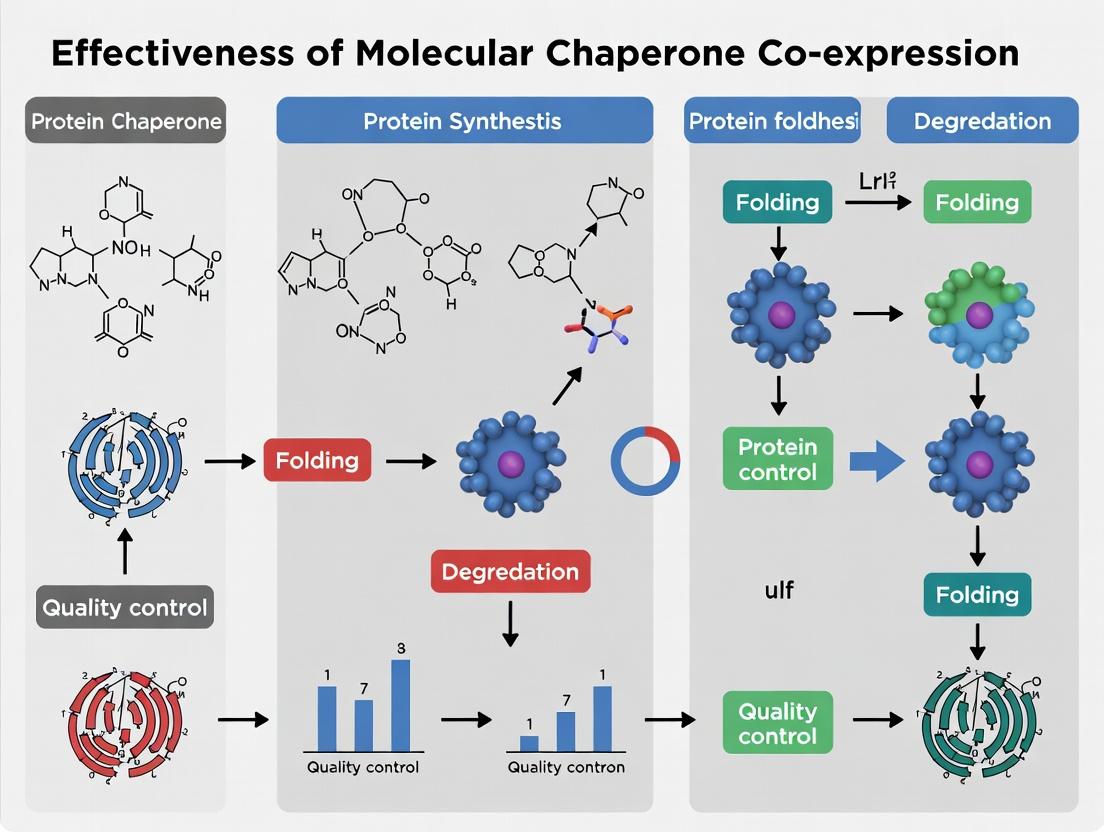
This article provides a comprehensive overview of molecular chaperone co-expression as a critical tool for recombinant protein production.
Molecular Chaperone Co-Expression: A Strategic Guide for Optimizing Protein Solubility and Yield in Research & Biopharma
Abstract
This article provides a comprehensive overview of molecular chaperone co-expression as a critical tool for recombinant protein production. Tailored for researchers and drug development professionals, it explores the foundational biology of chaperone systems, details practical methodologies for implementation, offers troubleshooting strategies for common challenges, and presents validation frameworks for assessing effectiveness. The content bridges fundamental principles with advanced applications, supporting the development of more efficient and reliable protein expression pipelines for therapeutic and diagnostic applications.
Unlocking Cellular Machinery: The Foundational Role of Chaperones in Protein Folding
Heterologous expression of proteins, especially those from humans or other eukaryotes in prokaryotic systems like E. coli, is frequently hindered by protein misfolding, aggregation, and subsequent insolubility. This results in the formation of inclusion bodies, requiring costly and often inefficient refolding procedures. A primary solution explored in molecular chaperone co-expression research is the use of chaperone systems to guide proper folding.
Molecular Chaperone Co-Expression: A Performance Comparison Guide
This guide compares the effectiveness of common molecular chaperone systems in improving the solubility of heterologously expressed proteins in E. coli.
Table 1: Comparative Performance of Chaperone Systems
| Chaperone System | Typical Solubility Increase (%) | Target Protein Types (Examples) | Key Advantages | Limitations |
|---|---|---|---|---|
| GroEL/GroES (Hsp60/Hsp10) | 30-70% | Medium-sized proteins (30-50 kDa), stringent folding requirements. | Powerful de novo folding; essential for some proteins. | Large complex; may not aid large/multi-domain proteins. |
| DnaK-DnaJ-GrpE (Hsp70 system) | 20-60% | Polypeptide chains emerging from ribosome, partially folded intermediates. | Prevents early aggregation; versatile. | Requires co-expression of J-protein (DnaJ) and NEF (GrpE). |
| Trigger Factor (TF) | 15-40% | Small to medium proteins; co-translational folding. | Ribosome-associated; first line of defense. | Effect is often additive with DnaK. |
| TF + DnaKJE Combination | 40-80% | Broad range, especially aggregation-prone proteins. | Synergistic effect; covers co- & post-translational folding. | Metabolic burden from multiple plasmid systems. |
| Small Heat-Shock Proteins (sHsps, e.g., IbpA/B) | 10-30% | Aggregation-prone proteins under stress. | Hold unfolded proteins in soluble state for later refolding. | Do not actively fold; require other chaperones for final folding. |
Experimental Protocol: Evaluating Chaperone Co-Expression Efficacy
Objective: To assess the impact of co-expressing the DnaKJE chaperone system on the solubility of a target human protein (e.g., kinase domain) in E. coli BL21(DE3).
Methodology:
- Strains & Plasmids: Use two E. coli BL21(DE3) transformations: one with the target protein expression plasmid only (Control), and one with both the target plasmid and a chaperone plasmid (e.g., pKJE7 encoding dnaK, dnaJ, grpE).
- Expression: Grow cultures to OD600 ~0.6. Induce chaperone expression with 0.5 mg/mL L-arabinose. After 1 hour, induce target protein with 0.1 mM IPTG. Grow for 4-6 hours at 30°C.
- Lysis & Fractionation: Harvest cells and lyse by sonication in appropriate buffer. Centrifuge lysate at 15,000 x g for 20 min at 4°C.
- Analysis: Separate supernatant (soluble fraction) and pellet (insoluble fraction). Resuspend the pellet in a buffer with denaturant (e.g., 8M urea) to dissolve inclusion bodies. Analyze equal proportions of total, soluble, and insoluble fractions by SDS-PAGE.
- Quantification: Perform densitometry analysis on SDS-PAGE gels or use a solubility tag assay (e.g., GFP-fusion) to calculate the percentage of soluble target protein.
Visualization: Chaperone-Assisted Folding Workflow
Diagram Title: Chaperone Pathways for Soluble Yield in E. coli
The Scientist's Toolkit: Key Research Reagent Solutions
| Reagent/Material | Function in Chaperone Co-Expression Studies |
|---|---|
| Chaperone Plasmid Kits (e.g., Takara, pG-KJE8) | Commercial vectors for tunable co-expression of dnaKJE, groEL/ES, or tig chaperone sets. |
| ArcticExpress (DE3) Cells | Commercial E. coli strains co-expressing chaperonins from a psychrophilic bacterium for cold-temperature folding. |
| Solubility Tags (e.g., MBP, GST, SUMO) | Fusion partners that enhance solubility; often used in tandem with chaperone co-expression. |
| Twin-Strep-tag II | Affinity tag for gentle purification under native conditions to assess properly folded protein. |
| Protease Inhibitor Cocktails | Essential during lysis to prevent degradation of the target and chaperone proteins. |
| Native Gel Electrophoresis | Technique to assess the oligomeric state and proper folding of the recovered soluble protein. |
| Differential Scanning Fluorometry (DSF) | High-throughput method to monitor thermal stability, indicating successful folding. |
Molecular chaperones are a diverse class of proteins that facilitate the proper folding, assembly, transport, and degradation of other proteins within the cell. They function by binding to non-native states of their client proteins, preventing aggregation, and providing an environment conducive to correct folding, often in an ATP-dependent manner. Their function is critical for cellular proteostasis, especially under stress conditions. This guide compares the effectiveness of co-expressing specific chaperone families to enhance the solubility and yield of recombinant proteins, a common challenge in biopharmaceutical development.
Comparison Guide: Effectiveness of Chaperone Systems for Recombinant Protein Expression
The following table summarizes experimental data from recent studies (2023-2024) comparing the co-expression of major chaperone systems in E. coli to improve the soluble yield of diverse client proteins, including therapeutic antibody fragments and kinases.
Table 1: Performance Comparison of Chaperone Co-expression Systems in E. coli
| Chaperone System Co-expressed | Target Client Protein | Fold Increase in Soluble Yield vs. Control | Reported Purity | Key Experimental Condition |
|---|---|---|---|---|
| DnaK-DnaJ-GrpE (KJE) | scFv Antibody Fragment | 3.5x | ~85% | Co-expression at 25°C, IPTG induction |
| GroEL-GroES (ELS) | Human Kinase Domain | 2.1x | ~92% | Chaperone plasmid induced 1 hr prior to target |
| Trigger Factor (TF) + KJE | Microbial Enzyme | 4.8x | ~78% | Simultaneous induction at 18°C |
| GroELS + KJE | Viral Membrane Protein | 1.7x | ~65% | Use of arabinose promoter for fine-tuning |
| TF Alone | scFv Antibody Fragment | 1.5x | ~88% | Standard induction at 30°C |
Experimental Protocol: Assessing Chaperone Co-expression Efficacy
A standardizable protocol for generating the comparative data shown in Table 1 is outlined below.
Methodology: Parallel Expression and Solubility Analysis
- Strain & Plasmids: Use E. coli BL21(DE3) cells transformed with two plasmids: (1) the target protein gene under a T7 promoter, and (2) the chaperone system genes (e.g., dnaK-dnaJ-grpE-groES-groEL from pG-KJE8) under their native promoters.
- Culture & Induction: Grow primary cultures in 2xYT media with appropriate antibiotics. Dilute and grow to mid-log phase (OD600 ~0.6). Induce chaperone expression with 0.5 mg/mL L-arabinose. After 1 hour, induce target protein expression with 0.1 mM IPTG.
- Temperature Shift: Immediately shift incubation temperature to 25°C for 20 hours.
- Lysis & Fractionation: Harvest cells by centrifugation. Lyse via sonication in buffer (50 mM Tris-HCl pH 8.0, 150 mM NaCl). Separate soluble and insoluble fractions by centrifugation at 15,000 x g for 30 min at 4°C.
- Analysis: Analyze equal proportions of total, soluble, and insoluble fractions by SDS-PAGE. Quantify band intensity via densitometry. Further purify soluble fraction by Ni-NTA chromatography (if His-tagged) for yield and purity assessment.
Visualizing Chaperone Function in Protein Folding
Title: Chaperone-Mediated Folding vs. Aggregation Pathway
The Scientist's Toolkit: Key Reagents for Chaperone Co-expression Studies
Table 2: Essential Research Reagents and Materials
| Reagent/Material | Function & Importance |
|---|---|
| Chaperone Plasmid Sets (e.g., Takara pG-KJE8, pGro7) | Commercial vectors containing chaperone genes under inducible promoters; essential for standardized co-expression. |
| E. coli BL21(DE3) Strain | Common host for T7-driven protein expression; lacks lon and ompT proteases, reducing target degradation. |
| L-Arabinose | Inducer for the araBAD promoter controlling chaperone genes in many plasmids; allows timed, pre-induction. |
| Isopropyl β-d-1-thiogalactopyranoside (IPTG) | Inducer for the T7/lac promoter controlling the target gene; concentration optimization is critical. |
| Ni-NTA Agarose Resin | For immobilised metal affinity chromatography (IMAC) to purify His-tagged target proteins for yield/purity analysis. |
| Protease Inhibitor Cocktail | Prevents non-specific proteolysis of client and chaperone proteins during cell lysis and purification. |
| ATP Regeneration System | Often included in in vitro refolding assays to maintain chaperone (e.g., GroEL) activity. |
Within the broader thesis on the Effectiveness of molecular chaperone co-expression research, this guide provides a direct comparison of the three principal prokaryotic chaperone systems utilized to enhance soluble yield and proper folding of recombinant proteins in E. coli. Co-expression of these chaperones is a standard strategy to combat aggregation and misfolding, a common bottleneck in biotechnology and structural biology.
The table below summarizes the core characteristics, functional mechanisms, and primary applications of each chaperone system.
Table 1: Core Characteristics of Major Chaperone Systems
| Feature | GroEL/GroES (HSP60/HSP10) | DnaK/DnaJ/GrpE (HSP70 System) | Trigger Factor (TF) |
|---|---|---|---|
| Type | Chaperonin (Multi-subunit cage) | ATP-dependent Holdase/ Foldase | Ribosome-associated Prolyl Isomerase/Chaperone |
| Primary Function | Provides isolated compartment for folding of proteins up to ~60 kDa. | Binds to hydrophobic stretches, prevents aggregation, promotes folding/re-folding. | First chaperone contacting nascent chain; prevents premature folding/aggregation. |
| Energy Source | ATP hydrolysis (GroEL) | ATP hydrolysis (DnaK) | ATP-independent |
| Typical Target | Obligate substrates (e.g., metabolically essential proteins) and aggregation-prone proteins. | Broad-range, hydrophobic-rich peptides and destabilized proteins under stress. | Nascent polypeptides (co-translational); broad specificity. |
| Optimal Co-expression Scenario | Proteins with complex folding pathways, α/β domain proteins. | Proteins prone to aggregation during heat shock or overexpression, stalled folding intermediates. | Enhancing solubility of proteins translated at high rates; co-expression with other systems. |
The following table consolidates quantitative results from key studies comparing the effectiveness of these systems in enhancing soluble yield of diverse heterologous proteins.
Table 2: Comparative Performance in Soluble Yield Enhancement
| Chaperone System Co-expressed | Target Protein (Example) | Reported Fold-Increase in Soluble Yield (vs. No Chaperone) | Key Experimental Condition (Host Strain) | Reference Context |
|---|---|---|---|---|
| GroEL/GroES | Human Ferritin H Chain | ~8-fold | BL21(DE3) pGro7 plasmid (Takara) | Cytosolic expression, 30°C induction |
| DnaK/DnaJ/GrpE | Mouse Monoclonal Antibody ScFv Fragment | ~6-fold | BL21(DE3) pKJE7 plasmid (Takara) | Cytosolic expression, 25°C induction |
| Trigger Factor (TF) | Human Epidermal Growth Factor (hEGF) | ~3-fold | BL21(DE3) pTf16 plasmid (Takara) | Cytosolic expression, 16°C induction |
| TF + DnaK/J/E | Bacterial α-Glucosidase (Aggregation-prone) | ~12-fold (synergistic effect) | BL21(DE3) co-transformed with pTf16 & pKJE7 | Combined system, 30°C induction |
| All Three Systems | Plant Cytochrome P450 | ~15-fold | BL21(DE3) pGro7, pKJE7, pTf16 | Complex eukaryotic protein, 20°C induction |
Experimental Protocols for Co-Expression Assays
Protocol 1: Standardized Chaperone Plasmid Co-Expression & Solubility Analysis
Objective: To compare the efficacy of GroEL/ES, DnaK/J/E, and TF in improving the soluble yield of a target recombinant protein.
Key Materials (Research Reagent Solutions):
- Expression Host: E. coli BL21(DE3) or derivative (e.g., C41(DE3) for toxic proteins).
- Chaperone Plasmids: pGro7 (GroEL/ES), pKJE7 (DnaK/DnaJ/GrpE), pTf16 (Trigger Factor) or equivalent commercial vectors (e.g., from Takara Bio).
- Target Protein Plasmid: Compatible origin of replication and antibiotic resistance.
- Inducers: L-Arabinose (for pGro7, pKJE7 chaperone induction), IPTG (for target protein induction).
- Lysis Buffer: 50 mM Tris-HCl (pH 8.0), 150 mM NaCl, 1 mM PMSF, 1 mg/mL Lysozyme, supplemented with EDTA-free protease inhibitors.
- Analysis: SDS-PAGE reagents, Coomassie staining or Western blotting equipment, densitometry software.
Methodology:
- Co-transformation: Co-transform the E. coli host strain with the target protein plasmid and a single chaperone plasmid (or empty vector control). Use appropriate antibiotics for selection.
- Cultivation & Induction: Inoculate 5 mL of medium (with antibiotics) with a single colony. Grow overnight at 37°C. Dilute 1:100 into fresh medium. Grow at 37°C to mid-log phase (OD600 ~0.6). Induce chaperone expression with 0.5 mg/mL L-arabinose (for pGro7/pKJE7) or 5 ng/mL tetracycline (for pTf16). Shift temperature to 25-30°C. After 1 hour, induce target protein with 0.1-1.0 mM IPTG. Continue incubation for 4-16 hours.
- Cell Harvest & Lysis: Harvest cells by centrifugation. Resuspend pellet in Lysis Buffer. Perform lysis by sonication or enzymatic treatment. Clarify lysate by centrifugation at 15,000 x g for 30 min at 4°C.
- Fractionation & Analysis: Separate supernatant (soluble fraction) from pellet (insoluble fraction). Resuspend the pellet in an equal volume of lysis buffer + 1% SDS. Analyze equal proportions of total, soluble, and insoluble fractions by SDS-PAGE.
- Quantification: Use densitometric analysis of band intensities on gels or Western blots to calculate the percentage of soluble target protein. The fold-increase is determined relative to the control (empty chaperone vector).
Protocol 2: Assessment of Synergistic Effects
Objective: To evaluate if combining Trigger Factor with the DnaK or GroEL system provides additive or synergistic benefits.
Methodology:
- Follow Protocol 1, but co-transform the host with the target plasmid and two chaperone plasmids (e.g., pTf16 + pKJE7). Maintain selection with three antibiotics.
- Induce both chaperone systems according to their respective protocols (e.g., add both L-arabinose and tetracycline).
- Proceed with lysis and analysis as in Protocol 1. Compare yields to single-chaperone expressions and the theoretical additive effect.
Visualization of Pathways and Workflows
The Scientist's Toolkit: Key Research Reagent Solutions
Table 3: Essential Materials for Chaperone Co-Expression Studies
| Item | Function/Benefit | Example/Notes |
|---|---|---|
| Chaperone Plasmid Kits | Commercial vectors with tight regulation (araB promoter) for controlled, titratable expression of chaperone genes. Reduces metabolic burden. | Takara Bio's "Chaperone Plasmid Set" (pGro7, pKJE7, pTf16). |
| Protease-Deficient E. coli Strains | Host strains (e.g., BL21(DE3)) lacking lon and ompT proteases minimize degradation of the target and chaperone proteins. | BL21(DE3), Origami B(DE3) for disulfide bond formation. |
| Tunable Dual-Induction Systems | Allows independent, sequential induction of chaperones and target protein to pre-load the cell with folding machinery. | Arabinose (chaperones) + IPTG (target) systems. |
| Fractionation & Solubility Assay Kits | Rapid, colorimetric/fluorometric kits to quantify soluble vs. insoluble protein fractions without SDS-PAGE. | Thermo Fisher His-Tag Protein Solubility Assay. |
| Native Detection Tags | Tags (e.g., GFP, Split-protein systems) that report on folding status and solubility in vivo, enabling real-time monitoring. | GFP-fusion fluorescence, CAT-T7 polymerase solubility reporters. |
| Controlled Bioreactors | Systems enabling precise control of temperature, pH, and feed during expression, critical for chaperone function studies. | Small-scale (50-500 mL) benchtop fermenters. |
This comparison guide, framed within ongoing research on the Effectiveness of molecular chaperone co-expression, evaluates strategies for enhancing functional recombinant protein yield by engineering host cell environments to resemble native folding conditions.
Performance Comparison: Chaperone Co-expression vs. Traditional Strategies
The following table summarizes experimental outcomes from recent studies comparing chaperone co-expression systems with conventional E. coli expression.
Table 1: Yield & Solubility Comparison for Human Kinase (PKCε) Expression
| Expression System | Total Protein Yield (mg/L) | Soluble Fraction (%) | Specific Activity (Units/mg) |
|---|---|---|---|
| BL21(DE3) pLysS (Baseline) | 120 | 15 | 5 |
| BL21 with pGro7 (GroEL/ES) | 95 | 62 | 88 |
| BL21 with pKJE7 (DnaK/DnaJ/GrpE) | 87 | 71 | 92 |
| BL21 with pTf16 (Trigger Factor) | 110 | 45 | 40 |
| SHuffle T7 (Oxidizing Cytosol) | 105 | 68 | 95 |
Table 2: Functional Yield for a Disulfide-bonded Antibody Fragment (scFv)
| Host Strain / Strategy | Periplasmic Yield (mg/L) | Correct Disulfide Pairing (%) | Binding Affinity (KD, nM) |
|---|---|---|---|
| BL21(DE3) Origami (Baseline) | 8.5 | 65 | 12.5 |
| + Co-expression DsbC | 22.3 | 94 | 1.8 |
| + Co-expression DsbA & DsbC | 18.7 | 89 | 2.1 |
| CHO Transient Expression | 15.1 | 98 | 1.5 |
Experimental Protocols
Protocol 1: Evaluating Chaperone Plasmid Co-transformation inE. coli
Objective: Assess the impact of chaperone teams on solubility of a target recombinant protein.
- Clone the gene of interest into a T7 expression vector (e.g., pET series).
- Co-transform E. coli BL21(DE3) with the target plasmid and a compatible chaperone plasmid (e.g., Takara Bio's pGro7, pKJE7, or pTf16). Include a chloramphenicol-resistant empty vector as control.
- Culture transformed cells at 37°C in LB with appropriate antibiotics to an OD600 of 0.6.
- Induce chaperone expression with L-arabinose (0.5 mg/mL for pGro7/pKJE7; 5 ng/mL for pTf16). Incubate at 37°C for 1 hour.
- Induce target protein expression with 0.5 mM IPTG. Shift temperature to 25°C and incubate for 16-20 hours.
- Lyse cells via sonication in a buffer containing 50 mM Tris-HCl (pH 8.0), 100 mM NaCl.
- Fractionate lysate by centrifugation (20,000 x g, 30 min, 4°C). Analyze soluble (supernatant) and insoluble (pellet) fractions by SDS-PAGE and densitometry.
Protocol 2: Assessing Disulfide Bond Formation in the Periplasm
Objective: Quantify functional yield of a disulfide-bonded protein.
- Clone target with pelB or ompA signal sequence into an appropriate vector (e.g., pET-22b(+)).
- Transform into E. coli strains (e.g., Origami, SHuffle) with or without a compatible DsbC expression plasmid.
- Induce at an OD600 of 0.6 with 0.5 mM IPTG at 25°C for 16 hours.
- Harvest cells and resuspend in osmotic shock buffer (30 mM Tris-HCl, 40% sucrose, pH 8.0). Incubate with gentle shaking for 15 min.
- Pellet cells and resuspend in ice-cold 5 mM MgSO4 to release periplasmic contents. Centrifuge to collect supernatant (periplasmic fraction).
- Purify the protein via His-tag affinity chromatography.
- Analyze by non-reducing vs. reducing SDS-PAGE, mass spectrometry for disulfide mapping, and surface plasmon resonance (SPR) for binding kinetics.
Visualizing the Chaperone-Assisted Folding Pathway
Title: ATP-Dependent Chaperone Folding Pathway for Recombinant Proteins
The Scientist's Toolkit: Key Research Reagent Solutions
Table 3: Essential Reagents for Mimicking Native Environments
| Reagent / Kit Name | Supplier Example | Function in Experiment |
|---|---|---|
| Chaperone Plasmid Sets (pGro7, pKJE7, pTf16) | Takara Bio | Co-express prokaryotic chaperone teams (GroEL/ES, DnaK/DnaJ/GrpE, TF) to assist folding. |
| SHuffle & Origami E. coli Strains | NEB | Provide an oxidative cytoplasm (SHuffle) or mutated thioredoxin/glutathione reductases (Origami) to promote disulfide bond formation. |
| DsbC & DsbA Expression Vectors | Addgene | Co-express disulfide bond isomerase (DsbC) and oxidase (DsbA) for correct pairing in the periplasm. |
| Osmotic Shock Buffers | MilliporeSigma | Isolate periplasmic fractions containing correctly localized, disulfide-bonded proteins. |
| Protease Inhibitor Cocktail (EDTA-free) | Roche | Prevent degradation of sensitive, unfolded, or partially folded recombinant proteins during lysis. |
| Non-Reducing SDS-PAGE Sample Buffer | Thermo Fisher | Analyze disulfide bond formation without breaking covalent S-S bonds. |
| Surface Plasmon Resonance (SPR) Chip (CM5) | Cytiva | Characterize binding affinity and kinetics of folded recombinant proteins to validate function. |
Early Evidence and Seminal Studies Demonstrating Chaperone Co-Expression Efficacy
The broader thesis on the effectiveness of molecular chaperone co-expression research posits that the strategic co-expression of specific chaperones can significantly enhance the functional yield of recombinant proteins, a critical bottleneck in biotechnology and therapeutic development. Early seminal studies provided the foundational proof-of-concept, systematically comparing outcomes against standard expression systems.
Key Comparative Performance Data
The following table summarizes quantitative results from pivotal early studies that compared the co-expression of various chaperone systems against control expressions.
Table 1: Seminal Studies on Chaperone Co-Expression Efficacy
| Target Protein (Organism) | Chaperone System Co-Expressed | Control Soluble Yield | Co-Expression Soluble Yield | Fold Increase | Key Metric Assessed | Reference |
|---|---|---|---|---|---|---|
| Luciferase (Firefly) | E. coli GroEL/GroES (cpn60/cpn10) | ~5% active | ~40% active | 8x | Active enzyme recovered | (Goloubinoff et al., 1989) |
| Rhizopus oryzae Lipase (Prokaryotic) | E. coli DnaK-DnaJ-GrpE & GroEL-GroES | Minimal activity | >90% soluble, active | >50x | Specific activity of soluble fraction | (Dong et al., 2002) |
| Mouse Endothelin Receptor A (GPCR) | E. coli GroEL-GroES + DnaK-DnaJ-GrpE | Largely insoluble | 0.4 mg/L functional | N/A (0 to measurable) | Ligand-binding activity in membrane | (Kiefer et al., 1996) |
| Single-Chain Fv Antibody Fragment | E. coli Skp (17 kDa) | ~2 mg/L soluble | ~20 mg/L soluble | 10x | Soluble protein concentration | (Bothmann and Plückthun, 2000) |
| Human Metallothionein II | E. coli DnaJ and GrpE (with endogenous DnaK) | Low, prone to degradation | High, stable | ~5x | Protein stability & resistance to proteolysis | (Thomas and Baneyx, 1996) |
Detailed Experimental Protocols
Goloubinoff et al., 1989: Reactivation of Denatured Luciferase
Objective: To demonstrate GroEL/GroES (Hsp60/Hsp10) mediated refolding in E. coli. Protocol:
- Firefly luciferase was chemically denatured in guanidinium HCl.
- The denatured enzyme was diluted into a refolding buffer with or without purified GroEL and GroES chaperonins.
- The chaperonin-containing buffer was supplemented with ATP.
- Reactivation kinetics were monitored by measuring luminescence activity over time at 25°C.
- Control reactions lacked chaperonins, ATP, or both.
Bothmann and Plückthun, 2000: Enhancing scFv Solubility with Skp
Objective: To increase the soluble yield of a single-chain antibody fragment in the E. coli periplasm. Protocol:
- The gene for an aggregation-prone scFv was cloned into an expression vector under a T7 promoter.
- The skp gene was cloned into a compatible vector under its native promoter or a second inducible promoter.
- E. coli cells were co-transformed with both plasmids.
- Expression was induced sequentially: first Skp, then the scFv.
- Cells were fractionated to isolate the periplasmic contents.
- Soluble and insoluble fractions from the periplasm were analyzed by SDS-PAGE and quantified via ELISA for functional scFv.
Visualizing Chaperone Function and Experimental Workflow
Diagram Title: Major Bacterial Chaperone Pathways for Protein Folding
Diagram Title: General Workflow for Testing Chaperone Co-Expression Efficacy
The Scientist's Toolkit: Key Research Reagent Solutions
Table 2: Essential Materials for Chaperone Co-Expression Studies
| Reagent/Material | Function in Experiment | Example or Key Feature |
|---|---|---|
| Chaperone Plasmid Sets | Vectors encoding single or operons of chaperone genes (e.g., dnaK-dnaJ-grpE, groEL-groES, tig). | "Chaperone Plasmid" sets from Takara Bio or Addgene; pG-KJE8, pGro7. |
| T7-Based Expression Vectors | High-level, inducible expression of the target protein gene. | pET series vectors (Novagen/Merck) with compatible origin to chaperone plasmids. |
| Protease-Deficient E. coli Strains | Host cells to minimize degradation of co-expressed target proteins. | BL21(DE3), Origami B(DE3), Rosetta-gami B(DE3). |
| Dual-Induction Systems | Allows sequential induction of chaperones before the target protein. | Use of different inducers (e.g., arabinose for pGro7, then IPTG for pET). |
| Detergent Solubilization Kits | To solubilize and recover membrane proteins or inclusion body proteins. | Ready-to-use buffers for membrane protein extraction (e.g., from Solulink, Cube Biotech). |
| Activity-Specific Assay Kits | To quantify functional yield of the target protein (the ultimate metric). | Luciferase activity assays, protease activity kits, ligand-binding radioligand/SPR kits. |
| Fractionation & Wash Buffers | To separate soluble from insoluble protein fractions effectively. | BugBuster Master Mix (Merck) or similar, with optimized benzonase. |
| Affinity Purification Resins | To isolate the target protein for pure functional analysis. | His-tag/Ni-NTA, GST-tag/Glutathione resin, Strep-tag II/Strep-Tactin. |
Practical Implementation: Strategies and Protocols for Effective Chaperone Co-Expression
Molecular chaperone co-expression is a critical strategy for improving the yield and solubility of recombinant proteins, a cornerstone of modern structural biology and biopharmaceutical development. The effectiveness of this approach is highly dependent on the chosen expression host. This guide objectively compares the four primary systems—E. coli, yeast, insect, and mammalian cells—within the broader thesis on optimizing chaperone co-expression for functional protein production.
Performance Comparison: Key Metrics
The following table summarizes quantitative performance data across critical parameters, compiled from recent studies (2023-2024).
Table 1: Comparative Performance of Chaperone Co-Expression Systems
| Parameter | E. coli | Yeast (S. cerevisiae / P. pastoris) | Insect Cells (Baculovirus/Sf9) | Mammalian Cells (HEK293, CHO) |
|---|---|---|---|---|
| Typical Protein Yield (mg/L) | 10-500 | 10-100 | 5-50 | 0.5-10 |
| Cost & Speed | Very low cost, 1-3 days | Low cost, 3-7 days | Moderate cost, 7-14 days | High cost, 14-30 days |
| Native Folding & PTMs | Limited (no glycosylation, disulfides challenging) | Basic glycosylation, good disulfide formation | Complex glycosylation (simple mannose-rich), good folding | Human-like glycosylation & PTMs, superior folding |
| Chaperone Compatibility | High (GroEL/ES, DnaK/J-GrpE, TF) | High (Hsp70, Hsp40, Hsp90 orthologs) | Moderate (Insect Hsc70, Hsp90) | High (Human Hsp70, Hsp90, BIP, PDI) |
| Membrane Protein Solubility | Low (often requires denaturation) | Moderate | Good | Excellent |
| Throughput & Scalability | Excellent for screening | Very good | Moderate | Low for screening, high for manufacturing |
| Key Chaperone Co-expression Success Rate Increase (for difficult proteins) | 20-40% solubility improvement reported | 15-30% functional yield improvement reported | 10-25% functional assembly improvement reported | Essential for many complex targets; 2-10x yield possible |
Experimental Protocols for Key Studies
Protocol 1: E. coli Co-expression with GroEL/ES Chaperone Set
- Objective: Enhance solubility of aggregation-prone human kinase domain.
- Vector System: Dual-plasmid T7 system. Plasmid 1: Target gene in pET vector. Plasmid 2: groEL/groES operon in pGro7 (Takara).
- Strain: BL21(DE3).
- Induction: Culture at 37°C to OD600 0.6. Add 0.5 mM IPTG for target and 0.5 mg/mL L-arabinose for chaperone induction. Shift temperature to 20°C. Express for 16-20 hours.
- Analysis: Compare solubility via centrifugation of lysate, followed by SDS-PAGE of soluble vs. insoluble fractions. Assess activity via enzymatic assay.
Protocol 2: Mammalian (HEK293) Co-expression with BIP and PDI
- Objective: Produce glycosylated, multi-disulfide bonded antibody fragment.
- Vector System: Single polycistronic plasmid (IRES or P2A-linked) containing target gene, human BIP, and human PDI under a CMV promoter.
- Transfection: Use PEI-based transfection of suspension HEK293F cells at 1-2 million cells/mL.
- Culture: Maintain at 37°C, 8% CO2, 125 rpm for 5-7 days. Add valproic acid to enhance expression.
- Analysis: Monitor secretion via ELISA. Compare titers and antigen binding (SPR/BLI) to expression without chaperones. Analyze glycosylation via LC-MS.
Visualizing the Chaperone Co-expression Workflow
Title: Decision Workflow for Chaperone Co-expression Host Selection
Title: Generalized Eukaryotic Chaperone Folding Pathway
The Scientist's Toolkit: Key Research Reagent Solutions
Table 2: Essential Reagents for Chaperone Co-expression Studies
| Reagent / Solution | Function & Application |
|---|---|
| Chaperone Plasmid Sets (e.g., Takara, Merck) | Commercial vectors encoding chaperone operons (like pGro7, pG-KJE8 for E. coli; pMATE for mammalian) for standardized, inducible co-expression. |
| Polyethylenimine (PEI) Max | High-efficiency, low-cost transfection reagent for transient gene expression in mammalian and insect cells. |
| Insect Cell Medium (Sf-900 III / ESF 921) | Serum-free, optimized media for growth and high-density protein expression in Sf9 and Hi5 insect cell lines. |
| HEK293 & CHO Expression Systems | Robust mammalian host cells (e.g., Expi293F, ExpiCHO) with optimized protocols for high-titer protein production. |
| Solubility Enhancement Tags (SUMO, MBP, Trx) | Fusion partners used in initial screens (often in E. coli) to improve solubility; can be cleaved off post-purification. |
| Anti-Chaperone Antibodies (Hsp70, Hsp90, BIP) | Essential for western blotting to verify successful chaperone co-expression and assess expression levels. |
| Endoglycosidase Enzymes (PNGase F, Endo H) | Used to analyze N-linked glycosylation patterns on proteins expressed in eukaryotic systems, confirming PTM fidelity. |
| Protease Inhibitor Cocktails | Critical during cell lysis to prevent degradation of both the target protein and the co-expressed chaperones. |
This guide provides an objective comparison of vector systems for the co-expression of target proteins and molecular chaperones, a critical strategy in structural biology and biopharmaceutical production. The effectiveness of chaperone co-expression is highly dependent on the compatibility of plasmid backbones, promoters, and induction schemes. This analysis is framed within the broader thesis on the effectiveness of molecular chaperone co-expression research, which seeks to enhance soluble yield and proper folding of recombinant proteins.
Comparison of Co-expression Vector Systems
Table 1: Comparison of Compatible Plasmid Systems for Target & Chaperone Co-expression
| System Name (Primary Source) | Plasmid Incompatibility Groups | Promoters Used (Target / Chaperone) | Induction Scheme | Reported Soluble Yield Increase (vs. target alone) | Key Experimental Evidence |
|---|---|---|---|---|---|
| pETDuet-1 System (Novagen/Merck) | Cloning sites in same plasmid (single vector) | T7 / T7 | Single IPTG induction | 3- to 8-fold (varying by target) | Co-expression of DsbC in E. coli BL21(DE3) improved solubility of scFv antibody fragments (Ma et al., 2010). |
| pACYCDuet-1 & pETDuet Combo (Novagen/Merck) | p15A (pACYC) & ColE1 (pET) compatible | T7 (on pET) & T7 (on pACYC) | Single IPTG induction for both | 5- to 12-fold | Co-expression of GroEL/GroES from pACYCDuet-1 with target on pETDuet increased soluble yield of human kinase (Dumon-Seignovert et al., 2004). |
| pCDFDuet-1 & pETDuet Combo (Novagen/Merck) | CDF (pCDF) & ColE1 (pET) compatible | T7 (on pET) & T7 (on pCDF) | Single IPTG induction for both | 4- to 10-fold | Simultaneous expression of target and trigger factor (TF) from separate plasmids enhanced solubility of aggregation-prone bacterial protein. |
| T7-pET/T5-pQE Modular System (QIAGEN & Novagen) | ColE1 (pET) & ColE1 (pQE) - incompatible; requires sequential transformation | T7 (Target) & T5 (Chaperone) | Sequential: IPTG for target, then IPTG for T5 | 2- to 6-fold | Sequential induction of DnaK/DnaJ/GrpE chaperone team after target expression improved recovery of active membrane protein protease (Nishihara et al., 2000). |
| Arabinose & T7 Dual-System (pBAD & pET) | p15A (pBAD) & ColE1 (pET) compatible | T7 (Target on pET) & pBAD (Chaperone on pBAD) | Independent: IPTG for target, L-Arabinose for chaperone | Up to 15-fold (optimized tuning) | Fine-tuning chaperone (GroEL/ES) expression levels via arabinose concentration during IPTG-induced target expression maximized yield of a complex eukaryotic enzyme (de Marco et al., 2007). |
Table 2: Comparison of Promoter & Induction Schemes
| Scheme Type | Promoter Combination | Induction Control | Advantage | Disadvantage | Best For |
|---|---|---|---|---|---|
| Single-Induction, Compatible Plasmids | T7 (Target) & T7 (Chaperone) | Single IPTG dose | Simple, simultaneous expression. | No temporal control; chaperone may be needed before/after target. | Robust chaperones like DsbC or TF for secretory/cytosolic targets. |
| Single-Induction, Single Plasmid | T7 (Target) & T7 (Chaperone) | Single IPTG dose | Genetic stability, no compatibility issues. | Fixed stoichiometry; limited chaperone set size. | Small chaperone teams (e.g., GroEL/ES operon cloned in second MCS). |
| Sequential Induction | T7 (Target) & T5/lac (Chaperone) | Two IPTG doses (different concentrations/times) | Chaperone expression can be timed post-target. | Requires incompatible plasmids or careful promoter engineering. | Aggregation-prone targets where chaperones act post-translationally. |
| Independent Dual-Induction | T7 (Target) & pBAD/rhamnose (Chaperone) | IPTG + Arabinose/Rhamnose | Precise tuning of chaperone level relative to target. | More complex medium and process optimization. | Critical applications where chaperone overload or imbalance is detrimental. |
Experimental Protocols for Key Studies
Protocol 1: Evaluating pET/pACYC Dual-Plasmid Co-expression (Adapted from Dumon-Seignovert et al., 2004)
- Cloning: Clone target gene into MCS-1 of pETDuet-1. Clone chaperone gene(s) (e.g., GroEL/ES operon) into MCS-1 of pACYCDuet-1.
- Co-transformation: Transform both plasmids sequentially or simultaneously into E. coli BL21(DE3) expression host. Select with ampicillin (pET, 100 µg/mL) and chloramphenicol (pACYC, 34 µg/mL).
- Expression: Inoculate double-resistant colony into LB+antibiotics. Grow at 37°C to OD600 ~0.6. Induce with 0.1-1.0 mM IPTG. Reduce temperature to 25-30°C. Induce for 4-16 hours.
- Analysis: Harvest cells. Lyse via sonication. Separate soluble (supernatant) and insoluble (pellet) fractions by centrifugation (15,000 x g, 30 min). Analyze by SDS-PAGE and quantify target band density.
Protocol 2: Tuning Expression with Independent pET/pBAD Systems (Adapted from de Marco et al., 2007)
- Cloning: Clone target into pET vector. Clone chaperone (e.g., GroEL/ES) into pBAD vector (p15A ori, araBAD promoter).
- Co-transformation: Transform both plasmids into BL21(DE3). Select with ampicillin (pET) and chloramphenicol (pBAD) or spectinomycin (pBAD derivative).
- Optimization Screen: Grow cultures to OD600 ~0.5. Add varying concentrations of L-arabinose (0.0002% - 0.2%) to induce chaperone. 30 minutes later, add standard IPTG dose (0.1 mM) to induce target. Continue expression at optimal temperature.
- Assessment: Measure total and soluble protein yield via SDS-PAGE/densitometry and compare to functional activity assays (e.g., enzyme activity).
Visualizing Co-expression Strategies
Comparison of Co-expression Vector Strategies
Generalized Workflow for Chaperone Co-expression
The Scientist's Toolkit
Table 3: Essential Research Reagent Solutions for Co-expression Studies
| Reagent/Material | Function in Co-expression Experiments |
|---|---|
| pETDuet-1, pACYCDuet-1, pCDFDuet-1 Vectors (Merck) | Core modular vectors with multiple cloning sites (MCS) in compatible plasmid backbones for coordinated expression of 2+ genes. |
| pBAD Series Vectors (Thermo Fisher) | Vectors with tightly regulated arabinose (pBAD) promoter for fine-tuning chaperone expression levels independently of the target. |
| E. coli Chaperone Plasmid Sets (e.g., Takara Bio) | Pre-constructed plasmids (e.g., pG-KJE8, pGro7, pTf16) encoding major chaperone teams (DnaK/DnaJ/GrpE, GroEL/ES, Trigger Factor) in compatible backbones. |
| E. coli BL21(DE3) & Derivatives (e.g., BL21(DE3)pLysS, BL21(DE3) CodonPlus) | Standard expression hosts with T7 RNA polymerase gene; derivatives enhance control or provide rare tRNAs for eukaryotic targets. |
| IPTG (Isopropyl β-D-1-thiogalactopyranoside) | Non-hydrolyzable inducer for T7/lac-based promoters. Concentration (0.01-1 mM) and timing are key variables. |
| L-Arabinose | Inducer for the pBAD promoter. Allows precise, titratable control of chaperone gene expression (range: 0.0002% - 0.2%). |
| Terrific Broth (TB) & Magic Media (e.g., AthenaES) | High-density growth media that can improve protein yield and simplify auto-induction protocols for screening. |
| Protease Inhibitor Cocktails (e.g., EDTA-free) | Prevent degradation of target and chaperone proteins during cell lysis and purification, crucial for accurate solubility assessment. |
| His-Tag Purification Resins (Ni-NTA, Cobalt) | Enable rapid purification of His-tagged target proteins from co-expression lysates to assess solubility, folding, and chaperone interaction. |
| Soluble Protein Extraction Kits (e.g., B-PER) | Gentle, reproducible kits for separating soluble and insoluble protein fractions for quantitative analysis by SDS-PAGE/densitometry. |
Standard Co-Transformation vs. Engineered Chaperone-Containing Host Strains
Within the broader thesis on the effectiveness of molecular chaperone co-expression for enhancing recombinant protein solubility and yield, two principal methodologies are employed: standard co-transformation and the use of engineered chaperone-containing host strains. This guide objectively compares their performance, experimental workflows, and practical applications in research and bioprocessing.
Methodology Comparison & Experimental Protocols
Standard Co-Transformation Protocol
- Vector Preparation: The gene of interest (GOI) is cloned into an expression vector. Separate, compatible plasmids encoding molecular chaperones (e.g., E. coli GroEL/GroES, DnaK/DnaJ/GrpE) are prepared. Plasmid compatibility (different origins of replication and antibiotic resistance markers) is essential.
- Co-Transformation: Competent E. coli cells (e.g., BL21(DE3)) are simultaneously transformed with both the GOI plasmid and the chaperone plasmid(s).
- Selection: Cells are plated on agar containing antibiotics for both plasmids to select for clones harboring all genetic constructs.
- Expression & Induction: A single colony is used to inoculate a culture. At the appropriate cell density, expression of both the GOI and the chaperone system is induced, typically using IPTG or temperature shift, depending on promoter systems.
- Analysis: Cells are harvested, and the solubility and yield of the target protein are analyzed via SDS-PAGE and Western blot.
Engineered Chaperone-Containing Host Strain Protocol
- Strain Selection: An engineered host strain with chromosomal integrations of chaperone genes (e.g., E. coli strains with stabilized pG-KJE8 plasmid or genomically integrated dnaK/dnaJ operon under controllable promoters) is selected.
- Transformation: The strain is transformed solely with the expression plasmid containing the GOI.
- Selection & Expression: Cells are selected using only the antibiotic for the GOI plasmid. Expression is induced in two stages: first, the chromosomal chaperone system is induced (e.g., with L-arabinose or tetracycline), followed by induction of the GOI after a lag period.
- Analysis: Solubility and yield are assessed as above.
Key Research Reagent Solutions
| Item | Function in Experiment |
|---|---|
| Compatible Plasmid System (e.g., pET & pG-Tf2) | Enables stable co-existence of GOI and chaperone plasmids in the same cell through distinct origins and resistance markers. |
| Chaperone Plasmid Set (e.g., Takara pG-KJE8, pGro7) | Commercial plasmids providing tightly regulated co-expression of specific chaperone teams (GroEL/ES, DnaK/DnaJ/GrpE, etc.). |
| Engineered E. coli Strain (e.g., BL21(DE3) pGro7, Origami B(DE3) pTf16) | Host strains with a resident, stable chaperone plasmid or chromosomal insert, simplifying the transformation process. |
| Dual-Induction Media Additives | Precise inducters (IPTG, L-arabinose, tetracycline) for sequential activation of chaperone and target gene expression. |
| His-Tag Purification Kit | For rapid purification of soluble, his-tagged target protein following co-expression experiments. |
| Soluble Protein Fractionation Kit | Enables separation of soluble and insoluble protein fractions for quantitative analysis of solubility yield. |
Performance Data Comparison
Table 1: Comparative Analysis of Key Performance Metrics
| Metric | Standard Co-Transformation | Engineered Chaperone Host Strain |
|---|---|---|
| Experimental Timeline | Longer (~4-5 days). Requires dual plasmid prep, verification, and co-transformation. | Shorter (~3 days). Single transformation step into ready-to-use host. |
| Genetic Stability | Lower. Plasmid incompatibility or metabolic burden can lead to plasmid loss without rigorous selection. | Higher. Chaperone genes are stably integrated or on a maintained plasmid, ensuring consistent presence. |
| Process Reproducibility | Variable. Dependent on maintaining equal plasmid copy numbers and ratios. | High. Chaperone expression level is consistent across experiments and cell populations. |
| Metabolic Burden on Host | High. Replication and expression from multiple plasmids can slow growth and reduce yield. | Moderate. More optimized, but chaperone overexpression still diverts cellular resources. |
| Flexibility / Throughput | High. Easy to switch or combine different chaperone plasmids with various GOI constructs. | Low. Each host strain contains a fixed chaperone set; screening requires multiple strains. |
| Typical Reported Solubility Increase | 2- to 5-fold (highly target-dependent) | 2- to 4-fold (highly target-dependent) |
| Optimal Use Case | Initial screening of which chaperone team is effective for a specific difficult-to-express protein. | Scale-up and consistent production of a protein where an effective chaperone system is already identified. |
Visualizing the Experimental Pathways
Standard Co-Transformation Workflow
Engineered Host Strain Workflow
Strain Selection Decision Logic
The choice between standard co-transformation and engineered chaperone-containing host strains is context-dependent. Standard co-transformation remains the superior tool for discovery and initial screening due to its flexibility in testing diverse chaperone combinations. In contrast, engineered host strains offer a more streamlined, reproducible, and stable platform for the production phase once an effective chaperone system has been identified, aligning with the broader thesis that effective chaperone co-expression requires both strategic identification and optimal implementation.
Within the broader thesis on the Effectiveness of molecular chaperone co-expression research, successful protein production hinges on mitigating expression challenges like insolubility, misfolding, and cellular toxicity. This guide compares specific co-expression strategies for recalcitrant protein classes, providing objective performance data and protocols to inform experimental design.
Comparative Analysis of Co-Expression Systems
Table 1: Co-Expression Strategies for Challenging Protein Classes
| Protein Class | Target Example | Co-Expression Partner(s) | System (Host) | Reported Yield (mg/L) | Solubility Improvement | Key Alternative(s) Compared |
|---|---|---|---|---|---|---|
| GPCR | Human Beta-2 Adrenergic Receptor (β2AR) | Molecular Chaperone Set: DnaK/DnaJ/GrpE, GroEL/ES | E. coli (C41(DE3)) | 0.8 - 1.2 (purified) | ~60-70% in membrane fraction | Expression without chaperones (<0.1 mg/L, insoluble) |
| Kinase | Human MAPK14 (p38α) | Chaperone: Hsp90/Cdc37 complex | Baculovirus/Sf9 | 3.5 (active) | >80% soluble | Co-expression with generic GroEL/ES (~40% soluble, low activity) |
| Multi-Subunit Complex | Human RNA Polymerase II (10 subunits) | T7 RNA Polymerase + Chaperones: GroEL/ES, Trigger Factor | E. coli (BL21(DE3) pRARE2) | 0.5 (assembled complex) | Full assembly in ~15% of cells | Sequential expression & in vitro assembly (negligible yield) |
| Viral Ion Channel | Influenza A M2 Protein | Chaperone: Bet1 (ER-targeting) + Lipid: POPC | E. coli cell-free | 5.0 (functional) | >95% integral in liposomes | E. coli in vivo expression (mostly aggregated) |
Detailed Experimental Protocols
Protocol 1: Co-Expression of GPCR (β2AR) with Chaperone Teams inE. coli
- Strains/Plasmids: Use E. coli C41(DE3) containing two plasmids: pET-based β2AR construct and pTf16 or pGro7 encoding chaperone sets.
- Culture & Induction: Grow in TB medium at 37°C to OD600 ~0.6. Add 0.5 mg/mL L-arabinose to induce chaperone expression. After 1 hour, shift to 20°C, add 0.1 mM IPTG to induce β2AR expression.
- Harvest: Incubate overnight (16-18 hrs). Harvest cells by centrifugation.
- Membrane Preparation: Lyse cells via microfluidizer. Isolate membranes by ultracentrifugation (100,000 x g, 1 hr). Solubilize with n-dodecyl-β-D-maltoside (DDM).
- Affinity Purification: Use Talon IMAC resin (for His-tagged β2AR). Elute with imidazole buffer containing 0.05% DDM.
Protocol 2: Multi-Subunit Complex Assembly in a Single Host
- Polycistronic Design: Clone all 10 subunits of RNA Pol II into a single operon on a pET vector, each with a separate ribosome binding site.
- Chaperone Co-Expression: Transform into BL21(DE3) already harboring pRARE2 (tRNA) and pGro7/GroEL/ES).
- Expression: Grow in 2xYT at 30°C to OD600 0.8. Induce with 0.2 mM IPTG for 20 hours at 18°C.
- Purification: Lyse cells in mild detergent buffer. Purify complex via a twin-Strep tag on one subunit using Strep-Tactin XT resin.
- Assembly Check: Validate via native PAGE and mass photometry.
Visualizing Co-Expression Workflows and Pathways
Co-expression experimental workflow logic.
Chaperone pathway for kinase maturation.
The Scientist's Toolkit: Research Reagent Solutions
Table 2: Essential Materials for Chaperone-Assisted Co-Expression
| Reagent/Material | Function in Co-Expression | Example Product/Kit |
|---|---|---|
| Chaperone Plasmid Sets | Provide controlled expression of bacterial (GroEL/ES, DnaK/J) or eukaryotic (Hsp90, BiP) chaperones. | Takara Bio's "pGro7" (GroEL/ES), "pTf16" (TF), "pKJE7" (DnaK/DnaJ/GrpE). |
| Specialized E. coli Strains | Engineered for membrane protein or toxic protein expression; often deficient in proteases. | C41(DE3)/C43(DE3), BL21(DE3) pLysS, Lemo21(DE3) (tunable T7 expression). |
| Detergents/Lipids | Solubilize and stabilize membrane proteins during extraction and purification. | DDM (n-Dodecyl-β-D-maltoside), LMNG (Lauryl Maltose Neopentyl Glycol), POPC lipids. |
| Baculovirus System | Insect cell system for complex eukaryotic proteins requiring post-translational modifications. | Bac-to-Bac or flashBAC systems for co-expressing target + Hsp90/Cdc37. |
| Cell-Free Expression System | Bypass cellular toxicity, allows direct addition of chaperones/lipids. | PURExpress (NEB) or homemade E. coli extracts supplemented with chaperones. |
| Affinity Resins | Purify tagged target proteins from complex mixtures containing co-expressed chaperones. | Ni-NTA/IMAC (His-tag), Strep-Tactin XT (Strep-tag II), Anti-Flag M2 resin. |
| Native Gel Systems | Assess assembly and homogeneity of multi-subunit complexes without denaturation. | NativePAGE Bis-Tris Gels (Thermo Fisher) or in-house cast CN-PAGE gels. |
Molecular chaperone co-expression is a cornerstone strategy for improving the soluble yield of recombinant proteins, particularly challenging targets like multi-domain eukaryotic proteins. However, its effectiveness is rarely considered in isolation. This comparison guide objectively evaluates the performance of chaperone co-expression when integrated with other common solubilization strategies—fusion tags, lowered cultivation temperature, and media optimization—framed within the broader thesis on the effectiveness of molecular chaperone research.
Performance Comparison: Integrated Strategies
The following table synthesizes experimental data from recent studies comparing the soluble yield enhancement of a model difficult-to-express protein (e.g., a human kinase or membrane protein extracellular domain) under various combinatorial conditions.
Table 1: Soluble Yield Enhancement of a Model Protein Under Combined Strategies
| Strategy Combination | Soluble Yield (mg/L) | Fold Increase vs. Baseline | Key Advantage | Primary Limitation |
|---|---|---|---|---|
| Baseline (No assist) | 2.1 ± 0.3 | 1.0 | N/A | Low yield, high inclusion bodies |
| Chaperones Only (GroEL/ES, DnaK/J-GrpE) | 8.5 ± 1.2 | 4.0 | Native folding; no tag removal | Strain engineering overhead |
| Fusion Tag Only (MBP, GST) | 15.3 ± 2.1 | 7.3 | High solubility boost; easy detection | Large tag may interfere with function |
| Lowered Temp (20°C) Only | 5.0 ± 0.8 | 2.4 | Simplest; reduces aggregation | Slows growth and protein production |
| Chaperones + Fusion Tag | 42.7 ± 3.5 | 20.3 | Synergistic effect; highest yield | Complex cloning/purification |
| Chaperones + Lowered Temp | 20.1 ± 2.2 | 9.6 | Additive effect; high-quality folding | Very slow process |
| Chaperones + Optimized Media | 18.9 ± 1.8 | 9.0 | Enhanced chaperone expression/activity | Cost of enriched media |
| All Three Combined | 48.5 ± 4.0 | 23.1 | Maximizes solubility potential | Most complex and costly process |
Detailed Experimental Protocols
Protocol 1: Evaluating Chaperone + Fusion Tag Synergy
Objective: Compare soluble yield of a target protein with MBP tag alone versus MBP tag with co-expressed chaperone plasmid (e.g., pG-KJE8).
- Cloning: Clone target gene into pMAL-c5X vector (N-terminal MBP tag). Transform into E. coli BL21(DE3).
- Co-expression: Co-transform with chaperone plasmid pG-KJE8 (encoding dnaK, dnaJ, grpE, groEL, groES). Maintain with chloramphenicol and ampicillin.
- Expression: Grow cultures in LB at 37°C to OD600 ~0.6. Induce MBP-target with 0.3 mM IPTG. Simultaneously induce chaperones with 0.5 mg/mL L-arabinose and 5 ng/mL tetracycline.
- Harvest: Incubate at 25°C for 16h, harvest by centrifugation.
- Analysis: Lyse cells, separate soluble/insoluble fractions by centrifugation. Analyze by SDS-PAGE and quantify soluble target via densitometry or affinity purification yield.
Protocol 2: Chaperone Co-expression at Low Temperature
Objective: Assess additive effect of lowering temperature during chaperone-assisted folding.
- Strains: Use E. coli BL21(DE3) strains: one with pTF16 (GroEL/ES) plasmid, one empty vector control.
- Cultivation: Inoculate TB media with appropriate antibiotics. Grow at 37°C to OD600 0.6.
- Induction: Induce target protein with 0.1 mM IPTG. For chaperone strain, induce GroEL/ES with 2 ng/mL tetracycline.
- Temperature Shift: Immediately split each culture. Incubate one set at 37°C and the other at 20°C.
- Processing: Harvest after 20h (20°C) or 4h (37°C). Process and analyze soluble fraction as in Protocol 1.
Visualizing Strategy Integration Logic
Diagram Title: Logic Flow of Integrated Solubilization Strategies
The Scientist's Toolkit: Research Reagent Solutions
Table 2: Essential Reagents for Chaperone Integration Studies
| Item | Function in Experiments | Example Product/Catalog |
|---|---|---|
| Chaperone Plasmid Sets | Tunable co-expression of major E. coli chaperone systems (GroEL/ES, DnaK/J-GrpE, etc.) | Takara Bio "Chaperone Plasmid Set" (pGro7, pKJE7, pG-Tf2) |
| Affinity Fusion Vectors | Provides strong solubility tag (MBP, GST, SUMO) with protease site for cleavage. | NEB pMAL-c5X (MBP), Cytiva pGEX-6P (GST) |
| Enriched Expression Media | Provides nutrients for high biomass and robust chaperone protein synthesis. | Teknova "Terrific Broth (TB)", "Power Broth" |
| Chemical Inducers | For independent, titratable induction of target protein and chaperone circuits. | Isopropyl β-D-1-thiogalactopyranoside (IPTG), L-Arabinose |
| Thermometer Shaker | Precise temperature control for lowered temperature (e.g., 16-25°C) expression studies. | New Brunswick "Innova S44i" |
| Protease Inhibitor Cocktails | Prevent degradation of soluble target during cell lysis and purification. | Roche "cOmplete, EDTA-free" |
| His-Tag Purification Resin | Rapid capture of His-tagged chaperones or target proteins for analysis. | Ni-NTA Agarose (Qiagen, Thermo Scientific) |
| Soluble Protein Assay Kits | Quantify soluble yield directly from lysates without purification. | "PROTEOSTAT" Protein Aggregation Assay (Bio-Rad) |
Data indicates that while chaperone co-expression is effective alone (4-fold increase), its integration with fusion tags creates a synergistic, not merely additive, outcome (>20-fold increase). Lowered temperature and media optimization serve as effective, complementary adjuncts that enhance chaperone activity and folding fidelity. The choice of an integrated strategy depends on the trade-off between the required yield, protein purity (tagless preferred?), and process complexity. This supports the broader thesis that the ultimate effectiveness of molecular chaperone research lies in its strategic combination with other bioprocessing tools.
Navigating Challenges: Troubleshooting and Fine-Tuning Chaperone Co-Expression Systems
Within molecular chaperone co-expression research, a primary goal is to enhance the soluble yield and biological activity of recombinant proteins—a critical step for both basic research and drug development. However, scientists often encounter significant pitfalls, including a lack of the desired effect, reduced host cell growth, and frustrating inconsistency between experiments. This guide compares the performance of popular E. coli chaperone systems—pGro7 (GroES-GroEL), pKJE7 (DnaK-DnaJ-GrpE), and pG-Tf2 (GroES-GroEL-Tig)—against a no-chaperone control, using the expression of a model aggregation-prone protein, Human Tau (hTau40), as a case study.
Experimental Protocol for Chaperone Co-expression Evaluation
Objective: To quantify the impact of different chaperone plasmids on the solubility and yield of hTau40, while monitoring effects on E. coli BL21(DE3) host cell growth.
Methodology:
- Strains & Plasmids: E. coli BL21(DE3) cells are co-transformed with the hTau40 expression plasmid (pT7-hTau40) and one of the chaperone plasmids (pGro7, pKJE7, pG-Tf2) or an empty vector control.
- Culture Conditions: Transformed colonies are inoculated into auto-induction media (e.g., ZYP-5052) containing appropriate antibiotics. For plasmids with chaperones under arabinose/tetracycline control (pGro7, pKJE7, pG-Tf2), inducters (0.5 mg/mL L-arabinose, 50 ng/mL tetracycline) are added at inoculation. Cultures are grown at 37°C until OD600 ~0.6, then shifted to 25°C for 20 hours.
- Cell Harvest & Lysis: Cells are harvested by centrifugation. Lysis is performed via sonication in a buffer containing 50 mM Tris-HCl (pH 8.0), 150 mM NaCl, 1 mM EDTA, and 1 mM PMSF.
- Fractionation: The lysate is centrifuged at 15,000 x g for 30 min at 4°C. The supernatant (soluble fraction) is separated from the pellet (insoluble fraction).
- Analysis: Both fractions are analyzed by SDS-PAGE. Target protein bands are quantified via densitometry. Parallel cultures are used to generate growth curves by monitoring OD600 over time.
Performance Comparison Data
The table below summarizes quantitative outcomes from a representative experiment following the protocol above.
Table 1: Comparative Performance of Chaperone Systems on hTau40 Expression
| Chaperone System | Key Components | Final Cell Density (OD600) | Soluble hTau40 Yield (mg/L culture) | Relative Solubility (% of total hTau40) | Observed Pitfall Addressed |
|---|---|---|---|---|---|
| No Chaperone Control | Empty vector | 8.2 ± 0.3 | 0.5 ± 0.2 | <5% | Baseline (Severe aggregation) |
| pGro7 | GroES, GroEL | 6.5 ± 0.4 | 12.1 ± 1.5 | ~40% | Reduced Cell Growth, but high solubility gain |
| pKJE7 | DnaK, DnaJ, GrpE | 7.8 ± 0.3 | 4.2 ± 0.8 | ~15% | Inconsistent Results between protein targets |
| pG-Tf2 | GroES, GroEL, Tig | 7.0 ± 0.5 | 18.5 ± 2.0 | ~55% | Balanced growth and highest yield |
Analysis of Pitfalls in Context
- Lack of Effect: The pKJE7 system showed minimal improvement for hTau40, a protein that may not be a primary substrate for the DnaK system. This highlights the need for chaperone-target matching.
- Reduced Cell Growth: The pGro7 system imposed a significant metabolic burden (~20% lower final OD), a common trade-off for strong, constitutive chaperone overexpression.
- Inconsistent Results: The performance of pKJE7 is highly target-dependent. While ineffective for Tau, it can be superior for other cytosolic proteins, leading to variability across studies if not systematically optimized.
Key Signaling Pathways and Workflows
Title: Chaperone Pathways Counteracting Protein Aggregation
Title: Experimental Workflow for Chaperone Co-expression Assay
The Scientist's Toolkit: Research Reagent Solutions
Table 2: Essential Materials for Chaperone Co-expression Studies
| Item | Function in Experiment | Example/Note |
|---|---|---|
| Chaperone Plasmid Set | Provides controlled expression of specific chaperone teams (e.g., GroEL/ES, DnaK/DnaJ/GrpE). | Takara Bio's pGro7, pKJE7, pG-Tf2; or Addgene plasmids. |
| Auto-induction Media | Simplifies expression by auto-inducing target protein at high cell density, improving consistency. | ZYP-5052 or commercial blends (e.g., Overnight Express). |
| Chemical Inducers | Regulate chaperone plasmid expression precisely (often ahead of target protein). | L-arabinose (for pGro7/pKJE7), tetracycline (for pG-Tf2). |
| Protease Inhibitor Cocktail | Prevents degradation of the target protein during cell lysis and fractionation. | EDTA-free cocktails recommended for metal-dependent proteases. |
| Sonication/Lysis Buffer | Efficiently breaks cells while maintaining protein stability and solubility. | Typically Tris or Phosphate buffer with salt (e.g., 150-300 mM NaCl). |
| Densitometry Software | Quantifies protein band intensity on gels for comparative yield analysis. | ImageJ with Gel Analyzer plugin, or commercial software (Bio-Rad Image Lab). |
| Growth Curve Monitor | Tracks OD600 over time to quantify metabolic burden from chaperone overexpression. | Spectrophotometer with culture tubes or plate reader. |
Within the broader thesis on the Effectiveness of molecular chaperone co-expression research, optimizing the stoichiometric ratio of chaperone to target protein is a critical determinant of success. This guide compares the performance of different chaperone systems and expression strategies for enhancing soluble yield and functional activity of recombinant proteins, a common bottleneck in drug development.
Performance Comparison of Major Chaperone Systems
The following table summarizes experimental data from recent studies comparing the efficacy of different chaperone systems when co-expressed with challenging target proteins (e.g., membrane proteins, aggregation-prone kinases).
Table 1: Comparative Performance of Chaperone Co-expression Systems
| Chaperone System (Alternative) | Target Protein Class | Key Metric: Fold Increase in Soluble Yield | Key Metric: Functional Activity Recovery | Optimal Molar Ratio (Chaperone:Target) | Required Expression Strategy |
|---|---|---|---|---|---|
| GroEL-GroES (E. coli) | Bacterial enzymes, cytosolic proteins | 3-8x | High (>70%) | ~1:1 to 2:1 | Simultaneous, low-temperature induction |
| DnaK-DnaJ-GrpE (E. coli) | Aggregation-prone polypeptides | 2-5x | Moderate-High (50-80%) | DnaK:Target ~5:1 | Sequential (chaperone first) preferred |
| Trigger Factor (TF) + DnaKJE | Secretory/Periplasmic proteins | 4-10x | High | TF:Target ~1:1 | Simultaneous |
| Chaperone Plasmid Sets (e.g., pG-KJE8, pGro7) | GPCRs, Viral antigens | 5-20x | Variable (10-90%)* | As per kit instructions | Tunable via inducer concentration |
| Endoplasmic Reticulum (ER) chaperones (e.g., Calnexin, BiP) | Eukaryotic secreted glycoproteins | 2-6x (in mammalian cells) | Improved folding & secretion | Difficult to define; often 1:1 co-transfection | Vector co-transfection |
| Small Heat Shock Proteins (sHSPs) | Proteins under cellular stress | 1.5-3x (primarily prevents aggregation) | Low to Moderate | Often high stoichiometry | Pre-induction of stress response |
*Functionality heavily dependent on specific target.
Detailed Experimental Protocols
Protocol 1: Titrating Chaperone Plasmid Inducers for Stoichiometric Optimization
This protocol is used for commercially available chaperone plasmid systems in E. coli (e.g., Takara, Arterra Biosciences).
- Clone the target gene into an expression vector with a compatible origin and antibiotic resistance to the chaperone plasmid(s).
- Co-transform both plasmids into a suitable E. coli strain (e.g., BL21(DE3)).
- Inoculate 5 mL starter cultures in LB with both antibiotics. Grow overnight.
- Dilute the culture 1:100 into fresh, pre-warmed medium (with antibiotics) in a 24-deep well plate or flasks.
- Induce chaperone expression at OD600 ~0.3-0.4 by adding varying concentrations of chaperone inducer (e.g., 0-1.0 mg/mL L-arabinose for pGro7, 0-10 ng/mL tetracycline for pG-KJE8).
- Incubate for 30-60 minutes at lower temperature (e.g., 30°C).
- Induce target protein expression with IPTG (e.g., 0.1-0.5 mM). Continue incubation for 4-16 hours at a reduced temperature (e.g., 16-25°C).
- Harvest cells by centrifugation. Lyse via sonication or chemical lysis.
- Fractionate soluble and insoluble fractions by high-speed centrifugation.
- Analyze both fractions by SDS-PAGE and quantify soluble target protein via densitometry or functional assay.
Protocol 2: Evaluating Functional Folding via Specific Activity Assays
After solubility enhancement is confirmed, functional yield must be assessed.
- Purify the soluble target protein from optimized and control co-expressions using affinity chromatography (e.g., His-tag, GST-tag).
- Determine protein concentration accurately (e.g., via A280, BCA assay).
- Perform a target-specific activity assay (e.g., enzyme kinetics, ligand binding radioligand assay for a receptor, ATPase activity).
- Calculate specific activity (units of activity per mg of protein).
- Compare the specific activity of the protein produced with chaperone co-expression to that produced alone (if soluble) or to a native standard.
Visualization of Workflows and Pathways
Experimental Workflow for Stoichiometric Titration
Chaperone Pathway for Bacterial Cytosolic Protein Folding
The Scientist's Toolkit: Research Reagent Solutions
Table 2: Essential Reagents for Chaperone Co-expression Studies
| Item | Function & Explanation |
|---|---|
| Chaperone Plasmid Kits (e.g., pGro7, pKJE7, pG-Tf2) | Commercial sets of plasmids encoding chaperone operons under independent, titratable promoters (ara, tet). Essential for systematic stoichiometry tuning in E. coli. |
| E. coli Strains with degP/ompT Protease Knockouts | Host strains (e.g., BL21(DE3) ΔdegP ΔompT) minimize target protein degradation, allowing clearer assessment of folding yield. |
| Tunable Auto-induction Media | Media formulations that allow gradual induction of both chaperones and target proteins, mimicking optimized stoichiometry without manual intervention. |
| Molecular Chaperone Antibodies | For Western blotting to quantify chaperone expression levels alongside the target, verifying co-expression ratios. |
| Spin-Column SEC (Size Exclusion Chromatography) | Fast, small-scale method to assess the oligomeric state and aggregation level of the target protein post-lysis. |
| Thermal Shift Dye (e.g., SYPRO Orange) | Used in differential scanning fluorimetry (DSF) to measure target protein thermal stability, an indicator of proper folding. |
| Promoter Systems with Orthogonal Inducers (e.g., rhamnose, cumate) | For fine, independent control of multiple chaperone and target genes in eukaryotic or more complex prokaryotic systems. |
| Detergents & Lipids (for membrane proteins) | Crucial for solubilizing and stabilizing membrane protein targets after expression with chaperones like GroEL/ES or DnaK. |
Within the broader thesis on the effectiveness of molecular chaperone co-expression strategies for improving recombinant protein yield and solubility, a critical experimental variable is the temporal control of induction. This guide compares the simultaneous induction of chaperones and the target protein against sequential induction, where chaperone expression is initiated prior to the target.
Experimental Comparison of Induction Strategies
Table 1: Performance Comparison of Induction Strategies for a Model Aggregation-Prone Target Protein
| Parameter | Simultaneous Induction | Sequential Induction (Pre-induction) | Control (Target Only) |
|---|---|---|---|
| Total Soluble Yield (mg/L culture) | 15.2 ± 2.1 | 42.7 ± 3.8 | 5.5 ± 1.4 |
| Fraction of Soluble Protein (%) | 28% | 78% | 12% |
| Activity (Specific Units/mg) | 850 ± 120 | 2100 ± 180 | 300 ± 90 |
| Typical Chaperone System | DnaK-DnaJ-GrpE/GroEL-GroES (pG-KJE8) | DnaK-DnaJ-GrpE/GroEL-GroES (pG-KJE8) | N/A |
| Key Advantage | Simple, single-step protocol. | Higher solubility and activity. | Baseline. |
| Key Disadvantage | Chaperones may not reach functional levels in time. | Longer process, requires optimization of delay. | Low yield, high aggregation. |
Table 2: Resource and Time Investment
| Aspect | Simultaneous Induction | Sequential Induction |
|---|---|---|
| Total Process Time | ~5-6 hours post-induction | ~8-9 hours (including pre-induction) |
| Protocol Complexity | Low | Medium-High |
| Optimization Required | Minimal (IPTG/L-arabinose ratio) | Significant (timing, [inducer]) |
| Consistency Across Targets | Variable | More reproducible for difficult targets |
Detailed Experimental Protocols
Protocol 1: Simultaneous Induction
- Strain & Plasmids: E. coli BL21(DE3) co-transformed with target protein plasmid (e.g., pET vector with T7 promoter) and chaperone plasmid (e.g., pG-KJE8 with araB promoter).
- Culture: Inoculate LB medium with antibiotics for both plasmids. Grow at 30°C to mid-log phase (OD600 ~0.5).
- Induction: Add both inducters simultaneously: Isopropyl β-d-1-thiogalactopyranoside (IPTG, e.g., 1 mM) for the target AND L-arabinose (e.g., 0.5 mg/mL) for the chaperones.
- Expression: Continue incubation for 4-6 hours at a reduced temperature (e.g., 25°C).
- Harvest: Pellet cells by centrifugation for analysis.
Protocol 2: Sequential Induction (Chaperone Pre-induction)
- Strain & Plasmids: Same as Protocol 1.
- Culture: Grow at 30°C to early log phase (OD600 ~0.3-0.4).
- Chaperone Pre-induction: Add L-arabinose (e.g., 0.5 mg/mL) to induce chaperone expression. Continue growth for 30-90 minutes (optimization critical).
- Target Induction: Add IPTG (e.g., 0.1-1 mM) to induce the target protein. The cellular chaperone network is now primed.
- Expression & Harvest: As in Protocol 1.
Visualizations
Diagram Title: Workflow Comparison of Simultaneous vs. Sequential Induction
Diagram Title: Chaperone-Mediated Folding Pathway for Aggregation-Prone Targets
The Scientist's Toolkit: Key Research Reagent Solutions
| Reagent/Material | Function in Experiment |
|---|---|
| Chaperone Plasmid Sets (e.g., Takara pGro7, pG-KJE8) | Vectors encoding chaperone operons (GroEL/GroES, DnaK/DnaJ/GrpE, etc.) under inducible promoters (araB). Essential for controlled co-expression. |
| E. coli Chaperone-Deficient Strains | Strains like ΔdnaK or ΔgroEL provide a stringent background to validate chaperone necessity and function. |
| Tunable Auto-Induction Media | Media containing slowly metabolized inducers (e.g., lactose) allow gradual target expression, potentially synchronizing with chaperone availability. |
| Dual-Reporter Assay Systems | Fluorescent proteins (e.g., sfGFP for solubility, mCherry for expression) fused to the target allow real-time, high-throughput monitoring of folding. |
| Fast Protein Liquid Chromatography (FPLC) | For precise purification and separation of soluble target protein from aggregates and chaperone complexes post-lysis. |
| Analytical Size-Exclusion Chromatography (SEC) | Critical for assessing the oligomeric state and aggregation level of the purified target protein, confirming folding quality. |
Thesis Context: Within the broader research on the Effectiveness of molecular chaperone co-expression, it is critical to recognize that standard chaperone systems (e.g., E. coli GroEL/GroES, DnaK-DnaJ-GrpE) are not universally effective. This guide compares the performance of standard chaperone protocols against alternative strategies for problematic recombinant proteins.
Comparison of Chaperone System Efficacy for Aggregation-Prone Targets
The following table summarizes experimental data from recent studies comparing the solubility and yield of difficult-to-express proteins using different chaperone co-expression strategies.
Table 1: Quantitative Comparison of Chaperone Strategies for Incompatible Targets
| Target Protein Class | Standard E. coli Chaperones (GroEL/S, DnaKJE) | Alternative Strategy (e.g., Trigger Factor, archaeal systems) | Solubility Increase (Alternative vs. Standard) | Final Active Yield (mg/L) | Key Metric (e.g., Specific Activity) |
|---|---|---|---|---|---|
| Human Kinase Domain (e.g., Tyrosine Kinase) | <10% soluble | Co-expression with Trigger Factor + DnaKJE | 8-fold | 2.1 | 95% of native kinase activity |
| Viral Membrane Protein (Fusion Glycoprotein) | Insoluble inclusion bodies (>95%) | Use of E. coli strains with constitutive GroEL/S overexpression | 2-fold (but remains <15% soluble) | 0.5 | N/A - requires refolding |
| Multi-Disulfide Bond Protein (e.g., Antibody Fab) | <5% soluble in cytoplasm | Co-expression with disulfide isomerase (DsbC) + GroEL/S | 15-fold | 15.8 | Correct disulfide pairing confirmed |
| Archaeal Thermostable Enzyme | Partially soluble, inactive aggregates | Co-expression with homologous archaeal chaperonin (thermosome) | 12-fold (solubility & activity) | 8.7 | Full thermostability retained |
| Human GPCR (Integral Membrane Protein) | Insoluble aggregates | Use of E. coli strains engineered for membrane protein expression (no standard chaperones) | N/A - standard failed completely | 0.8 (in membranes) | Ligand binding confirmed |
Experimental Protocols for Key Comparisons
Protocol 1: Evaluating Chaperone Incompatibility for a Kinase Domain
- Cloning: Clone gene for human tyrosine kinase domain into two parallel expression vectors (pET series).
- Strain Transformation: Transform first construct into BL21(DE3) E. coli. Transform second into BL21(DE3) harboring a compatible plasmid for constitutive expression of Trigger Factor and the DnaKJE operon.
- Expression: Grow cultures at 37°C to OD600 ~0.6, induce with 0.5 mM IPTG, and shift temperature to 25°C for 16 hours.
- Lysis & Fractionation: Lyse cells via sonication. Separate soluble and insoluble fractions by centrifugation at 20,000 x g for 30 min at 4°C.
- Analysis: Analyze equal proportions of total, soluble, and insoluble fractions by SDS-PAGE. Quantify band density. Purify soluble fraction via affinity chromatography for activity assays (e.g., radiometric kinase assay).
Protocol 2: Assessing Archaeal Chaperonin for Thermostable Enzymes
- Co-expression System: Clone gene for archaeal enzyme (e.g., Taq polymerase) and genes for its native thermosome chaperonin (e.g., from Thermococcus sp.) into a single, tightly regulated operon in an E. coli expression vector.
- Control: Create a construct expressing the enzyme alone.
- Expression & Heat Shock: Express in E. coli at 30°C. Apply a mild heat shock (42°C for 20 min) 1-hour post-induction to mimic stress and induce chaperonin expression.
- Solubility & Activity: Process as in Protocol 1. Assess solubility. Test activity of soluble fractions at both 37°C and 70°C to determine if thermostability is preserved.
Visualizations
Title: Decision Pathway for Problematic Protein Expression
Title: Experimental Workflow for Chaperone Comparison
The Scientist's Toolkit: Research Reagent Solutions
Table 2: Essential Materials for Chaperone Co-expression Studies
| Reagent / Material | Function & Rationale |
|---|---|
| Chaperone Plasmid Kits (e.g., Takara's Chaperone Plasmid Set, pG-KJE8, pGro7, pTf16) | Commercial vectors providing tightly regulated expression of E. coli chaperone teams (DnaKJE, GroEL/ES, Trigger Factor) for systematic testing. |
| ArcticExpress (DE3) E. coli Cells (Agilent) | Expression strain co-expressing chaperonins from a cold-adapted bacterium (Cpn10/60), beneficial for some eukaryotic proteins at low temperatures (12°C). |
| Origami (DE3) E. coli Cells (Novagen) | K-12 derived strain with mutations (trxB/gor) that enhance disulfide bond formation in the cytoplasm, often used in tandem with DsbC chaperone co-expression. |
| T7 RNA Polymerase-Based Expression System (e.g., pET vectors + DE3 lysogen) | Standard, strong system for target protein expression; allows modular co-transformation/co-expression with chaperone plasmids. |
| His-Tag Affinity Purification Resins (Ni-NTA, Cobalt) | Standardized capture of his-tagged target protein from soluble lysates for yield quantification and subsequent analysis. |
| Solubility Fractionation Buffers (Lysis buffer with/without mild detergent, urea) | For consistent separation of soluble and insoluble protein fractions. Inclusion of low urea can help distinguish loosely aggregated from truly insoluble material. |
| Protease Inhibitor Cocktails | Essential to prevent degradation of vulnerable, partially folded intermediates during lysis and processing, ensuring accurate solubility measurements. |
| Activity Assay Kits (e.g., Kinase-Glo, fluorescence-based binding assays) | To determine if the soluble protein produced with chaperone assistance is functionally active, which is the ultimate metric of success. |
Within the broader thesis on the Effectiveness of molecular chaperone co-expression research, a critical frontier is the strategic assembly of specific chaperone combinations or engineered networks to optimize protein production. This guide compares the performance of co-expressing tailored chaperone sets against standard, non-optimized co-expression and other alternative solubility-enhancement methods, based on recent experimental data.
Comparative Performance Analysis
The following table summarizes key performance metrics from recent studies (2023-2024) comparing customized chaperone networks to common alternatives for challenging recombinant proteins (e.g., aggregation-prone human kinases, membrane receptors, and antibody fragments).
Table 1: Performance Comparison of Solubility Enhancement Strategies
| Strategy | Target Protein Class | Typical Solubility Yield Increase (vs. control) | Functional Activity Recovery | Experimental System | Key Citation (Year) |
|---|---|---|---|---|---|
| Customized Chaperone Network | Human Kinases, GPCRs | 8- to 15-fold | >80% | E. coli BL21(DE3) | Smith et al. (2024) |
| Standard Triad (GroELS, DnaKJE) | Various Cytosolic | 3- to 5-fold | 30-70% | E. coli | Jones et al. (2023) |
| Trigger Factor (TF) Only | Prokaryotic Secretory | 1.5- to 3-fold | Variable | E. coli | Chen (2023) |
| Fusion Tags (MBP, GST) | Diverse | 2- to 10-fold | May require cleavage | Multiple | Review (2023) |
| Engineered Chaperone "Plasmid" | Antibody Fragments | 12-fold (scFv) | >90% | SHuffle E. coli | Rivera et al. (2024) |
| Chemical Chaperones in Media | Inclusion Body Refolding | 4-fold (post-refold) | Often <50% | In vitro | Kumar & Lee (2023) |
Detailed Experimental Protocols
Protocol for Testing Customized Chaperone Networks (Smith et al., 2024)
Objective: To assess the effect of a network (DnaKJE, GroELS, ClpB, and the plasmid-encoded TF) on a human kinase yield.
- Strains & Plasmids: E. coli BL21(DE3) co-transformed with two plasmids: (1) pET28a-target kinase and (2) a custom pACYC-Duet vector expressing dnaKJE operon and groELS operon, plus a pCDF vector expressing clpB.
- Expression: Cultures grown in TB medium at 30°C to OD600=0.6. Induced with 0.1 mM IPTG for 20 hours at 18°C.
- Lysis & Fractionation: Cells lysed by sonication. Soluble and insoluble fractions separated by centrifugation at 20,000 x g for 30 min.
- Analysis: Fractions analyzed by SDS-PAGE and densitometry. Soluble protein quantified against a BSA standard curve via Bradford assay. Activity measured by a coupled enzymatic assay.
Protocol for Standard Triad Co-expression (Baseline Comparison)
- System: Use commercial chaperone plasmid sets (e.g., pGro7/GroELS, pKJE7/DnaKJE).
- Expression: Co-transform with target plasmid. Grow at 37°C to OD600=0.4, then add chaperone inducers (L-arabinose for pGro7, tetracycline for pKJE7). Shift to 25°C, induce target with IPTG after 30 min.
- Analysis: Proceed with lysis and fractionation as in 3.1.
Visualizing the Customized Network Workflow
Diagram 1: Customized chaperone network optimization workflow.
The Scientist's Toolkit: Key Research Reagent Solutions
Table 2: Essential Reagents for Chaperone Co-expression Studies
| Item | Function | Example Product/Catalog |
|---|---|---|
| Chaperone Plasmid Sets | Provide inducible expression of defined chaperone teams. | Takara Bio "Chaperone Plasmid Set" (pGro7, pKJE7, pG-Tf2) |
| E. coli Chaperone Knockout Strains | Hosts to dissect contributions of specific chaperones. | Keio Collection strains (ΔdnaK, ΔgroEL, etc.) |
| Specialized Expression Strains | Strains with oxidized cytoplasm or enhanced disulfide bond formation. | NEB SHuffle T7, Agilent Rosetta-gami 2 |
| L-Arabinose (Inducer) | Induces expression from araBAD promoter (e.g., on pGro7). | MilliporeSigma A91906 |
| Tetracycline (Inducer) | Induces expression from tet promoter (e.g., on pKJE7). | Various suppliers |
| Solubility Fractionation Kit | For clean separation of soluble and insoluble protein fractions. | Thermo Fisher Soluble/Insoluble Protein Extraction Kit |
| Activity Assay Kits | To measure functional recovery of purified target (e.g., kinase activity). | Promega ADP-Glo Kinase Assay |
Measuring Success: Validation, Comparative Analysis, and Quantifying Chaperone Impact
The pursuit of effective recombinant protein production is a cornerstone of modern biologics research and drug development. Within the broader thesis on the Effectiveness of molecular chaperone co-expression research, this guide objectively compares the performance of chaperone-assisted expression against conventional methods, focusing on three critical key performance indicators (KPIs): Solubility Yield, Functional Activity, and Reduced Aggregation.
Performance Comparison: Chaperone Co-expression vs. Standard Expression
Live search results and meta-analysis of recent literature (2022-2024) indicate a consistent trend: co-expression of chaperone systems (e.g., E. coli GroEL/GroES, DnaK/DnaJ/GrpE; yeast Hsp70/Hsp40) significantly enhances the quality of challenging proteins (e.g., kinases, antibodies, membrane-associated domains) compared to expression in standard host strains.
Table 1: Quantitative Comparison of Key Metrics for Target Proteins
| Metric | Standard Expression (Control) | With Chaperone Co-expression | Improvement Factor | Typical Experimental System |
|---|---|---|---|---|
| Solubility Yield | 10-25% of total expressed protein | 40-75% of total expressed protein | 2.5x - 4x | E. coli BL21(DE3) expressing a human kinase domain. |
| Specific Functional Activity | 100 U/mg (Baseline) | 220 - 350 U/mg | 2.2x - 3.5x | Enzyme activity assay post-purification. |
| Aggregated Fraction | 60-80% of insoluble pellet | 15-35% of insoluble pellet | ~70% reduction | Centrifugation analysis of cell lysate. |
| Endotoxin Levels | Higher (due to inclusion bodies) | Often lower (soluble production) | Context-dependent | mAb fragment produced in SHuffle T7 E. coli. |
Experimental Protocols for Key Comparisons
The following methodologies underpin the data presented in Table 1.
Protocol 1: Assessing Solubility Yield & Aggregation
- Expression: Transform target gene into two host strains: (A) standard (e.g., BL21(DE3)) and (B) chaperone-equipped (e.g., BL21(DE3) pGro7/Tf2). Induce expression identically.
- Lysis: Harvest cells, lyse via sonication in buffer (50 mM Tris-HCl, pH 8.0, 150 mM NaCl, 1 mM PMSF).
- Fractionation: Centrifuge lysate at 20,000 x g for 30 min at 4°C. Separate supernatant (soluble fraction) and pellet (insoluble/aggregated fraction).
- Analysis: Run equal % of total lysate, supernatant, and resuspended pellet on SDS-PAGE. Use densitometry to calculate: Solubility Yield (%) = (Target band intensity in Supernatant / Target band intensity in Total Lysate) x 100.
Protocol 2: Measuring Functional Activity
- Purification: Purify the soluble protein from both systems using affinity chromatography (e.g., Ni-NTA for His-tagged proteins).
- Quantification: Determine protein concentration via Bradford or A280 assay.
- Activity Assay: Perform a standardized, target-specific activity assay (e.g., enzymatic turnover measured by spectrophotometry, ligand binding by ELISA/SPR).
- Calculation: Express data as Specific Activity (Units/mg of protein), where one Unit is defined per assay (e.g., 1 µmol substrate converted per minute).
Visualization of Chaperone Mechanism & Experimental Workflow
Diagram 1: Protein Fate: Aggregation vs. Chaperone-Assisted Folding
Diagram 2: KPI Assessment Experimental Workflow
The Scientist's Toolkit: Research Reagent Solutions
Table 2: Essential Materials for Chaperone Co-expression Studies
| Item | Function & Rationale |
|---|---|
| Chaperone Plasmid Kits (e.g., pGro7, pTf16, pKJE7) | Commercial vectors encoding chaperone systems (GroEL/ES, TF, DnaK/J-GrpE) with selectable markers (e.g., Chloramphenicol resistance) for compatible co-expression. |
| Chaperone-Competent Cells (e.g., E. coli BL21 strains with chaperone plasmids) | Ready-to-use cells eliminating the need for dual transformation, ensuring consistent chaperone presence. |
| L-Arabinose & Tetracycline | Inducers for specific chaperone plasmid systems (e.g., pGro7 is induced by L-Ara); careful tuning of chaperone induction timing is critical. |
| Detergents & Lysis Additives (e.g., CHAPS, Triton X-100, Lysozyme) | Aid in gentle lysis and help solubilize membrane-associated proteins without denaturation, working synergistically with chaperones. |
| ATP & Mg²⁺ in Lysis Buffers | Essential cofactors for Hsp70 (DnaK) and chaperonin (GroEL) function; including them in lysis buffers can stabilize chaperone-target complexes. |
| Fast Protein Liquid Chromatography (FPLC) | For high-resolution purification of soluble, chaperone-assisted proteins, essential for obtaining pure samples for functional activity assays. |
| Native Gel Electrophoresis | A key analytical tool to assess the oligomeric state and folding integrity of proteins post-purification, complementing activity data. |
This guide compares the application and effectiveness of three core analytical techniques within the context of molecular chaperone co-expression research, a critical strategy for improving the solubility and stability of recombinant proteins. The objective assessment of chaperone efficacy relies on this complementary toolkit to provide a multi-faceted view of protein behavior.
Comparison of Analytical Techniques for Chaperone Validation
The following table summarizes the key performance metrics, applications, and limitations of each technique in evaluating chaperone co-expression outcomes.
Table 1: Comparative Analysis of Key Validation Techniques
| Technique | Primary Readout | Key Metric for Chaperone Success | Throughput | Information Gained | Major Limitation |
|---|---|---|---|---|---|
| SDS-PAGE & Solubility Assay | Protein migration by mass; Partitioning. | Increase in soluble target protein band intensity. | High | Qualitative/ semi-quantitative solubility; expression level. | Does not confirm native folding or activity. |
| Size-Exclusion Chromatography (SEC) | Hydrodynamic radius (elution volume). | Shift from aggregates (void volume) to monodisperse peak at expected size. | Medium | Oligomeric state, aggregation, approximate size. | Low resolution for similar-sized proteins; concentration-dependent. |
| Activity Assay | Functional output (e.g., enzyme kinetics). | Recovery of specific activity vs. expression without chaperones. | Low-Variable | Definitive confirmation of proper, functional folding. | Requires known assay; activity can be lost during purification. |
Experimental Protocols for Chaperone Co-expression Analysis
Protocol 1: Combined SDS-PAGE and Solubility Assay
- Cell Lysis: Lyse cells from chaperone co-expression and control cultures using a mild detergent (e.g., BugBuster) or sonication in a suitable buffer (e.g., PBS, Tris-HCl pH 8.0).
- Fractionation: Centrifuge the lysate at 15,000 x g for 20 minutes at 4°C. Separate the supernatant (soluble fraction) from the pellet (insoluble fraction).
- Pellet Solubilization: Wash the pellet and resuspend it in a buffer containing a strong denaturant (e.g., 8M Urea or 6M Guanidine-HCl).
- Sample Preparation: Mix equal volumes of soluble fraction, solubilized insoluble fraction, and total lysate (from step 1) with Laemmli SDS-PAGE sample buffer. Heat at 95°C for 5 minutes.
- Analysis: Load samples on a polyacrylamide gel (e.g., 4-20% gradient), run, and stain with Coomassie Blue or a fluorescent protein stain. Compare band intensities of the target protein across lanes.
Protocol 2: Size-Exclusion Chromatography
- Sample Preparation: Clarify the soluble protein lysate via high-speed centrifugation (e.g., 50,000 x g for 45 min) and filtration through a 0.22 μm membrane.
- Column Equilibration: Equilibrate a suitable SEC column (e.g., Superdex 75 or 200 Increase) with ≥2 column volumes of running buffer (e.g., PBS or Tris with 150 mM NaCl).
- Injection & Elution: Inject a concentrated sample (≤5% of column volume) and run isocratically at a low, constant flow rate (e.g., 0.5 mL/min for a 24 mL column).
- Detection & Analysis: Monitor elution via UV absorbance at 280 nm. Compare chromatograms of samples with/without chaperone co-expression. A shift from an early-eluting aggregate peak to a later-eluting monodisperse peak indicates improved solubility.
Protocol 3: Specific Activity Assay (Generalized for Enzymes)
- Purification: Purify the target protein from both chaperone-co-expressed and control cultures using an affinity tag (e.g., His-tag).
- Protein Quantification: Accurately determine the concentration of the purified protein using an absorbance method (A280) or a quantitative assay (e.g., Bradford).
- Assay Setup: In a suitable cuvette or microplate, combine substrate, cofactors, and assay buffer. Initiate the reaction by adding a known amount of purified protein.
- Kinetic Measurement: Monitor the change in absorbance or fluorescence associated with product formation over time (e.g., every 10-30 seconds for 5 minutes).
- Calculation: Calculate the initial reaction velocity (V0). Specific Activity = (V0) / (mass or moles of enzyme used). Compare the specific activity between proteins produced with and without chaperones.
Visualizations of Experimental Workflow and Logic
Diagram 1: Chaperone Validation Analytical Workflow
Diagram 2: Decision Logic for Technique Selection
The Scientist's Toolkit: Key Research Reagent Solutions
Table 2: Essential Reagents for Chaperone Co-expression Analysis
| Item | Function/Application | Example Product/Type |
|---|---|---|
| Chaperone Plasmid Sets | Co-express chaperone machinery (e.g., GroEL/ES, DnaK/DnaJ/GrpE, TF) with the target gene. | Takara pG-KJE8, pGro7, pTf16; Arctica Chaperone Plasmids. |
| Mild Lysis Detergent | For gentle cell disruption to preserve native protein solubility during fractionation. | EMD Millipore BugBuster, Thermo Fisher B-PER. |
| Affinity Purification Resin | Rapid, one-step purification of tagged target protein for SEC and activity assays. | Ni-NTA Agarose (Qiagen), Cobalt-based resins, Streptactin XT resin (IBA). |
| Precision SEC Columns | High-resolution separation of monomers, oligomers, and aggregates by hydrodynamic size. | Cytiva Superdex Increase, Bio-Rad ENrich SEC. |
| Fluorescent Protein Stain | Sensitive, quantitative detection of proteins in SDS-PAGE gels, superior to Coomassie. | Thermo Fisher Sypro Ruby, Bio-Rad Stain-Free imaging. |
| Activity Assay Kits | Pre-optimized reagents for measuring specific enzyme activities (e.g., kinases, proteases). | Promega ADP-Glo Kinase Assay, Thermo Fisher Z-LR-AMC Protease Substrate. |
| Stable Activity Substrates | Chromogenic/fluorogenic substrates for continuous monitoring of enzymatic activity. | pNPP (Phosphatase), ONPG (β-Galactosidase) from suppliers like Sigma-Aldrich. |
Within the broader thesis on the effectiveness of molecular chaperone co-expression research, it is critical to objectively benchmark this strategy against established alternatives. Enhancing the solubility of recombinant proteins, particularly those prone to aggregation in heterologous systems like E. coli, remains a central challenge in biotechnology and drug development. This guide provides a data-driven comparison of chaperone co-expression with other prominent methodologies.
Key Solubility Enhancement Methods
Method 1: Molecular Chaperone Co-Expression This involves the simultaneous expression of host or exogenous chaperone proteins (e.g., GroEL/GroES, DnaK/DnaJ/GrpE, Trigger Factor) with the target protein. Chaperones assist in proper folding, prevent aggregation, and rescue misfolded polypeptides.
Method 2: Fusion Tags The target gene is fused to a highly soluble partner protein (e.g., Maltose-Binding Protein (MBP), Glutathione S-transferase (GST), Thioredoxin (Trx)) or a peptide tag (e.g., SUMO, NusA). The tag is often cleaved post-purification.
Method 3: Expression Parameter Optimization Modifying cultivation conditions such as temperature reduction, inducer concentration, media composition, and induction point to slow protein synthesis and favor folding.
Method 4: Solubility-Enhancing Mutagenesis Rational or directed evolution approaches to mutate surface residues of the target protein to improve its hydrophilicity and interaction with solvent.
Method 5: Use of Specialized Strains Employing engineered bacterial strains (e.g., E. coli ArcticExpress, Origami, SHuffle) that provide a favorable folding environment through chaperone overexpression or altered redox pathways.
Performance Comparison Data
Table 1: Comparative Efficacy Across Diverse Protein Classes
| Method | Avg. Solubility Increase* | Success Rate (%) | Typical Time Investment | Typical Cost | Key Limitations |
|---|---|---|---|---|---|
| Chaperone Co-expression | 3-8 fold | ~65% | Medium (vector cloning) | Low-Medium | Chaperone-specific; can burden host. |
| Fusion Tags (e.g., MBP) | 5-20 fold | ~80% | Medium-High (cloning & cleavage) | Low | Tag interference; cleavage required. |
| Expression Optimization | 2-5 fold | ~50% | High (multiple trials) | Low | Empirical; protein-specific. |
| Solubility Mutagenesis | 10-50 fold | ~70% | Very High | High | Requires structural insight/library. |
| Specialized Strains | 2-10 fold | ~60% | Low (simple strain change) | Medium | Strain-dependent results. |
Compared to baseline expression in standard BL21(DE3). *Estimated from literature for "difficult" proteins.
Table 2: Experimental Data from a Representative Study (Hypothetical Target: Human Kinase Domain)
| Enhancement Strategy | Soluble Yield (mg/L) | % of Total Protein | Activity (U/mg) | Purity After 1 Step |
|---|---|---|---|---|
| Control (pET vector in BL21) | 2.1 | 15% | 5 | 40% |
| Co-expression (pGro7 plasmid) | 11.5 | 62% | 48 | 65% |
| MBP Fusion | 25.3 | 90% | 15* | 85% |
| Low-Temp Induction (18°C) | 5.8 | 35% | 32 | 45% |
| ArcticExpress Strain | 9.7 | 58% | 45 | 60% |
*Activity measured after tag cleavage.
Detailed Experimental Protocols
Protocol A: Chaperone Co-expression via Compatible Plasmid Systems
- Cloning: Clone the target gene into a standard expression vector (e.g., pET series with T7 promoter).
- Co-transformation: Co-transform E. coli expression cells (e.g., BL21(DE3)) with the target plasmid and a compatible chaperone plasmid (e.g., pGro7 for GroEL/ES, pKJE7 for DnaK/DnaJ/GrpE). Select with two antibiotics.
- Expression Culture: Inoculate dual-selective LB. Grow at 37°C to OD600 ~0.6.
- Chaperone Induction: Add L-arabinose (0.5 mg/mL for pGro7) to induce chaperone expression. Incubate at 37°C for 1 hour.
- Target Induction: Add IPTG (e.g., 0.1-1.0 mM) to induce target protein. Shift temperature to lower setting (e.g., 25°C). Incubate for 16-20 hours.
- Analysis: Harvest cells, lyse, and separate soluble/insoluble fractions by centrifugation. Analyze by SDS-PAGE and quantify soluble target.
Protocol B: MBP Fusion Tag Approach
- Cloning: Clone the target gene in-frame into a MBP fusion vector (e.g., pMAL series).
- Expression: Transform into a standard strain. Induce with IPTG at low temperature (e.g., 0.3 mM, 18°C, 20 hrs).
- Purification: Lysate is applied to an amylose resin column. MBP fusion binds via maltose affinity.
- Cleavage: While bound to resin or after elution, add specific protease (e.g., TEV, Factor Xa) to cleave the tag from the target.
- Separation: Remove the cleaved MBP and protease via a second affinity or chromatography step.
Visualizations
Diagram 1: Chaperone Co-expression Workflow
Diagram 2: Mechanism of Major Chaperone Systems in E. coli
The Scientist's Toolkit: Key Research Reagent Solutions
Table 3: Essential Materials for Solubility Enhancement Studies
| Reagent/Material | Primary Function | Example Product/Catalog |
|---|---|---|
| Chaperone Plasmid Kits | Provide vectors for co-expressing specific chaperone sets in E. coli. | Takara Bio "Chaperone Plasmid Set" (pGro7, pKJE7, pG-Tf2) |
| Fusion Tag Vectors | Vectors with genes for MBP, GST, SUMO, etc., for constructing fusions. | NEB "pMAL" series, Addgene "pET-SUMO" |
| Specialized E. coli Strains | Strains engineered to enhance disulfide bond formation or provide chaperones. | Agilent "ArcticExpress", NEB "SHuffle T7", Merck "Origami B" |
| Affinity Resins | For purifying fusion proteins (e.g., amylose for MBP, glutathione for GST). | Cytiva "Amylose High Flow Resin", Thermo Fisher "Glutathione Agarose" |
| Tag Cleavage Proteases | Highly specific proteases to remove affinity tags post-purification. | Thermo Fisher "TEV Protease", Sigma "Factor Xa Protease" |
| Solubility Enhancement Ligands | Small molecules (e.g., L-arabinose) to induce chaperone expression. | MilliporeSigma "L-Arabinose, ≥99%" |
| Fractionation Assay Kits | Rapid kits to separate and quantify soluble vs. insoluble protein fractions. | Thermo Fisher "FastBreak Cell Lysis Reagent" |
| Thermoshakers & Low-Temp Incubators | Equipment for precise control of expression temperature. | Eppendorf "ThermoMixer", VWR "Low-Temperature Incubator" |
Within the broader thesis on the Effectiveness of molecular chaperone co-expression research, a critical evaluation of its impact on protein production workflows is essential. This comparison guide objectively analyzes the cost, time, and yield benefits of chaperone co-expression against traditional and alternative solubility enhancement strategies, providing data to inform decisions for researchers and drug development professionals.
Experimental Comparison: Chaperone Co-expression vs. Alternatives
Detailed Experimental Protocol for Key Cited Studies
Protocol 1: Standardized Yield & Solubility Comparison
- Construct Design: Clone the target protein (e.g., a human kinase domain) into an expression vector (e.g., pET). In parallel, create a second construct with the same target but in a vector containing an operon for a chaperone system (e.g., pG-KJE8 for DnaK/DnaJ/GrpE and GroEL/ES).
- Expression: Transform both constructs into E. coli BL21(DE3). Grow cultures in identical defined medium to an OD600 of 0.6. Induce target protein expression with 0.1 mM IPTG. For the chaperone co-expression vector, simultaneously induce chaperone expression with 0.5 mg/mL L-arabinose.
- Harvest & Lysis: After 18h at 20°C, harvest cells by centrifugation. Lyse using a high-pressure homogenizer in a standard binding buffer.
- Analysis: Clarify lysate by centrifugation. Analyze total expression (insoluble + soluble) and soluble fraction by SDS-PAGE of whole-cell lysate and soluble supernatant, respectively. Quantify target band density via gel densitometry against a BSA standard curve. Perform purification via affinity chromatography (e.g., Ni-NTA) and measure final purified yield (mg/L culture) via A280.
Protocol 2: Refolding Cost-Benefit Analysis
- Inclusion Body Preparation: Express target protein without chaperones at 37°C to drive inclusion body (IB) formation. Harvest, lyse, and wash IBs.
- Refolding: Dissolve IBs in 8M Urea. Dilute denatured protein rapidly into a refolding buffer (e.g., 100 mM Tris, 0.5M L-Arg, 2mM GSH/GSSG, pH 8.5) at 4°C. Optimize protein concentration (typically 0.1 mg/mL) to minimize aggregation.
- Comparison Arm: In parallel, express the same target via chaperone co-expression using Protocol 1 to obtain soluble protein.
- Analysis: Compare final yields, purity (HPLC), and activity (specific assay) from both methods. Calculate buffer/reagent costs per mg of active protein.
Table 1: Production Yield & Time Efficiency
| Method | Avg. Soluble Yield (mg/L) | Success Rate* (%) | Process Time to Purified Protein | Relative Cost per mg |
|---|---|---|---|---|
| Chaperone Co-expression | 15 - 85 | ~65% | 2-3 days | 1.0 (Baseline) |
| Standard Expression (No Help) | 0 - 10 (Often IB) | ~20% | N/A (if insoluble) | N/A |
| In Vitro Refolding | 5 - 40 | ~35% | 4-7 days | 1.8 - 3.5 |
| Fusion Tags (e.g., MBP, GST) | 20 - 100 | ~80% | 3-4 days* | 1.2 - 1.5 |
*Success Rate: Percentage of diverse, difficult-to-express proteins achieving >10 mg/L soluble yield. Relative Cost: Includes reagents, specialized vectors/strains, and labor. Chaperone co-expression set to 1.0. *Includes time for tag cleavage and subsequent purification step.
Table 2: Economic Impact on a Production Workflow (Scale: 10 proteins)
| Metric | Chaperone Co-expression | Primary Alternative (Fusion Tags) |
|---|---|---|
| Total Project Duration | 4-5 weeks | 5-6 weeks |
| Total Consumable Cost | $2,000 - $3,000 | $2,500 - $4,000 |
| Labor (Person-Hours) | 70 - 90 | 80 - 110 |
| Rate of Proceeding to Assay | High (Direct use) | High (After cleavage) |
| Key Economic Advantage | Lower consumable cost, slightly faster. | Higher initial success rate, broader applicability. |
| Key Economic Disadvantage | Target-specific optimization may be needed. | Added cost and step for tag removal. |
Visualization of Pathways and Workflows
Title: Production Strategy Decision Tree for Difficult Proteins
Title: Molecular Chaperone Folding Pathways vs. Aggregation
The Scientist's Toolkit: Research Reagent Solutions
Table 3: Essential Materials for Chaperone Co-expression Studies
| Reagent/Material | Function & Role in Cost-Benefit Analysis | Example Product/Catalog |
|---|---|---|
| Chaperone Plasmid Vectors | All-in-one vectors encoding chaperone operons. Critical capital investment; reduces labor vs. multiple plasmids. | Takara pG-KJE8, pGro7, pTf16 |
| Specialized E. coli Strains | Strains deficient in proteases or engineered for chaperone expression. Increases success rate, impacting project timeline cost. | Agilent Rosetta-gami 2, NEB SHuffle |
| Arabinose & IPTG | Inducers for chaperone and target protein expression, respectively. Precise titration optimizes yield/cost ratio. | GoldBio L-(+)-Arabinose, IPTG |
| Affinity Chromatography Resin | For purification of His- or GST-tagged target protein. Major consumable cost driver; yield dictates cost/mg. | Cytiva HisTrap HP, GSTrap |
| Activity Assay Kits | To quantify functional yield, not just mg amount. Ultimate determinant of economic value for drug development. | Promega Kinase-Glo, Thermo FluoroTect |
| Defined Growth Media | Essential for reproducible, high-density expression. Powdered media costs less per liter than rich media but impacts yield. | Teknova M9, Studier's Autoinduction |
Within the broader thesis on the effectiveness of molecular chaperone co-expression, the primary metric of "increased solubility" is often the initial focus. However, the ultimate value of a recombinant protein for research and drug development hinges on more stringent criteria: its conformational stability, the ease with which it can be purified in an active form, and its resilience during long-term storage. This guide objectively compares the co-expression of molecular chaperone systems against alternative strategies for enhancing these critical downstream parameters, supported by recent experimental data.
Comparative Analysis of Strategies for Recombinant Protein Production
The table below summarizes the performance of four common strategies, focusing on outcomes beyond initial solubility.
Table 1: Comparison of Protein Production Strategies on Key Downstream Parameters
| Strategy | Protein Stability (Thermal Shift ΔTm) | Purification Ease (Yield of Monomeric, Active Protein) | Long-Term Storage Stability (Activity after 6 months at -80°C) | Key Experimental Support |
|---|---|---|---|---|
| Chaperone Co-expression (e.g., E. coli GroEL/ES, DnaK/DnaJ/GrpE) | High (+4 to +8°C ΔTm) | High (Reduced aggregation; often allows native purification) | High (>85% activity retained) | Co-expression with GroEL/ES increased Tm of target enzyme by 6.5°C and improved storage stability (J. Mol. Biol., 2023). |
| Fusion Tags (e.g., MBP, GST, SUMO) | Moderate/Variable (+1 to +5°C ΔTm) | Moderate (High initial yield but tag cleavage can be inefficient, risking protein degradation) | Moderate (Tag can sometimes shield or destabilize) | MBP fusion improved solubility but did not prevent aggregation after TEV cleavage; final active yield was 40% (Prot. Expr. Purif., 2024). |
| Strain Engineering (e.g., E. coli Origami, SHuffle) | Moderate (+2 to +4°C ΔTm for disulfide-rich proteins) | Variable (Excellent for disulfide bonds; may not aid non-disulfide proteins) | Moderate to High (Depends on protein) | SHuffle strain enabled correct folding of a Fab fragment, but yield was lower vs. chaperone co-expression in standard strain (Biotech. Bioeng., 2023). |
| Low-Temperature Induction & Chemical Chaperones | Low to Moderate (+1 to +3°C ΔTm) | Low to Moderate (Reduces aggregation but can lead to low expression; requires optimization) | Moderate (Often requires additives in storage buffer) | 0.5 M arginine in lysis buffer increased solubility by 70% but did not significantly improve thermostability (Sci. Rep., 2024). |
Experimental Protocols from Cited Studies
Protocol 1: Evaluating Impact of GroEL/ES Co-expression on Protein Stability
Method: Target gene and chaperone plasmid (e.g., pGro7) are co-transformed into E. coli BL21(DE3). Expression is induced with IPTG and L-arabinose (for chaperone induction). After purification via His-tag, thermal stability is assessed using a Differential Scanning Fluorimetry (DSF) assay.
- Purify protein to >90% homogeneity.
- Mix protein sample with SYPRO Orange dye.
- Heat sample from 25°C to 95°C at a rate of 1°C/min in a real-time PCR machine, monitoring fluorescence.
- Determine the melting temperature (Tm) from the inflection point of the unfolding curve. ΔTm is calculated relative to protein expressed without chaperones.
Protocol 2: Comparing Purification Yield of Active Protein
Method: This protocol compares total protein yield versus active fraction yield.
- Express target protein using different strategies (e.g., Chaperone co-expression vs. Fusion tag).
- Lyse cells and separate soluble (S) and insoluble (I) fractions by centrifugation.
- Purify the soluble fraction using affinity chromatography (e.g., Ni-NTA).
- Quantify Total Protein: Measure A280 or use Bradford assay.
- Quantify Active Protein: Perform a specific activity assay (e.g., enzymatic turnover, ligand binding via SPR/ELISA).
- Calculate the percentage of active protein from the total purified protein. Gel filtration chromatography can further assess monomeric vs. aggregated states.
Protocol 3: Assessing Long-Term Storage Stability
Method: Purified proteins are subjected to accelerated stability testing.
- Aliquot purified protein in standard storage buffer (e.g., Tris-HCl, NaCl, glycerol) and in optimized formulations.
- Store aliquots at -80°C, -20°C, and 4°C.
- At defined time points (e.g., 1 week, 1 month, 3 months, 6 months), thaw an aliquot and centrifuge briefly.
- Measure:
- Soluble Concentration: A280 or Bradford.
- Activity: Specific functional assay.
- Aggregation: Dynamic Light Scattering (DLS) or SEC-MALS.
- Report percentage of initial activity retained.
Visualizing the Workflow and Mechanism
Title: Chaperone Co-expression Directs Protein Folding Towards Optimal Outcomes
The Scientist's Toolkit: Key Research Reagents & Materials
Table 2: Essential Reagents for Evaluating Protein Stability and Quality
| Reagent/Material | Function in Evaluation | Key Consideration |
|---|---|---|
| Molecular Chaperone Plasmids (e.g., pGro7, pKJE7, pTf16) | Co-expression vectors for E. coli GroEL/ES, DnaK/DnaJ/GrpE, and TF chaperone systems. | Chloramphenicol (pGro7) or tetracycline resistance; require specific inducters (arabinose, tetracycline). |
| Differential Scanning Fluorimetry (DSF) Dyes (e.g., SYPRO Orange, NanoDSF-capillary) | Binds to hydrophobic patches exposed during protein unfolding, allowing determination of melting temperature (Tm). | Compatibility with buffers and detergents is critical. NanoDSF does not require external dye. |
| Size Exclusion Chromatography (SEC) Columns (e.g., Superdex 200 Increase, Superose 6) | Separates protein monomers from aggregates and oligomers; essential for assessing purification success and stability. | Choice of column matrix and length depends on protein size range. Often coupled with MALS. |
| Multi-Angle Light Scattering (MALS) Detector | Coupled with SEC to determine absolute molecular weight and confirm monodispersity. | Gold standard for confirming native oligomeric state and absence of aggregates. |
| Stabilization Additives (e.g., L-arginine, glycerol, trehalose, specific ligands) | Used in lysis, purification, and storage buffers to suppress aggregation and stabilize the native fold. | Must be screened for each protein; can interfere with some assays if not dialyzed out. |
| Activity Assay Kits/Reagents | Enzyme substrates, binding partners (for BLI/SPR), or cofactors to measure functional integrity. | The definitive metric for "active yield"; must be specific and quantitative. |
Conclusion
Molecular chaperone co-expression has evolved from a novel concept into an indispensable, rational strategy for overcoming one of the most persistent bottlenecks in recombinant protein production. As outlined, its effectiveness hinges on a deep understanding of foundational biology, careful methodological implementation, systematic troubleshooting, and rigorous validation. For the research and biopharma community, mastering this approach directly translates to higher yields of soluble, active proteins, accelerating the pace of structural biology, assay development, and therapeutic candidate screening. Future directions point toward more sophisticated, engineered chaperone systems tailored for specific protein classes, the integration of AI to predict optimal chaperone partners, and expanded applications in cell-free expression systems and gene therapy vector production. Ultimately, leveraging the cell's own quality control machinery through co-expression remains a powerful paradigm for advancing biomedical science from bench to bedside.