Strategic ER Retention: Enhancing Protein Folding, Quality Control, and Secretory Yield for Therapeutic Development
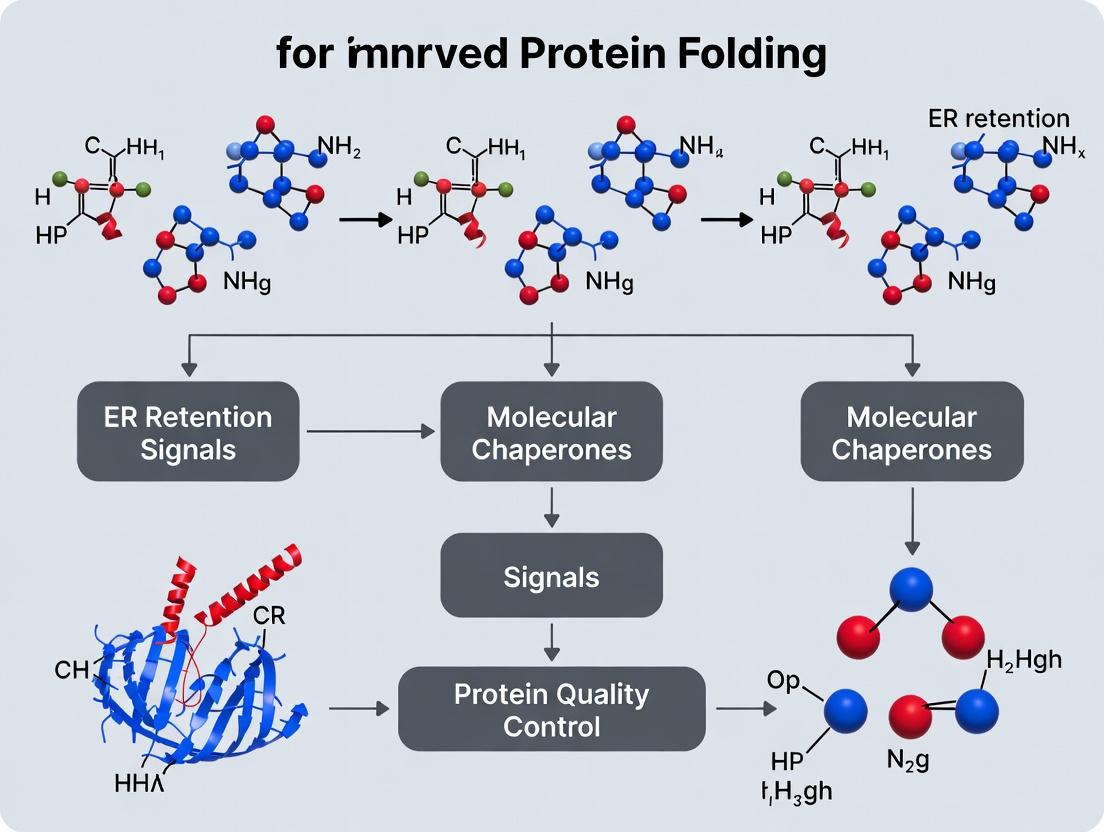
This article provides a comprehensive resource for researchers and biopharmaceutical professionals on Endoplasmic Reticulum (ER) retention strategies to improve recombinant protein folding and yield.
Strategic ER Retention: Enhancing Protein Folding, Quality Control, and Secretory Yield for Therapeutic Development
Abstract
This article provides a comprehensive resource for researchers and biopharmaceutical professionals on Endoplasmic Reticulum (ER) retention strategies to improve recombinant protein folding and yield. We explore the foundational biology of the ER as a folding compartment, detailing key retention mechanisms and chaperones. Methodological sections cover genetic, chemical, and cell line engineering approaches to implement ER retention. We address common challenges and optimization techniques for aggregation-prone proteins, followed by validation methods and comparative analyses of different strategies. The synthesis offers actionable insights for optimizing protein production pipelines and informs novel therapeutic strategies for protein misfolding diseases.
The ER as a Folding Hub: Understanding Retention Mechanisms and Chaperone Networks
The Role of the ER Lumen in Protein Folding, Modification, and Quality Control
Within the broader thesis of ER retention strategies for improved protein folding research, the ER lumen serves as a specialized compartment essential for the maturation of secretory and membrane proteins. Its unique oxidizing environment, high calcium concentration, and enrichment of chaperones and modifying enzymes create a factory for protein processing. Efficient retention of target proteins within the ER, via genetic (e.g., KDEL/HDEL tags) or pharmacological (e.g., proteostasis regulator) strategies, allows for detailed study of folding intermediates, quality control checkpoints, and the impact of disease-associated mutations. These approaches are critical for developing therapies for conformational diseases like cystic fibrosis, alpha-1-antitrypsin deficiency, and neurodegenerative disorders, where enhancing ER folding capacity and quality control can increase the functional yield of mutant proteins.
Key Processes & Quantitative Data
Table 1: Key Protein Folding and Modification Factors in the ER Lumen
| Factor/Process | Representative Components | Key Function | Quantitative Metrics (Typical/Reported) |
|---|---|---|---|
| Chaperones | BiP (GRP78), GRP94, Calnexin, Calreticulin | Prevent aggregation, promote folding, regulate UPR. | BiP binds ATP with Kd ~1-15 µM; Cellular concentration: ~1% of total ER protein. |
| Oxidoreductases | Protein Disulfide Isomerase (PDI), ERp57 | Catalyze disulfide bond formation/isomerization. | PDI oxidation rate constant (kcat) ~0.1 min⁻¹; [PDI] in ER: ~0.8 mM. |
| N-glycosylation | Oligosaccharyltransferase (OST) complex | Transfers preformed glycan (Glc₃Man₉GlcNAc₂) to Asn-X-Ser/Thr. | OST Km for peptide substrates: ~5-50 µM; Efficiency varies by sequon. |
| Quality Control | UGGT, Mannosidases (ERManI, EDEMs) | Recognize misfolded proteins via glycan trimming. | EDEM1 transcription can be upregulated 10-20 fold during ER stress. |
| Calcium Levels | Ca²⁺ ions | Essential cofactor for chaperones (e.g., calreticulin), signal transduction. | ER lumen concentration: ~1-3 mM; Cytosol: ~100 nM. |
Table 2: ER Retention Strategies for Research
| Strategy | Mechanism | Application in Research | Key Efficiency/Data |
|---|---|---|---|
| KDEL/HDEL Tag | Binds to KDEL receptors, retrieves from cis-Golgi. | Retain secreted proteins (e.g., antibodies, enzymes) in ER for folding studies. | Retrieval efficiency >95% for strong ligands; can alter kinetics of secretion. |
| Pharmacological Chaperones | Bind and stabilize specific protein conformations. | Increase functional yield of disease mutants (e.g., CFTR ΔF508). | Can improve maturation efficiency 2-5 fold depending on compound and mutant. |
| Proteostasis Regulators | Modulate UPR, increase chaperone expression. | Enhance global ER folding capacity and reduce stress. | 4-PBA (2 mM) can reduce BiP level by 40% in stressed cells. |
| Temperature Shift (27°C) | Slows kinetics, may improve folding efficiency. | Used for "rescue" of temperature-sensitive mutants. | Can improve CFTR ΔF508 plasma membrane localization 3-10 fold. |
Experimental Protocols
Protocol 1: Assessing ER Retention and Folding Efficiency Using a KDEL-Tagged Reporter
Objective: To evaluate the folding and modification of a protein of interest retained in the ER lumen. Materials: Expression vector with KDEL/HDEL tag, HEK293T cells, transfection reagent, Cycloheximide, SDS-PAGE/WB equipment, Endoglycosidase H (Endo H), PNGase F, anti-target and anti-KDEL receptor antibodies. Procedure:
- Clone & Transfect: Clone your gene of interest (GOI) with a C-terminal KDEL/HDEL tag (e.g., SEKDEL) into an appropriate mammalian expression vector. Transfect HEK293T cells using standard protocols.
- Pulse-Chase Analysis: 24-48h post-transfection, starve cells in methionine/cysteine-free media for 30 min. Pulse with ⁵⁵S-Met/Cys labeling media for 10-20 min.
- Chase: Replace media with complete media containing excess unlabeled Met/Cys. Add cycloheximide (100 µg/mL) to halt new synthesis. Harvest cells at chase timepoints (e.g., 0, 30, 60, 120 min).
- Immunoprecipitation: Lyse cells in non-denaturing IP buffer. Immunoprecipitate the KDEL-tagged protein using a specific antibody or tag antibody.
- Glycosidase Analysis: Split IP samples. Treat one with Endo H (cleaves high-mannose ER-type glycans), one with PNGase F (removes all N-glycans), and one with buffer only. Analyze by SDS-PAGE and autoradiography.
- Interpretation: Persistent Endo H sensitivity indicates ER retention. Acquisition of Endo H resistance indicates escape from ER, suggesting retrieval is incomplete. The rate of folding can be inferred from changes in electrophoretic mobility over time.
Protocol 2: Monitoring ER Lumen Redox State Using roGFP-based Sensors
Objective: To quantitatively measure the glutathione-dependent redox potential (Eₕ) in the ER lumen in response to folding stress or retention strategies. Materials: Plasmid encoding ER-targeted roGFP (e.g., roGFP-iE-ER), live-cell imaging setup (confocal microscope with 405nm and 488nm lasers), DTT (reducing control), H₂O₂ or diamide (oxidizing control). Procedure:
- Sensor Expression: Transfect cells with the ER-roGFP construct. The sensor contains an ER signal peptide and KDEL retrieval sequence.
- Calibration: 24h later, perform a two-point calibration. Treat cells sequentially: a) 10 mM DTT (fully reduced, Rmin), b) 5 mM H₂O₂ or 2 mM diamide (fully oxidized, Rmax). Image at both excitation wavelengths (405nm and 488nm) with emission ~510nm.
- Experimental Measurement: Image experimental cells (e.g., expressing a misfolded ER-retained protein vs. control) under the same conditions.
- Data Analysis: Calculate the fluorescence ratio (405nm/488nm excitation). Normalize the experimental ratio (R) to the calibrated Rmin and Rmax: Oxidation Degree = (R - Rmin) / (Rmax - Rmin). Calculate Eₕ using the Nernst equation specific for roGFP.
- Interpretation: A more oxidized shift indicates ER stress or increased oxidative protein folding load. Effective pharmacologic chaperones may normalize a stress-induced over-oxidation.
Diagrams
The Scientist's Toolkit
Table 3: Essential Research Reagents for ER Lumen Folding Studies
| Reagent/Solution | Primary Function | Key Application/Note |
|---|---|---|
| Tunicamycin | Inhibits N-linked glycosylation (blocks GlcNAc phosphotransferase). | Induces ER stress; negative control for glycosylation-dependent folding/QC. |
| Dithiothreitol (DTT) | Reducing agent; disrupts disulfide bonds. | Induces ER stress by perturbing the oxidative folding environment. |
| Thapsigargin | Sarco/ER Ca²⁺ ATPase (SERCA) inhibitor; depletes ER Ca²⁺ stores. | Potent inducer of ER stress/UPR; studies on calcium-dependent chaperones. |
| 4-Phenylbutyrate (4-PBA) | Chemical chaperone, proteostasis regulator. | Used to mitigate ER stress and improve folding of mutant proteins in research. |
| MG-132 / Bortezomib | Proteasome inhibitors. | Blocks ERAD; allows accumulation of misfolded ER substrates for study. |
| Kifunensine | Class I α-mannosidase inhibitor. | Blocks ERAD lectin pathway; studies on mannose-timer based QC. |
| Endo H & PNGase F | Glycosidases for N-glycan analysis. | Distinguish ER (high-mannose, Endo H-sensitive) from Golgi-modified glycans. |
| ER-Targeted roGFP (Grx1-roGFP2-iE-ER) | Genetically encoded redox sensor. | Live-cell measurement of ER lumen glutathione redox potential (Eₕ). |
| Anti-KDEL Antibody | Detects ER resident proteins (BiP, GRP94, PDI). | Western blot/IF marker for ER content and stress (upregulation). |
Within the endoplasmic reticulum (ER), efficient retention of soluble resident proteins is critical for maintaining its unique luminal environment, which is essential for protein folding, quality control, and calcium storage. This function is primarily mediated by a well-conserved retrieval system centered on C-terminal tetrapeptide signals: KDEL, HDEL, and RDEL. These motifs are recognized by the KDEL receptor (KDELR), a seven-transmembrane domain protein that shuttles between the ER and the Golgi apparatus to capture escaped ER-resident proteins and return them via COPI-coated vesicles. This article, framed within a broader thesis on ER retention strategies for improved protein folding research, details the molecular mechanisms, comparative efficacy, and experimental protocols for studying these fundamental signals.
The ER lumen houses chaperones (e.g., BiP/GRP78), folding enzymes (e.g., PDI), and calcium-binding proteins critical for proteostasis. To prevent their secretion, these proteins contain specific retrieval signals. The KDEL receptor (KDELR in humans; Erd2p in yeast) operates in the cis-Golgi and the ER-Golgi Intermediate Compartment (ERGIC). Its binding is pH-sensitive, with high affinity in the slightly acidic Golgi lumen and low affinity in the neutral ER, facilitating ligand release.
Motif Comparison & Quantitative Binding Data
The canonical signals are not equivalent in their binding affinity or species prevalence. The following table summarizes key quantitative and comparative data.
Table 1: Comparative Analysis of KDEL, HDEL, and RDEL Motifs
| Motif | Primary Species Prevalence | Apparent Kd to Human KDELR1 (nM)* | Common Example Proteins | Retrieval Efficiency (Relative to KDEL) |
|---|---|---|---|---|
| KDEL | Mammals, Higher Plants | ~50-100 | Protein Disulfide Isomerase (PDI), BiP/GRP78 | 1.0 (Reference) |
| HDEL | Yeast (S. cerevisiae), Trypanosomes | ~20-50 (Yeast Erd2p) | Kar2p (Yeast BiP), Pdi1p | ~1.2-1.5 (Higher in yeast system) |
| RDEL | Some Plants, Occurs in Mammals | ~200-400 | Calreticulin (some isoforms) | ~0.4-0.6 |
Note: Affinity values are approximate and depend on experimental conditions (e.g., pH, receptor subtype). Mammalian KDELR1 shows highest affinity for KDEL, while yeast Erd2p prefers HDEL.
Table 2: Human KDEL Receptor Subtypes Characteristics
| Receptor Subtype | Gene | Chromosome Location | pH Sensitivity | Ligand Preference | Tissue Expression |
|---|---|---|---|---|---|
| KDELR1 | KDELR1 | 19q13.3 | High (Binds at pH ~5.5-6.0) | KDEL > RDEL > HDEL | Ubiquitous |
| KDELR2 | KDELR2 | 7p22.1 | Moderate | Broad (KDEL, RDEL) | Ubiquitous |
| KDELR3 | KDELR3 | 22q13.1 | Lower | Broad | Restricted (e.g., ovary, testis) |
Core Signaling Pathway & Retrieval Cycle
Diagram Title: KDEL Receptor Retrieval Cycle from Golgi to ER
Experimental Protocols
Protocol 4.1: Assessing Motif-Dependent Retrieval Efficiency via Live-Cell Imaging
Objective: To quantify the retrieval efficiency of KDEL, HDEL, and RDEL motifs using a fluorescent reporter. Application: Screening motif strength for engineered protein retention.
Materials & Workflow:
- Construct Generation: Clone sequences encoding EGFP fused to a secretion signal peptide (e.g., from IL-2) and C-terminal KDEL, HDEL, or RDEL (or control) into a mammalian expression vector (e.g., pcDNA3.1).
- Cell Transfection: Transfect HeLa or COS-7 cells using a standard method (e.g., lipofectamine 3000).
- Live-Cell Imaging: At 24h post-transfection, image cells using a confocal microscope. Co-stain the Golgi apparatus with a live-cell dye (e.g., BODIPY TR Ceramide).
- Quantitative Analysis:
- Measure fluorescence intensity of EGFP in the ER (perinuclear region) vs. the Golgi vs. the entire cell.
- Calculate a Retention Index (RI) = (ER Fluorescence Intensity) / (Total Cellular Fluorescence Intensity).
- Compare RI across motifs. A higher RI indicates more efficient retention/retrieval.
Diagram Title: Workflow for Live-Cell Imaging of ER Retrieval Efficiency
Protocol 4.2: Co-Immunoprecipitation (Co-IP) for KDEL Receptor-Ligand Interaction
Objective: To validate physical interaction between KDELR and a motif-bearing protein and assess pH dependency. Application: Confirming direct binding and characterizing receptor-ligand pairs.
Detailed Methodology:
- Sample Preparation: Co-express FLAG-tagged KDELR1 and HA-tagged ligand (e.g., BiP-KDEL variant) in HEK293T cells for 48h.
- Cell Lysis under Different pH Conditions:
- Prepare two lysis buffers (IP Buffer: 50mM Tris, 150mM NaCl, 1% Triton X-100) adjusted to pH 7.4 (ER-simulating) and pH 6.0 (Golgi-simulating).
- Lyse cell pools in each buffer separately for 30 min on ice.
- Immunoprecipitation: Incubate cleared lysates with anti-FLAG M2 affinity gel for 2h at 4°C.
- Washing & Elution: Wash beads 5x with respective pH-adjusted lysis buffer. Elute proteins with 2x Laemmli buffer.
- Detection: Analyze eluates and inputs by SDS-PAGE and western blotting using anti-HA (ligand) and anti-FLAG (receptor) antibodies. Expected Outcome: Stronger co-IP signal at pH 6.0 versus pH 7.4, demonstrating pH-sensitive interaction.
The Scientist's Toolkit: Research Reagent Solutions
Table 3: Essential Reagents for Studying ER Retention Signals
| Reagent / Material | Function / Application | Example Product / Catalog Number (Representative) |
|---|---|---|
| Expression Vectors | For cloning and expressing motif-tagged reporter proteins (e.g., EGFP, secreted alkaline phosphatase) in mammalian, yeast, or plant systems. | pcDNA3.1(+), pEGFP-N1, pPICZα (for yeast). |
| KDELR Antibodies | Detection and immunofluorescence of endogenous or tagged KDEL receptors. Key for localization and Co-IP. | Anti-KDELR1 antibody (e.g., Proteintech 16116-1-AP), Anti-FLAG M2 (for tagged receptors). |
| ER & Golgi Markers | Compartment co-staining to validate localization of motif-tagged proteins. | ER: Anti-PDI, ER-Tracker Red dye. Golgi: Anti-GM130, BODIPY TR Ceramide. |
| pH-Sensing Dyes | To confirm the acidic pH of the Golgi compartment in live-cell assays. | LysoSensor Yellow/Blue, pHrodo dyes. |
| Protease Inhibitors | Essential for Co-IP and lysate preparation to prevent degradation of receptors/ligands. | Complete EDTA-free Protease Inhibitor Cocktail (Roche). |
| COPI Transport Inhibitor | To block retrograde transport and cause accumulation of KDEL ligands in the Golgi (negative control). | Brefeldin A (BFA). |
| Site-Directed Mutagenesis Kit | For generating point mutations in retrieval motifs (e.g., KDEL to KDEA) or in the KDELR binding pocket. | Q5 Site-Directed Mutagenesis Kit (NEB). |
The KDEL, HDEL, and RDEL motifs are the cornerstone of soluble protein retention in the ER, with variations in sequence and receptor affinity fine-tuning the system across species. Understanding their precise mechanism is fundamental for research aimed at modulating ER proteostasis, enhancing recombinant protein yields in bioreactors, and developing therapies for diseases of protein misfolding. The protocols and tools outlined here provide a foundation for empirical investigation within this critical cellular pathway.
Within the context of ER retention strategies for improved recombinant protein folding and yield, the chaperones BiP, calnexin, calreticulin, and protein disulfide isomerases (PDIs) are critical targets. Manipulating their expression or function can create a favorable folding environment, delay exit of folding intermediates, and reduce aggregation. This is paramount in biopharmaceutical production for diseases like cancer, diabetes, and genetic disorders where protein misfolding is a common pathomechanism.
BiP (Binding Immunoglobulin Protein/GRP78): The central ATP-dependent Hsp70 chaperone of the ER lumen. It binds hydrophobic patches of nascent chains, prevents aggregation, and is a master regulator of the Unfolded Protein Response (UPR). Overexpression of BiP is a common strategy to increase ER folding capacity and cell viability under recombinant protein stress.
Calnexin (CNX) & Calreticulin (CRT): These lectin chaperones operate within the Calnexin/Calreticulin Cycle, associating with monoglucosylated N-glycans on folding glycoproteins. Calnexin is a transmembrane protein, while calreticulin is soluble. They recruit PDIs and other foldases, providing a quality control checkpoint before ER exit.
Protein Disulfide Isomerases (PDIs): A family of oxidoreductases catalyzing the formation, reduction, and isomerization of disulfide bonds—a rate-limiting step for many therapeutics like antibodies and cytokines. The primary ER-resident member is PDIA1, but other isoforms (e.g., ERp57, ERp72) play specific roles, often partnering with CNX/CRT.
Table 1: Key Properties and Manipulation Strategies of ER Chaperones
| Chaperone | Primary Function | ER Retention Signal | Key Binding Partners | Strategy for Improved Folding |
|---|---|---|---|---|
| BiP (GRP78) | Polypeptide binding, ATP hydrolysis, UPR regulation | KDEL (Lys-Asp-Glu-Leu) | Co-chaperones (ERdj), Substrates, UPR sensors | Overexpression, Co-expression with ERdj partners |
| Calnexin (CNX) | Lectin binding, Glycoprotein folding | Cytosolic tail & transmembrane domain | Monoglucosylated glycans, ERp57, Substrates | Co-expression with glucosidases/transferase, Modulate cycle activity |
| Calreticulin (CRT) | Lectin binding, Glycoprotein folding, Ca²⁺ buffering | KDEL | Monoglucosylated glycans, ERp57, Substrates | Overexpression to enhance soluble glycoprotein folding |
| PDIA1 | Disulfide bond formation/isomerization | KDEL (most isoforms) | Substrates, Ero1α, Reduced glutathione | Overexpression, Medium supplementation with redox agents (Cys/Cystine) |
Table 2: Quantitative Impact of Chaperone Modulation on Recombinant Protein Titer
| Experimental Model (Cell Line) | Target Protein | Chaperone Manipulation | Reported Fold-Change in Titer/Secretion | Key Mechanism |
|---|---|---|---|---|
| CHO-DG44 | IgG1 Antibody | Co-expression of BiP & Protein Disulfide Isomerase (PDI) | ~2.5-fold increase | Enhanced polypeptide folding & SS bond formation |
| HEK293 | EPO | Knockdown of ERp57 (PDI family) | ~40% decrease | Impaired disulfide isomerization in calnexin cycle |
| Pichia pastoris | Human Serum Albumin | Overexpression of Calnexin homolog (Cnxl p) | ~3.1-fold increase | Improved ER retention & folding of glycoprotein |
| Sf9 Insect Cells | SARS-CoV-2 RBD | Co-expression of Calreticulin | ~1.8-fold increase | Increased glycoprotein folding & solubility |
Detailed Experimental Protocols
Protocol 1: Co-Immunoprecipitation (Co-IP) to Assess Chaperone-Substrate Interaction in the ER Objective: Validate physical interaction between a recombinant target protein (e.g., a nascent antibody light chain) and specific ER chaperones (e.g., BiP or PDI).
- Transfection & Metabolic Labeling: Transfect HEK293T cells with plasmid encoding your target protein. 24h post-transfection, starve cells in Cys/Met-free medium for 30 min, then pulse-label with ¹⁵⁵S|Cys/Met for 10-15 min.
- Chase & Lysis: Chase with complete medium for varying times (0, 30, 60 min) to monitor folding progression. Lyse cells in non-denaturing IP buffer (e.g., 1% Triton X-100, 150mM NaCl, 50mM Tris pH 7.4, plus protease inhibitors).
- Immunoprecipitation: Pre-clear lysate. Incubate with antibody against your target protein (or a tag) coupled to Protein A/G beads overnight at 4°C.
- Washing & Elution: Wash beads stringently 4-5 times with IP buffer. Elute bound proteins in 2X Laemmli sample buffer.
- Analysis: Resolve by SDS-PAGE. For total interaction analysis, immunoblot for chaperones (anti-BiP, anti-PDI). For pulse-chase analysis, dry gel and expose to a phosphorimager to visualize radiolabeled target and co-precipitating chaperones.
Protocol 2: Monitoring ER Redox State & Disulfide Bond Formation via Alkylating Agent Shift Assay Objective: Assess the oxidative folding efficiency of a recombinant protein by measuring its free thiol status.
- Cell Lysis with Alkylation: Harvest cells expressing your target. Lyse directly in Buffer A (100mM Tris pH 7.5, 1% SDS, 10mM N-ethylmaleimide (NEM, alkylates free thiols)) OR Buffer B (same, with 10mM iodoacetamide (IAM) instead of NEM). Vortex immediately.
- Control Preparation: Prepare a parallel sample lysed in Buffer A, then post-treated with DTT (reduce all disulfides) followed by excess IAM (to alkylate newly freed thiols).
- Immunoprecipitation: Dilute lysate 10-fold in non-denaturing IP buffer to dilute SDS. Immunoprecipitate target protein as in Protocol 1.
- Gel Electrophoresis: Run non-reducing SDS-PAGE (do not add β-mercaptoethanol to sample buffer).
- Interpretation: Compare gel mobility. Protein with more/faster disulfides (more oxidized) runs faster. NEM/IAM-treated samples (blocked free thiols) show baseline oxidized state. DTT-reduced control runs slowest. A "smear" indicates folding intermediates.
Visualizations
Title: Calnexin/Calreticulin Folding Cycle
Title: BiP as UPR Master Regulator
The Scientist's Toolkit: Research Reagent Solutions
| Reagent / Material | Function in ER Folding Research |
|---|---|
| Tunicamycin | Inhibits N-linked glycosylation; induces ER stress & UPR; used to disrupt calnexin cycle. |
| Dithiothreitol (DTT) | Reducing agent; induces ER stress by disrupting disulfide bonds; used in folding pulse-chase assays. |
| Brefeldin A (BFA) | Blocks protein transport from ER to Golgi; used to assay ER retention and accumulation of folding intermediates. |
| Cycloheximide | Protein synthesis inhibitor; used in chase-phase of pulse-chase experiments to track folding/processing of existing polypeptides. |
| Kifunensine | Inhibitor of α-mannosidase I; prevents degradation via ERAD; used to study/manipulate glycoprotein folding fate. |
| Anti-KDEL Antibody | Immunodetection of ER-resident proteins (BiP, PDI, CRT, GRP94) via their common retention signal. |
| PNGase F | Enzyme that removes N-linked glycans; used to confirm glycosylation status and its impact on mobility/folding. |
| Endo H | Enzyme that removes high-mannose (ER-type) but not complex glycans; used to monitor ER exit & Golgi processing. |
| Membrane-permeant Alkylators (NEM, IAM) | Used in redox state assays to trap in vivo thiol status during cell lysis (see Protocol 2). |
| ER-Tracker Dyes | Live-cell fluorescent dyes (e.g., ER-Tracker Red) for visualizing ER morphology and stress. |
The accumulation of unfolded or misfolded proteins in the endoplasmic reticulum (ER) disrupts homeostasis, triggering the Unfolded Protein Response (UPR). This integrated signaling network aims to restore ER folding capacity by attenuating protein translation, upregulating chaperone expression, and enhancing ER-associated degradation (ERAD). Within the thesis context of ER retention strategies for improved protein folding research, modulating the UPR offers a critical lever. By understanding and experimentally manipulating UPR sensors, researchers can either enhance the folding environment for recombinant protein production or, conversely, induce apoptosis in cancer cells where chronic UPR is a vulnerability. The following data, protocols, and tools provide a framework for such investigations.
Table 1: Core UPR Signaling Branches, Sensors, and Key Outputs
| UPR Arm | ER Sensor | Transducer | Primary Action | Key Downstream Targets | Functional Outcome |
|---|---|---|---|---|---|
| IRE1α | IRE1α | XBP1 mRNA | Unconventional splicing | XBP1s, EDEM1, P58^IPK | Chaperone & ERAD upregulation |
| PERK | PERK | eIF2α | Phosphorylation | ATF4, CHOP, GADD34 | Translational attenuation, antioxidant response |
| ATF6 | ATF6 | ATF6 (p90) | Golgi-mediated cleavage | ATF6f (p50), XBP1, CHOP | ER chaperone (BiP/GRP78) transcription |
Table 2: Common ER Stress Inducers and Their Mechanisms
| Compound | Primary Mechanism | Typical Working Concentration (in vitro) | Time to Peak UPR Activation |
|---|---|---|---|
| Tunicamycin | N-glycosylation inhibitor | 1–5 µg/mL | 6–12 hours |
| Thapsigargin | SERCA pump inhibitor (disrupts Ca²⁺) | 0.1–1 µM | 2–8 hours |
| Dithiothreitol (DTT) | Reduces disulfide bonds | 1–5 mM | 30 min–2 hours |
| Brefeldin A | Disrupts ER-Golgi transport | 1–10 µM | 2–6 hours |
Experimental Protocol 1: Monitoring XBP1 Splicing via RT-PCR
Objective: To detect activation of the IRE1α arm by analyzing the splicing status of XBP1 mRNA.
Materials:
- Cultured mammalian cells (e.g., HEK293, HeLa)
- ER stress inducer (e.g., Thapsigargin, 1 µM)
- TRIzol Reagent
- Chloroform, Isopropanol, 75% Ethanol
- Reverse Transcription System
- PCR Master Mix
- Specific primers: XBP1 Forward: 5'-AAACAGAGTAGCAGCTCAGACTGC-3', XBP1 Reverse: 5'-TCCTTCTGGGTAGACCTCTGGGAG-3'
- Agarose gel electrophoresis equipment
Procedure:
- Induction: Treat cells with ER stressor or vehicle control for a predetermined time (e.g., 6h for Thapsigargin).
- RNA Extraction: Lyse cells in TRIzol. Add chloroform, centrifuge. Transfer aqueous phase, precipitate RNA with isopropanol, wash with 75% ethanol, and resuspend in RNase-free water.
- cDNA Synthesis: Use 1 µg total RNA for reverse transcription with random hexamers.
- PCR Amplification: Amplify XBP1 cDNA using the primers above. Cycle conditions: 94°C 3 min; 35 cycles of (94°C 30s, 60°C 30s, 72°C 30s); 72°C 5 min.
- Analysis: Run PCR products on a 2.5-3% agarose gel. Un-spliced XBP1u yields a 289 bp product; spliced XBP1s yields a 263 bp product. A shift indicates IRE1α activation.
Experimental Protocol 2: Assessing PERK Activation via eIF2α Phosphorylation (Western Blot)
Objective: To quantify PERK pathway activation by measuring phosphorylated eIF2α levels.
Materials:
- Cell lysates in RIPA buffer with phosphatase/protease inhibitors
- Primary antibodies: anti-phospho-eIF2α (Ser51), anti-total eIF2α
- HRP-conjugated secondary antibodies
- SDS-PAGE and Western blotting apparatus
- Chemiluminescent substrate
Procedure:
- Sample Preparation: Harvest control and stressed cells, lyse in RIPA buffer. Determine protein concentration.
- Electrophoresis: Load 20-30 µg protein per lane on a 10% SDS-PAGE gel. Run at constant voltage.
- Transfer: Transfer proteins to a PVDF membrane.
- Immunoblotting: Block membrane with 5% BSA in TBST for 1h. Incubate with phospho-specific primary antibody (1:1000) overnight at 4°C. Wash, incubate with HRP-secondary (1:5000) for 1h. Develop. Strip membrane and re-probe for total eIF2α as loading control.
- Quantification: Use densitometry software. The ratio p-eIF2α / total eIF2α indicates PERK pathway activity.
The Scientist's Toolkit: Research Reagent Solutions
| Reagent / Material | Function / Application | Example Product (Supplier) |
|---|---|---|
| ER-Tracker Dyes | Live-cell staining of the ER for imaging under stress conditions. | ER-Tracker Red (BODIPY TR Glibenclamide), Thermo Fisher |
| BiP/GRP78 Antibody | Key readout for UPR activation & ER chaperone levels via WB/IHC. | Anti-GRP78 Antibody (C50B12), Cell Signaling Tech |
| ISRIB (Integrated Stress Response Inhibitor) | Reverses eIF2α phosphorylation effects; blocks PERK/ATF4 downstream signaling. | ISRIB, trans-, Tocris Bioscience |
| 4μ8c (IRE1α RNase Inhibitor) | Specifically inhibits IRE1α's RNase activity, blocking XBP1 splicing. | 4μ8c, Sigma-Aldrich |
| Tunicamycin | Classic, well-characterized ER stress inducer. Inhibits N-linked glycosylation. | Tunicamycin, Streptomyces sp., MilliporeSigma |
| Proteasome Inhibitor (MG132) | Used in conjunction with stressors to differentiate ERAD flux; blocks degradation. | MG132 (Carbobenzoxy-Leu-Leu-leucinal), Calbiochem |
| ATF6 Reporter Plasmid | Luciferase-based construct with ER stress response elements to monitor ATF6 activity. | p5xATF6-GL3, Addgene |
Diagram 1: Core UPR Signaling Pathway
Diagram 2: Experimental Workflow for UPR Analysis
Application Notes
The endoplasmic reticulum (ER) employs two primary, competing quality control (QC) strategies to manage its proteome: ER-associated degradation (ERAD) and pro-folding retention. The equilibrium between these pathways determines the fate of nascent polypeptides and is a critical focus for research aimed at rescuing mutant or misfolded proteins implicated in disease. Within the thesis on ER retention strategies, understanding and experimentally manipulating this balance is paramount for developing therapeutics for conditions like cystic fibrosis (CFTR ΔF508), alpha-1 antitrypsin deficiency, and neurodegenerative diseases.
ERAD identifies terminally misfolded or unassembled proteins, retro-translocates them to the cytosol, ubiquitinates them, and targets them for proteasomal degradation. Key components include E3 ubiquitin ligases (e.g., HRD1, gp78), the p97/VCP ATPase, and the proteasome.
Pro-folding retention involves a network of chaperones (e.g., BiP, calnexin/calreticulin cycle) and foldases that actively promote folding and prevent premature exit or degradation. This system provides multiple folding attempts, effectively "retaining" clients in a folding-competent state.
Recent quantitative studies highlight the dynamic nature of this balance. For instance, modulation of ER chaperone levels or inhibition of specific E3 ligases can shift the equilibrium, significantly increasing the functional yield of disease-relevant proteins.
Table 1: Key Quantitative Parameters in ERAD vs. Pro-Folding Balance
| Parameter / Molecule | Typical Measurement/Effect | Experimental System | Impact on Folding Yield |
|---|---|---|---|
| BiP/GRP78 Overexpression | 2- to 5-fold increase in secretion of mutant protein (e.g., A1AT Z variant). | HEK293 cell line. | Increases pro-folding retention, reduces ERAD. |
| Erastin (GPX4 inhibitor) | Induces ER stress, upregulates chaperones ~3-fold. Can increase CFTR ΔF508 maturation by ~40%. | Bronchial epithelial cells (CFBE). | Shifts balance toward folding via UPR activation. |
| HRD1 Inhibition (siRNA) | Increases steady-state levels of ERAD substrates (e.g., null secretory proteins) by 60-80%. | HeLa cells. | Blocks major ERAD-L/M branch, increases retention. |
| p97/VCP Inhibition (CB-5083) | Stabilizes polyubiquitinated ERAD substrates >90% within 2 hours. | Various cancer cell lines. | Halts retrotranslocation, leading to substrate accumulation. |
| Calnexin Cycle Inhibition (Castanospermine) | Reduces glycoprotein secretion by 50-70%, can increase ERAD targeting. | HepG2 cells. | Disrupts pro-folding pathway for glycoproteins. |
| Pharmacological Chaperones (e.g., 4-PBA for CFTR) | Can improve CFTR ΔF508 plasma membrane localization 2- to 3-fold. | Primary human bronchial epithelial cells. | Stabilizes native fold, evades QC. |
Experimental Protocols
Protocol 1: Modulating the Balance via Chaperone Overexpression
Objective: To enhance pro-folding retention of a client protein (e.g., A1AT Z variant) by overexpressing the ER chaperone BiP.
Materials:
- Expression plasmid for HA/FLAG-tagged client protein.
- BiP/GRP78 overexpression plasmid.
- Control empty vector.
- HEK293T cells.
- Transfection reagent (e.g., PEI).
- Cycloheximide.
- Lysis Buffer (RIPA with protease inhibitors).
- Antibodies: Anti-client, Anti-BiP, Anti-GAPDH.
Procedure:
- Seed HEK293T cells in 6-well plates.
- Co-transfect cells with client plasmid + BiP plasmid or client plasmid + empty vector.
- 24h post-transfection, treat cells with 100 µg/mL cycloheximide to halt new protein synthesis.
- Harvest cells at time points (0, 1, 2, 4, 8h) post-cycloheximide treatment.
- Lyse cells, quantify protein, and perform SDS-PAGE and Western blotting.
- Probe for client protein, BiP (to confirm overexpression), and GAPDH (loading control).
- Quantify band intensity. Increased half-life of the client protein with BiP co-expression indicates enhanced retention/stabilization against ERAD.
Protocol 2: Assessing ERAD Flux via p97/VCP Inhibition
Objective: To measure the basal ERAD rate of a substrate by inhibiting its retrotranslocation.
Materials:
- Cell line expressing an ERAD substrate (e.g., TCRα-GFP).
- p97/VCP inhibitor (e.g., CB-5083, 1µM working conc.).
- DMSO (vehicle control).
- Proteasome inhibitor (e.g., MG-132, 10µM).
- Cycloheximide.
- Flow cytometer or fluorescence plate reader.
Procedure:
- Seed cells in appropriate plates.
- Pre-treat cells with DMSO or CB-5083 for 30 minutes.
- Add cycloheximide to all wells to arrest translation.
- At defined intervals (0, 30, 60, 90, 120 min), harvest cells.
- Analyze GFP fluorescence intensity by flow cytometry. Alternatively, lyse cells for Western blot analysis.
- Control: Include a set of cells treated with MG-132 alone. The stabilization by MG-132 + CB-5083 should not be additive if both block the same pathway sequentially.
- The decay rate of fluorescence in DMSO vs. CB-5083 treated cells reveals the portion of substrate flux through ERAD. Slower decay with CB-5083 indicates active ERAD of the substrate.
Diagrams
Title: The ER Quality Control Decision Pathway
Title: Core ERAD Retrotranslocation Machinery
The Scientist's Toolkit: Research Reagent Solutions
Table 2: Essential Reagents for Studying ERAD & Pro-Folding Balance
| Reagent / Material | Category | Primary Function in Research | Example Product/Catalog # |
|---|---|---|---|
| CB-5083 | Small Molecule Inhibitor | Potent, selective ATP-competitive inhibitor of p97/VCP. Blocks retrotranslocation, allowing ERAD substrate accumulation for study. | Selleckchem S8101 |
| MG-132 / Bortezomib | Proteasome Inhibitor | Inhibits the 26S proteasome, preventing degradation of ubiquitinated ERAD substrates, causing their accumulation. | Sigma-Aldrich C2211 / S1013 |
| Kifunensine / Castanospermine | Glycosidase Inhibitor | Disrupts the calnexin/calreticulin cycle. Kifunensine inhibits mannosidase I, altering glycoprotein QC and ERAD timing. | Tocris 2970 / 0452 |
| HA/FLAG-tagged ERAD Reporters | Molecular Biology | Model ERAD substrates (e.g., CD3δ, TCRα, Null Hong Kong A1AT) for consistent, tag-based detection and pulldown. | Addgene plasmids #20739, #16058 |
| Anti-KDEL / Anti-BiP Antibody | Antibody | Immunodetection of ER resident chaperones (BiP, GRP94) to monitor ER stress and chaperone induction. | Cell Signaling Tech #6488 |
| Erastin | Small Molecule Inducer | Induces ferroptosis and ER stress, leading to UPR activation and chaperone upregulation, useful for probing folding capacity. | Sigma-Aldrich E7781 |
| Tunicamycin | ER Stress Inducer | Inhibits N-linked glycosylation, causing widespread protein misfolding, ER stress, and activating both QC pathways. | Tocris 3516 |
| 4-Phenylbutyric Acid (4-PBA) | Pharmacological Chaperone | Chemical chaperone that reduces ER stress; used clinically to improve folding and trafficking of mutant proteins like CFTR ΔF508. | Sigma-Aldrich SML0309 |
Implementing ER Retention: Genetic Engineering, Pharmacological, and Cellular Tools
Genetic Fusion of ER Retention/Retrieval Signals to Target Proteins
Application Notes
Within the broader thesis on Endoplasmic Reticulum (ER) retention strategies for improved protein folding research, the genetic fusion of ER retention/retrieval signals is a foundational technique. This approach allows researchers to artificially increase the residence time of a protein of interest within the ER lumen, facilitating detailed studies of its folding kinetics, interactions with ER chaperones and foldases, and quality control mechanisms. For drug development, this strategy is pivotal for enhancing the production of correctly folded, complex therapeutic proteins (e.g., antibodies, enzymes) by mitigating premature secretion and aggregation.
The primary signals used are short linear peptide motifs:
- KDEL (Lys-Asp-Glu-Leu) and variants (e.g., HDEL): ER luminal retrieval signals. Recognized by the KDEL receptor (KDELR) in the cis-Golgi, triggering COPI-coated vesicle retrieval back to the ER.
- KKXX (Lys-Lys-X-X) and KXKXXX: Cytosolic C-terminal di-lysine motifs for type I membrane proteins. Directly interact with COPI coats, retaining proteins in the ER or retrieving them from the cis-Golgi.
- RR (Arg-Arg) and RXRR (Arg-X-Arg-Arg): Cytosolic dibasic motifs for some membrane proteins, functioning similarly to KKXX.
Recent studies (2023-2024) highlight quantitative refinements in applying these signals. For instance, systematic tuning of signal strength (e.g., using KDEL vs. KEEL) allows for "leaky" retention, enabling a fraction of properly folded protein to secrete for analysis while retaining misfolded species.
Quantitative Data Summary
Table 1: Comparison of Common ER Retention/Retrieval Signals
| Signal Motif | Typical Location | Apparent Strength (Secretion Inhibition)* | Key Receptor/Effector | Common Application |
|---|---|---|---|---|
| KDEL | C-terminus (luminal) | 90-99% | KDELR1-3 (Golgi) | Soluble ER luminal proteins (e.g., chaperone studies, antibody heavy chains). |
| HDEL | C-terminus (luminal) | 95-99% | KDELR1-3 (Golgi) | Yeast and plant proteins; often stronger in homologous systems. |
| KKXX (e.g., KTKLL) | C-terminus (cytosolic) | 85-98% | COPI coat subunits (α- and β'-COP) | Type I transmembrane protein studies (e.g., receptor folding). |
| RR | Cytosolic tail | 80-95% | COPI coat subunits | Selected membrane proteins (e.g., ERGIC-53). |
| KEEL | C-terminus (luminal) | ~70-85% | KDELR (lower affinity) | Attenuated retention for partial secretion. |
Note: Strength is highly dependent on protein context, expression system, and cell type. Values represent typical ranges reported in mammalian cell studies.
Table 2: Impact of KDEL Fusion on Recombinant Protein Titer and Quality (Exemplary Data)
| Target Protein (System) | Signal | Reported Effect (vs. No Signal) | Reference Year |
|---|---|---|---|
| Single-chain Fv (HEK293) | KDEL | Intracellular Acc.: 3.5-fold ↑; Secretion: 90% ↓; Specific Activity: 2.1-fold ↑ | 2022 |
| α1-Antitrypsin (CHO) | KDEL | Correctly Folded Monomer: 4-fold ↑; Aggregate Secretion: 75% ↓ | 2023 |
| Cas9 (Yeast) | HDEL | ER Pool: >95% retained; Functional Maturation: Enhanced | 2021 |
| VWF (HEK293) | – | (Control: No signal → ~70% intracellular, ~30% constitutive secretion) | – |
Experimental Protocols
Protocol 1: Molecular Cloning for C-Terminal Signal Fusion
Objective: To genetically fuse an ER retention signal (e.g., KDEL) to the target protein. Materials: cDNA of target gene, expression vector (e.g., pcDNA3.1, pTT5), primers, high-fidelity DNA polymerase, restriction enzymes/ligase or Gibson Assembly/Infusion mix, competent E. coli.
Procedure:
- Primer Design: Design reverse primer to remove the native stop codon and append the desired signal sequence (e.g., 5'-...TCAGAAGACGAGCTGTGA-3' for KDEL plus a new stop codon). The forward primer is standard.
- PCR Amplification: Amplify the target gene ORF using high-fidelity polymerase.
- Cloning: Purify PCR product. Use restriction enzyme digestion and ligation or a seamless cloning method (e.g., Gibson Assembly) to insert the fragment into the chosen mammalian expression vector.
- Verification: Transform into competent E. coli, pick colonies, and culture for plasmid DNA miniprep. Verify insert by diagnostic digest and Sanger sequencing across the junction.
Protocol 2: Transient Transfection and Analysis of Retention
Objective: To express the fusion construct and assess ER retention efficiency. Materials: HEK293T or CHO-S cells, transfection reagent (e.g., PEI), serum-free medium, cycloheximide, lysis buffer (RIPA), RIPA buffer + 1% Triton X-100, anti-target and anti-calnexin/PDI antibodies, SDS-PAGE, western blot apparatus.
Procedure:
- Transfection: Seed 1e6 cells/well in a 6-well plate. The next day, transfect with 2 µg of plasmid DNA (fusion or control) using standard PEI or lipofectamine protocol.
- Pulse-Chase & Secretion Assay (48h post-transfection):
- Replace medium with fresh, serum-free medium.
- For "chase," add 100 µg/mL cycloheximide to inhibit new protein synthesis.
- Collect cell culture supernatant at time points (e.g., 0, 1, 2, 4h). Centrifuge to remove debris.
- At final time point, wash cells with PBS, lyse in RIPA buffer on ice for 30 min, and clear lysate by centrifugation.
- Analysis: Concentrate supernatant samples using TCA precipitation or centrifugal concentrators. Analyze equal proportions of cell lysate and concentrated supernatant by SDS-PAGE and western blot. Probe for the target protein and an ER marker (calnexin) as loading control for lysates.
- Quantification: Use densitometry to calculate the percentage of total target protein secreted over time for fusion vs. control constructs.
Protocol 3: Immunofluorescence Microscopy for Localization
Objective: To visually confirm ER localization of the fusion protein. Materials: Transfected cells on coverslips, paraformaldehyde (4%), permeabilization buffer (0.1% Triton X-100), blocking buffer (5% BSA), primary antibodies (anti-target, anti-PDI/Calreticulin), fluorescent secondary antibodies, DAPI, mounting medium, confocal microscope.
Procedure:
- Fixation: 48h post-transfection, wash cells with PBS and fix with 4% PFA for 15 min at RT.
- Permeabilization & Blocking: Permeabilize with 0.1% Triton X-100 in PBS for 10 min. Block with 5% BSA for 1h.
- Staining: Incubate with primary antibodies (diluted in blocking buffer) against the target protein and an ER marker (e.g., PDI) for 1-2h at RT or overnight at 4°C. Wash with PBS. Incubate with appropriate fluorescent secondary antibodies for 1h. Wash and stain nuclei with DAPI.
- Imaging: Mount coverslips and image using a confocal microscope. Analyze colocalization using Pearson's or Manders' coefficients.
Visualizations
Diagram Title: ER Retention & Retrieval Signaling Pathway
Diagram Title: Experimental Workflow for ER Signal Fusion Study
The Scientist's Toolkit: Research Reagent Solutions
Table 3: Essential Materials for ER Retention Signal Studies
| Item | Function/Application | Example Product/Cat. # (Illustrative) |
|---|---|---|
| Mammalian Expression Vectors | Backbone for cloning and high-level transient/stable expression. | pcDNA3.4-TOPO, pTT5, pLEX |
| Seamless Cloning Kit | For efficient, scarless insertion of signal sequences. | Gibson Assembly Master Mix, In-Fusion Snap Assembly |
| HEK293 or CHO Cells | Preferred mammalian hosts for recombinant protein studies. | Expi293F, FreeStyle CHO-S |
| Polyethylenimine (PEI) | Cost-effective transfection reagent for high-density cultures. | Linear PEI, MW 40,000 (Polysciences) |
| Cycloheximide | Protein synthesis inhibitor for pulse-chase experiments. | CHX (C1988, Sigma-Aldrich) |
| ER Marker Antibodies | Immunoblot/IF controls for ER localization. | Anti-Calnexin, Anti-PDI, Anti-Calreticulin |
| Protease Inhibitor Cocktail | Preserves protein integrity during cell lysis. | cOmplete EDTA-free (Roche) |
| Concentrators (100kDa MWCO) | For concentrating secreted proteins from supernatant. | Amicon Ultra centrifugal filters |
| Confocal Microscope | High-resolution imaging for colocalization analysis. | (Core facility instrument) |
| Image Analysis Software | Quantifies colocalization (Pearson's coefficient). | Fiji/ImageJ, Imaris, Volocity |
Engineering Cell Lines with Enhanced ER Chaperone Expression
Application Notes
Within the broader thesis on ER retention strategies for improved protein folding research, engineering cell lines with elevated levels of Endoplasmic Reticulum (ER) chaperones represents a critical methodology. This approach aims to augment the native protein folding capacity of host cells, thereby increasing the yield and quality of recombinant therapeutic proteins, many of which are prone to misfolding and aggregation. Enhanced expression of key chaperones such as BiP (GRP78), GRP94, calnexin, calreticulin, and protein disulfide isomerase (PDI) can directly mitigate ER stress, reduce the unfolded protein response (UPR)-mediated apoptosis, and improve the secretory flux. This is particularly valuable for the production of complex proteins like monoclonal antibodies, clotting factors, and viral envelope proteins in biomanufacturing. Furthermore, such engineered cell lines serve as refined models for studying protein misfolding diseases, including certain neurodegenerative disorders and cystic fibrosis.
Table 1: Impact of ER Chaperone Overexpression on Recombinant Protein Titers
| Chaperone Overexpressed | Host Cell Line | Target Recombinant Protein | Reported Fold Increase in Titer | Key Reference (Year) |
|---|---|---|---|---|
| BiP (GRP78) | CHO-K1 | IgG1 Monoclonal Antibody | 2.1x | Pybus et al. (2023) |
| Protein Disulfide Isomerase (PDI) | HEK293 | Factor VIII | 1.8x | Hsu et al. (2022) |
| Calnexin | CHO-S | EPO Receptor Fc-Fusion | 2.5x | Becker et al. (2024) |
| Combined BiP & PDI | CHO-DG44 | SARS-CoV-2 Spike Protein | 3.0x | Lee & Chen (2023) |
| Calreticulin | HEK293T | α1-Antitrypsin (Z variant) | 1.5x (with improved secretion) | Marino et al. (2022) |
Table 2: Common ER Chaperones and Their Primary Functions in Protein Folding
| Chaperone | Primary Function | Key Interacting Partners |
|---|---|---|
| BiP/GRP78 | ATP-dependent binding to hydrophobic regions of unfolded polypeptides; Master regulator of UPR. | IRE1α, PERK, ATF6; Substrates |
| GRP94 | Binds specifically to a subset of client proteins (e.g., integrins, toll-like receptors); ATPase activity. | Client proteins; Co-chaperones |
| Calnexin/Calreticulin | Lectin chaperones binding monoglucosylated N-glycans; Promote folding and prevent aggregation. | ERp57 (PDI family); Substrates with glycans |
| Protein Disulfide Isomerase (PDI) | Catalyzes disulfide bond formation, reduction, and isomerization. | Ero1α; Substrates |
Experimental Protocols
Protocol 1: Stable Overexpression of ER Chaperones Using Lentiviral Transduction
This protocol details the generation of a clonal HEK293 or CHO cell line stably overexpressing a specific ER chaperone.
Materials:
- HEK293T or CHO host cells.
- Lentiviral transfer plasmid containing chaperone gene (e.g., HSPA5 for BiP) with an ER retention signal (KDEL/HDEL) and a selectable marker (e.g., puromycin resistance).
- Lentiviral packaging plasmids (psPAX2, pMD2.G).
- Polyethylenimine (PEI) transfection reagent.
- Growth medium (DMEM/F-12 for HEK293, CD CHO for CHO cells) with appropriate serum or supplements.
- Puromycin dihydrochloride.
- Titering reagent (e.g., Lenti-X qRT-PCR Titration Kit).
- Polybrene.
Method:
- Virus Production: Co-transfect HEK293T packaging cells with the transfer plasmid and packaging plasmids (psPAX2, pMD2.G) using PEI in a 1:1:0.5 mass ratio. Replace medium after 6-8 hours.
- Harvest: Collect lentivirus-containing supernatant at 48 and 72 hours post-transfection. Filter through a 0.45 µm PVDF filter, aliquot, and store at -80°C.
- Virus Titer Determination: Serial dilute the virus on target cells in the presence of polybrene (8 µg/mL). After 72 hours, quantify vector copy number via qPCR or assess antibiotic-resistant colonies to calculate TU/mL.
- Transduction: Plate target cells at 50% confluence. Add filtered viral supernatant at an MOI of 5-10 in the presence of polybrene (8 µg/mL). Spinoculate by centrifugation at 800 x g for 30 minutes at 32°C.
- Selection: 48 hours post-transduction, begin selection with puromycin (2-5 µg/mL, concentration must be pre-determined by kill curve). Maintain selection for 7-10 days until all cells in the un-transduced control die.
- Clonal Isolation: Perform limiting dilution to isolate single cell-derived clones in 96-well plates. Expand clones and screen for chaperone expression via western blot and functional assays (see Protocol 2).
Protocol 2: Validation of Chaperone Function via Secretion ELISA and Pulse-Chase Analysis
This protocol validates that enhanced chaperone expression improves folding and secretion of a co-expressed model secretory protein.
Materials:
- Parental and engineered cell lines.
- Plasmid encoding a secreted model protein (e.g., SEAP - Secreted Alkaline Phosphatase).
- Transfection reagent.
- Methionine/Cysteine-free medium.
- [³⁵S]-Methionine/Cysteine EasyTag EXPRESS Protein Labeling Mix.
- Chase medium (complete medium with excess unlabeled methionine/cysteine).
- SEAP detection kit or target-specific ELISA kit.
- Lysis buffer (1% Triton X-100, protease inhibitors in PBS).
- Protein A/G beads.
- SDS-PAGE and western blot apparatus.
Method: Part A: Secretion Assay (ELISA)
- Co-transfect parental and chaperone-overexpressing cell lines with the SEAP (or target protein) expression plasmid.
- At 24, 48, and 72 hours post-transfection, collect cell culture supernatants.
- Clarify supernatants by centrifugation (500 x g, 5 min).
- Perform SEAP activity assay or target-specific ELISA on supernatants according to manufacturer instructions. Normalize data to total cellular protein from parallel wells.
- Compare the kinetics and total amount of secreted protein between cell lines.
Part B: Pulse-Chase Analysis
- Transfect cells with the target protein plasmid. 24 hours later, wash cells twice with warm, methionine/cysteine-free medium.
- Pulse: Incubate cells in labeling medium containing [³⁵S]-Methionine/Cysteine (50-100 µCi/mL) for 15-30 minutes at 37°C.
- Chase: Quickly wash cells and add complete chase medium. Harvest cell lysates and media at chase time points (e.g., 0, 30, 60, 120, 240 min).
- Immunoprecipitation: Pre-clear lysates, then incubate with antibody against the target protein. Capture immune complexes with Protein A/G beads.
- Analyze samples by SDS-PAGE, dry the gel, and expose to a phosphorimager screen. Quantify the band intensities corresponding to the immature (ER-localized) and mature (fully folded, secreted) forms of the protein over time. Enhanced chaperone function should accelerate the conversion of immature to mature form and increase the total percentage of protein secreted.
The Scientist's Toolkit
Table 3: Essential Research Reagents for Engineering ER Chaperone Cell Lines
| Reagent / Material | Function / Purpose | Example Product/Catalog |
|---|---|---|
| Lentiviral Packaging Plasmids (3rd Gen) | Required for production of replication-incompetent lentiviral particles for stable gene delivery. | psPAX2 (packaging), pMD2.G (VSV-G envelope) |
| ER Retention Signal Peptide Constructs | DNA sequences encoding KDEL or HDEL motifs to ensure engineered chaperones are retained in the ER lumen/membrane. | Addgene plasmid #s with KDEL tags |
| Puromycin Dihydrochloride | Selection antibiotic for stable cell line generation following transduction with puromycin-resistance containing vectors. | Thermo Fisher, A1113803 |
| Polybrene (Hexadimethrine Bromide) | A cationic polymer that enhances viral transduction efficiency by neutralizing charge repulsion. | Sigma-Aldrich, H9268 |
| [³⁵S]-Methionine/Cysteine Mix | Radioactive amino acids for metabolic labeling of newly synthesized proteins in pulse-chase experiments. | PerkinElmer, NEG772007MC |
| ER Chaperone-Specific Antibodies | For validation of chaperone overexpression via western blot and immunoprecipitation. | Anti-BiP (C50B12) Rabbit mAb (CST #3177), Anti-Calnexin Antibody (CST #2679) |
| SEAP Reporter Gene System | A quantitative, secreted reporter enzyme to monitor secretory pathway function without cell lysis. | Invitrogen, GeneBLAzer SEAP kits |
| ER Stress Inducers (Positive Controls) | Chemicals like Tunicamycin or Thapsigargin to induce ER stress and upregulate endogenous chaperones for comparison. | Tocris, #3516 (Tunicamycin) |
| Clonally Derived Cell Lines | Verified parental host cells (e.g., CHO-K1, HEK293) for consistent engineering baseline. | ATCC, CHO-K1 (CCL-61) |
Visualizations
Diagram Title: ER Chaperone Upregulation Pathway
Diagram Title: Cell Line Engineering & Validation Workflow
Pharmacological Chaperones and Small Molecule Folding Correctors
Within the broader thesis on ER Retention Strategies for Improved Protein Folding Research, pharmacological chaperones (PCs) and small molecule folding correctors represent a critical therapeutic application. The central hypothesis is that by strategically modulating the Endoplasmic Reticulum (ER) quality control (ERQC) machinery and prolonging the retention of misfolded proteins, these small molecules can promote proper folding, restore function, and alleviate disease pathology. This application note details protocols and strategies for their investigation.
Key Concepts and Mechanisms
Pharmacological Chaperones are typically substrate-competitive inhibitors or binders that stabilize the native conformation of a specific protein, aiding its maturation and escape from ER-associated degradation (ERAD).
Folding Correctors are a broader class that may interact directly with the misfolded protein (like PCs) or indirectly by modulating the proteostasis network (e.g., ER calcium levels, chaperone expression, or ERAD components).
Therapeutic Rationale: These strategies are prominent in diseases of misfolding, such as:
- Gaucher Disease (Glucocerebrosidase)
- Fabry Disease (α-galactosidase A)
- Cystic Fibrosis (CFTR ΔF508 mutant)
- Nephrogenic Diabetes Insipidus (Vasopressin V2 receptor)
- Lysosomal Storage Disorders
Table 1: Representative Pharmacological Chaperones and Correctors in Clinical Development
| Disease/Target | Compound Name | Class/Mechanism | Key Efficacy Metric (In Vitro/Ex Vivo) | Clinical Stage (as of 2024) |
|---|---|---|---|---|
| Cystic Fibrosis (CFTR ΔF508) | Lumacaftor (VX-809) | Corrector (Protein folding & trafficking) | ~15% Wild-Type CFTR function restoration in primary cells | Approved (in combo with Ivacaftor) |
| Cystic Fibrosis (CFTR ΔF508) | Elexacaftor (VX-445) | Next-Gen Corrector | ~50% Wild-Type CFTR function restoration in primary cells | Approved (in Trikafta) |
| Gaucher Disease (Glucocerebrosidase) | Ambroxol | Pharmacological Chaperone | 1.5-2.0 fold increase in enzyme activity in patient fibroblasts | Phase II/Repurposing |
| Fabry Disease (α-Gal A) | Migalastat (Galafold) | Pharmacological Chaperone | 50-70% of amenable mutants show >3-fold increase in lysosomal activity | Approved |
| Nephrogenic Diabetes Insipidus (AVPR2) | Tolvaptan (SR121463B) | Pharmacological Chaperone (Antagonist) | ~30-fold increase in cell surface receptor maturation for some mutants | Approved (for other indications) |
Table 2: Common In Vitro Assay Readouts for Folding Corrector Screening
| Assay Type | What it Measures | Typical Quantitative Output | Key Advantage |
|---|---|---|---|
| Thermal Shift Assay | Protein thermal stability (ΔTm) | ΔTm (°C) shift upon compound binding | High-throughput, direct binding measurement |
| Luminescence/Caspase-Glo | ER stress reduction | % Reduction in BiP/CHOP reporter activity or caspase activity | Functional readout of proteostasis improvement |
| ELISA/Flow Cytometry | Mature protein at plasma membrane | Fold-increase in complex-glycosylated (Band C) protein | Direct measure of trafficking correction |
| Microfluidics (FRET) | Protein conformation change | FRET efficiency ratio change | Real-time conformational monitoring |
| Functional Rescue (e.g., YFP/HALO) | Ion channel or enzyme activity | % of Wild-Type functional recovery (e.g., iodide flux, substrate turnover) | Gold-standard functional endpoint |
Experimental Protocols
Protocol 1: High-Throughput Thermal Shift Assay for Initial Compound Screening
Objective: Identify small molecules that bind to and stabilize the target protein.
Materials: Purified recombinant target protein domain, SYPRO Orange dye, 384-well PCR plates, real-time PCR instrument.
Procedure:
- Prepare a master mix containing target protein (1-5 µM) and SYPRO Orange dye (final 5X) in assay buffer.
- Aliquot 18 µL of master mix into each well of a 384-well PCR plate.
- Add 2 µL of test compound (from DMSO stock) or DMSO control to respective wells. Final DMSO concentration should be ≤1%.
- Seal plate and centrifuge briefly.
- Run in a real-time PCR instrument with a temperature gradient from 25°C to 95°C with a slow ramp rate (e.g., 1°C/min). Monitor fluorescence (excitation 470-490 nm, emission 560-580 nm).
- Analysis: Determine the melting temperature (Tm) for each well from the first derivative of the fluorescence curve. A positive ΔTm (compound Tm - vehicle Tm) ≥ 1.5°C suggests stabilizing binding.
Protocol 2: Assessing Correction of Misfolded Protein Trafficking via Western Blot
Objective: Evaluate the ability of a corrector to promote maturation and ER export of a misfolded protein.
Materials: Cell line expressing mutant protein of interest (e.g., HEK293-ΔF508-CFTR), corrector compounds, cycloheximide, lysis buffer, PNGase F, SDS-PAGE/Western blot equipment.
Procedure:
- Seed cells in 6-well plates and grow to 70-80% confluency.
- Treat cells with candidate corrector compounds (e.g., 10 µM) or DMSO vehicle for 16-24 hours.
- (Optional Chase): Add cycloheximide (100 µg/mL) to inhibit new protein synthesis. Harvest cells at time points (e.g., 0, 2, 4, 8 h) to assess protein half-life.
- Lyse cells in RIPA buffer with protease inhibitors.
- Deglycosylation Control: Treat half of each lysate with PNGase F (following manufacturer's protocol) to distinguish complex (mature) from core (immature) glycosylation.
- Perform SDS-PAGE and Western blot for target protein. Banding pattern analysis:
- Core-glycosylated (ER form): Lower molecular weight, sensitive to Endo H.
- Complex-glycosylated (Mature form): Higher molecular weight, PNGase F sensitive only.
- Quantify band intensity. Successful correction increases the ratio of complex-glycosylated to core-glycosylated protein.
Protocol 3: Functional Rescue Assay for ΔF508-CFTR Using Halide-Sensitive YFP (HS-YFP)
Objective: Quantify the restoration of chloride channel function after corrector treatment.
Materials: Fischer Rat Thyroid (FRT) cells co-expressing ΔF508-CFTR and HS-YFP, corrector compound, potentiator (e.g., Ivacaftor, 1 µM), forskolin, iodide solution, fluorescence plate reader.
Procedure:
- Seed FRT-ΔF508-CFTR-HSYFP cells in 96-well black-walled plates.
- Incubate with corrector compound (or vehicle) for 24 hours to allow maturation and trafficking.
- On assay day, wash cells 3x with PBS. Add 60 µL/well of PBS containing forskolin (20 µM) and Ivacaftor (1 µM). Incubate 15 min at RT to fully activate CFTR channels.
- Load plate into plate reader. Establish baseline fluorescence (excitation 488 nm, emission 530 nm) for 2 sec.
- Rapidly inject 165 µL of PBS where 137 mM Cl⁻ is replaced by I⁻ (I⁻ is a quencher of YFP).
- Record fluorescence every 0.1 sec for 20 sec. The initial rate of fluorescence quenching is proportional to I⁻ influx through functional CFTR.
- Analysis: Fit initial quenching curve to exponential decay. Normalize initial rates to a forskolin/Ivacaftor-treated wild-type CFTR control. Correctors increase the quenching rate in ΔF508 cells.
Diagrams and Visualizations
Diagram Title: Mechanism of Pharmacological Chaperone Action in ER
Diagram Title: Folding Corrector Screening Workflow
The Scientist's Toolkit: Research Reagent Solutions
Table 3: Essential Materials for Folding Corrector Research
| Item / Reagent | Function & Application | Example/Supplier Note |
|---|---|---|
| Mammalian Cell Lines | Expressing disease-relevant mutant proteins (e.g., ΔF508-CFTR, N370S GCase). | FRT-CFTR-HSYFP, HEK-293 transient transfections, patient-derived fibroblasts. |
| ER Stress Reporter Kits | Quantify reduction in UPR activation as a sign of improved proteostasis. | Promega pLightSwitch-ATF6/IRE1/XBP1, Cignal ERSE Reporter (Qiagen). |
| PNGase F & Endo H | Enzymes for glycan analysis to differentiate ER vs. post-ER protein forms. | NEB P0704S (PNGase F), P0702S (Endo H). Critical for Protocol 2. |
| HS-YFP/YFP Assay Kits | Ready-to-use cell lines & buffers for functional anion channel assays. | Thermo Fisher F1372 (FluoVolt CI⁻ Kit) or custom FRT cell lines. |
| Thermal Shift Dye | Fluorescent dye for high-throughput protein stability assays. | Thermo Fisher S6650 (SYPRO Orange). |
| Proteasome Inhibitors | To block ERAD, helping to isolate trafficking effects of correctors. | MG-132 (Calbiochem), Bortezomib. Use in pulse-chase experiments. |
| Chemical Chaperones (Controls) | Non-specific folding aids used as positive/negative controls. | Glycerol, DMSO, 4-Phenylbutyric Acid (4-PBA). |
| Selective Potentiators | For functional assays on channels/enzymes where PCs are not activators. | Ivacaftor (for CFTR), used in combination with correctors in Protocol 3. |
Within the broader thesis on endoplasmic reticulum (ER) retention strategies for improved protein folding research, the deliberate modulation of the Unfolded Protein Response (UPR) stands as a critical tool. By selectively activating or inhibiting the three primary ER stress sensors—IRE1α, PERK, and ATF6—researchers can manipulate the ER's protein-folding capacity, chaperone expression, and degradation machinery. This application note provides current protocols and data for experimentally modulating these pathways to enhance recombinant protein production, model disease states, and identify therapeutic targets.
Quantitative Comparison of UPR Pathways
Table 1: Core Characteristics and Modulators of the Three UPR Arms
| Pathway | Sensor | Key Effector | Primary Outcome | Common Chemical Activators (Concentration) | Common Inhibitors (Concentration) |
|---|---|---|---|---|---|
| IRE1α | IRE1α | XBP1 splicing (sXBP1) | RIDD, chaperone upregulation, ER expansion | Tunicamycin (1-5 µM), Thapsigargin (0.1-1 µM) | 4µ8C (10-100 µM), STF-083010 (25-50 µM) |
| PERK | PERK | p-eIF2α, ATF4 | Transient translation attenuation, oxidative stress response | Tunicamycin (1-5 µM), Thapsigargin (0.1-1 µM) | GSK2606414 (100-500 nM), ISRIB (200 nM) |
| ATF6 | ATF6 | Cleaved ATF6 (ATF6f) | ER chaperone (BiP/GRP78) and foldase gene transcription | AA147 (10-30 µM), Ceapins (1-10 µM) | Site-1 Protease (S1P) inhibitors (e.g., PF-429242, 10 µM) |
Table 2: Measurable Outputs for Pathway Validation (Typical Assay Windows)
| Pathway Readout | Assay Method | Typical Timeline Post-Induction | Key Indicator of Successful Modulation |
|---|---|---|---|
| IRE1α: XBP1 splicing | RT-PCR, gel electrophoresis | 1-4 hours | Shift from unspliced (XBP1u) to spliced (XBP1s) band |
| IRE1α: BiP/GRP78 upregulation | Western Blot, qPCR | 8-24 hours | >2-fold increase in protein/mRNA levels |
| PERK: eIF2α phosphorylation | Phospho-specific Western Blot | 30 mins - 2 hours | Increase in p-eIF2α(S51) signal |
| PERK: CHOP induction | Western Blot, qPCR | 4-12 hours | Appearance of CHOP protein signal |
| ATF6: Cleavage/Translocation | Western Blot (full vs. cleaved), Immunofluorescence | 2-8 hours | Nuclear localization of ATF6f; ~50 kDa fragment on blot |
Detailed Experimental Protocols
Protocol 3.1: Selective Activation of ATF6 Using AA147 for Chaperone Induction
Objective: To specifically activate the ATF6 arm of the UPR to enhance ER chaperone capacity without concurrent IRE1α/PERK-mediated apoptosis. Materials: HEK293 or CHO cells, AA147 (Tocris), DMSO, growth media, lysis buffer. Procedure:
- Seed cells in 6-well plates at 60% confluency 24h prior.
- Prepare AA147: Dissolve in DMSO for a 10 mM stock. Store at -20°C.
- Treatment: Dilute stock in pre-warmed media to a final concentration of 20 µM. Treat cells for 12-16 hours. Include a DMSO vehicle control (0.2% final).
- Harvest: Lyse cells in RIPA buffer supplemented with protease inhibitors.
- Validation: Perform Western blot analysis for cleaved ATF6 (ATF6f, ~50 kDa) and downstream target BiP/GRP78 (~78 kDa). β-actin serves as a loading control. Note: AA147 promotes ATF6 trafficking to the Golgi for cleavage without causing significant ER calcium depletion or global unfolded protein burden.
Protocol 3.2: Inhibiting IRE1α Endonuclease Activity to Attenuate the UPR
Objective: To suppress the IRE1α-XBP1 arm during chronic ER stress, shifting the cellular response. Materials: HeLa cells, Thapsigargin (TG), 4µ8C (Sigma), qPCR reagents, XBP1 splicing assay primers. Procedure:
- Seed cells as in Protocol 3.1.
- Pre-inhibition: Pre-treat cells with 50 µM 4µ8C (in DMSO) or vehicle for 1 hour.
- Stress Induction: Add Thapsigargin (0.5 µM final) directly to the media. Incubate for 4 hours.
- RNA Extraction & Analysis: Extract total RNA. Perform RT-PCR using primers flanking the XBP1 splice site.
- Gel Electrophoresis: Resolve PCR products on a 2.5% agarose gel. XBP1u = 289 bp, XBP1s = 263 bp. Expected Outcome: 4µ8C pre-treatment will significantly reduce or eliminate the XBP1s band compared to TG-only treatment.
Protocol 3.3: Measuring PERK Pathway Activation via eIF2α Phosphorylation
Objective: Quantify early PERK activation kinetics using phospho-specific flow cytometry. Materials: Jurkat T-cells, Tunicamycin, Phosflow Lyse/Fix Buffer (BD Biosciences), anti-p-eIF2α(S51) antibody, flow cytometer. Procedure:
- Suspend Jurkat cells at 1x10^6 cells/mL.
- Treat with 2 µM Tunicamycin or DMSO control. Incubate at 37°C for 0, 30, 60, and 120 minutes.
- At each time point, transfer 1 mL of cells to a tube containing 100 µL of pre-warmed Phosflow Lyse/Fix Buffer. Fix for 10 min at 37°C.
- Permeabilize cells with ice-cold 100% methanol for 30 min on ice.
- Stain with anti-p-eIF2α(S51) antibody (1:100 dilution) for 1 hour at room temp.
- Analyze by flow cytometry. Median fluorescence intensity (MFI) of the phospho-channel indicates PERK activity.
Visualizing UPR Modulation Pathways and Workflows
Title: UPR Signaling Pathways and Pharmacological Modulation
Title: ATF6 Activation Protocol and Assay Workflow
The Scientist's Toolkit: Key Research Reagents
Table 3: Essential Reagents for UPR Pathway Modulation Research
| Reagent | Supplier Examples | Primary Function in UPR Research | Key Application |
|---|---|---|---|
| Tunicamycin | Sigma-Aldrich, Tocris | N-linked glycosylation inhibitor; induces ER stress by causing misfolded protein accumulation. | Pan-UPR activator (activates IRE1, PERK, ATF6). |
| Thapsigargin | Cayman Chemical, Abcam | Sarco/ER Ca²⁺ ATPase (SERCA) inhibitor; depletes ER calcium stores. | Pan-UPR activator. |
| AA147 | Tocris, MedChemExpress | Activating transcription factor 6 (ATF6) activator. Promotes trafficking and cleavage. | Selective ATF6 pathway activation. |
| 4µ8C | Sigma-Aldrich, Selleckchem | IRE1α RNase domain inhibitor. Blocks XBP1 splicing and RIDD. | Selective IRE1α pathway inhibition. |
| GSK2606414 | Tocris, MedChemExpress | Potent and selective PERK inhibitor. Blocks autophosphorylation. | Selective PERK pathway inhibition. |
| ISRIB | Sigma-Aldrich, Cayman Chemical | Integrated stress response (ISR) inhibitor. Reverses eIF2α phosphorylation effects. | Reverses PERK-mediated translation arrest. |
| Anti-BiP/GRP78 Antibody | Cell Signaling, Abcam | Detects levels of key Hsp70 family ER chaperone. | Downstream readout of UPR activation (esp. ATF6). |
| Anti-p-eIF2α (S51) Antibody | Cell Signaling, Abcam | Detects phosphorylated, inactive eIF2α. | Primary readout for PERK pathway activity. |
| XBP1 Splicing Assay Primers | Many custom suppliers | PCR primers flanking the 26-base intron in human/mouse XBP1 mRNA. | Gold-standard assay for IRE1α endonuclease activity. |
| Phosflow Lyse/Fix Buffer | BD Biosciences | Permits simultaneous cell fixation and lysis for intracellular phospho-protein staining. | Flow cytometry analysis of p-eIF2α kinetics. |
Application Notes
Within the broader thesis on ER retention as a core strategy for enhancing recombinant protein folding and yield, these case studies examine its application in two distinct protein classes: monoclonal antibodies (mAbs) and lysosomal enzymes. The Endoplasmic Reticulum (ER) provides a unique oxidizing environment rich in chaperones (e.g., BiP, calnexin/calreticulin) and folding catalysts (e.g., PDIs). Retention signals, such as the C-terminal KDEL/HDEL sequence or engineered static retention via transmembrane domains, are employed to prolong residency in this compartment, allowing proteins more time to achieve native conformation before anterograde transport. This is particularly valuable for complex multisubunit proteins (mAbs) and enzymes prone to aggregation.
Case Study 1: IgG1 Monoclonal Antibody Production in CHO Cells
- Objective: Increase the yield of properly folded, assembly-competent IgG1 by delaying heavy chain (HC) and light chain (LC) egress from the ER.
- Strategy: Fusion of the ER retention signal KDEL to the C-terminus of both HC and LC genes.
- Quantitative Outcomes: Data from recent studies (2023-2024) show variable impacts on final secreted titer, highlighting a trade-off between folding/assembly and secretion efficiency.
Table 1: Impact of KDEL Retention on IgG1 Production in CHO Cells
| Metric | Control (No KDEL) | HC-KDEL + LC-KDEL | Notes |
|---|---|---|---|
| Intracellular HC/LC | 1.0 (reference) | 2.8-fold increase | Measured by ELISA post-cell lysis at 72h. |
| Secreted Titer | 1.0 (reference) | 0.4-fold decrease | Harvest titer at 144h. |
| Assembly Efficiency | 78% properly assembled | ~95% properly assembled | SEC-HPLC analysis of intracellular pool. |
| Aggregate Formation | 12% | <5% | SEC-HPLC of secreted protein. |
| ER Stress Induction | Baseline | 3.5-fold increase in BiP mRNA | qRT-PCR indicates UPR activation. |
Case Study 2: Lysosomal Enzyme (α-Galactosidase A) Production for ERT
- Objective: Enhance the folding and specific activity of a therapeutically relevant lysosomal enzyme prone to misfolding (e.g., Fabry disease treatment).
- Strategy: Use of a static ER retention anchor (transmembrane domain of CYP450) combined with a cleavable linker, enabling a "fold-then-release" mechanism.
- Quantitative Outcomes: This inducible retention strategy shows significant improvement in enzyme quality.
Table 2: Inducible ER Retention for α-Galactosidase A Production
| Metric | Control (Secreted) | ER-Retained (Pre-Release) | Post- Induced Release |
|---|---|---|---|
| Specific Activity | 1.0 x 10⁵ U/mg | N/A (retained) | 2.5 x 10⁵ U/mg |
| ER-Resident Time | ~30 min | Extended to 24h (induction point) | N/A |
| Mannose-6-Phosphate | 60% of molecules | N/A | >85% of molecules |
| Secretion Yield | 100% (reference) | Delayed, then ~80% of control | Final harvest titer. |
Experimental Protocols
Protocol 1: Evaluating ER Retention via KDEL Tagging for mAbs
- Vector Construction: Clone HC and LC genes into mammalian expression vectors (e.g., pcDNA3.4). Generate experimental constructs by adding nucleotide sequence encoding SEKDEL immediately before the stop codon of both chains via site-directed mutagenesis.
- Transient Transfection: Seed CHO-S cells in Freestyle CHO Expression Medium at 1 x 10⁶ cells/mL. Co-transfect HC and LC plasmids (1:1 ratio, 1 µg total DNA/mL) using polyethylenimine (PEI). Maintain cultures at 37°C, 8% CO₂, 120 rpm.
- Sample Collection (72h post-transfection): Harvest 1mL culture. Pellet cells (500 x g, 5 min). Retain supernatant for secreted protein analysis. Lyse cell pellet in 100 µL RIPA buffer with protease inhibitors for intracellular analysis.
- Analysis: Quantify intracellular and secreted IgG by ELISA. Assess assembly via non-reducing SDS-PAGE and size-exclusion chromatography (SEC). Monitor UPR via qRT-PCR for BiP and CHOP.
Protocol 2: Inducible ER Retention & Release for Enzymes
- Construct Design: Engineer fusion gene: N-terminal signal peptide – α-Galactosidase A – TEV protease cleavage site – transmembrane domain (from CYP450) – cytoplasmic tail. Clone into inducible expression vector.
- Stable Cell Line Generation: Transfect HEK293 or CHO cells. Select with appropriate antibiotic (e.g., puromycin) for 2 weeks. Screen clones for inducible expression.
- Fold-and-Hold Phase: Induce protein expression with doxycycline. Maintain cells in culture for 24h to allow synthesis and ER retention.
- Induced Release: Add TEV protease directly to culture medium (5 U/mL) to cleave the tether. Continue culture for additional 24-48h.
- Harvest & Analysis: Clarify supernatant via centrifugation and filtration. Purify enzyme via affinity chromatography. Measure specific activity using synthetic substrate (e.g., 4-MU-α-D-galactopyranoside). Analyze phosphorylation via lectin blot for M6P tags.
Visualizations
Title: KDEL Retrieval Pathway for Monoclonal Antibody Retention
Title: Inducible ER Retention and Release Experimental Workflow
The Scientist's Toolkit: Research Reagent Solutions
Table 3: Essential Reagents for ER Retention Studies
| Item | Function/Application | Example Product/Catalog |
|---|---|---|
| KDEL/HDEL Tag Antibodies | Detect retention signals in WB/IHC to confirm ER localization. | Anti-KDEL Monoclonal Antibody (10C3) |
| ER-Tracker Dyes | Live-cell imaging of the endoplasmic reticulum. | ER-Tracker Red (BODIPY TR Glibenclamide) |
| Mammalian Expression Vectors | Cloning and expression of tagged proteins. | pcDNA3.4, pTT5 vectors |
| PEI Transfection Reagent | High-efficiency transient transfection of CHO/HEK cells. | Polyethylenimine MAX (PEI MAX) |
| Site-Directed Mutagenesis Kit | Engineering KDEL tags or cleavage sites. | Q5 Site-Directed Mutagenesis Kit |
| TEV Protease | For inducible release from engineered ER anchors. | AcTEV Protease |
| UPR Activation Assay Kits | Quantify ER stress (e.g., XBP1 splicing, BiP expression). | XBP1 Splicing Assay Kit (Image-Based) |
| Size-Exclusion Chromatography (SEC) Columns | Analyze protein aggregation and assembly state. | TSKgel G3000SWxl column |
| Lectin for M6P Blotting | Detect lysosomal enzyme phosphorylation (quality marker). | Rhodamine-conjugated GNL (Galanthus nivalis lectin) |
| Protease Inhibitor Cocktail | Protect intracellular proteins during lysis. | cOmplete, EDTA-free Protease Inhibitor Cocktail |
Solving Folding Bottlenecks: Optimizing Retention Strategies for Challenging Proteins
Identifying and Mitigating Aggregation in the ER Lumen
This document serves as an application note within a broader thesis focusing on Endoplasmic Reticulum (ER) retention strategies to enhance recombinant protein folding research and therapeutic protein yield. The ER lumen provides a unique environment for protein folding, yet it is susceptible to protein aggregation due to misfolding, overexpression, or stress. Identifying and mitigating these aggregates is crucial for improving protein production platforms in biopharmaceutical development.
Quantitative Data on ER Aggregation Triggers and Markers
Table 1: Common Inducers of ER Aggregation and Quantitative Effects
| Inducer/Condition | Typical Experimental Concentration | Measured Effect on Aggregation (Relative Increase) | Key Readout |
|---|---|---|---|
| DTT (Reducing Agent) | 2-5 mM | 5-10 fold | BiP/GRP78 mRNA (qPCR), XBP1 splicing |
| Tunicamycin (N-glycosylation inhibitor) | 2-10 µg/mL | 8-15 fold | PERK phosphorylation, CHOP expression |
| Thapsigargin (SERCA inhibitor) | 100-300 nM | 10-20 fold | Cytosolic Ca²⁺ flux, ATF6 processing |
| Proteasome Inhibitor (MG-132) | 5-20 µM | 3-8 fold | Polyubiquitinated protein accumulation |
| Overexpression of Mutant Protein (e.g., ΔF508-CFTR) | Varies | Highly variable, up to 50 fold | Insoluble fraction in detergent lysates |
Table 2: Markers for Monitoring ER Aggregation
| Marker | Assay Method | Normal Range (Control) | Aggregation/Stress Indicator Range |
|---|---|---|---|
| BiP/GRP78 Protein | Western Blot, ELISA | 1.0 (relative units) | 2.5 - 8.0 (relative increase) |
| XBP1 Splicing | RT-PCR, gel electrophoresis | <10% spliced | 30-80% spliced |
| Phospho-PERK (Thr980) | Phospho-specific Western Blot | Baseline | 3-12 fold increase |
| CHOP/GADD153 mRNA | qPCR | 1.0 (relative expression) | 10-100 fold increase |
| ER-Associated Degradation (ERAD) Substrates | Cycloheximide chase, pulse-chase | t½ = 1-2 hrs | t½ > 4 hrs, accumulation |
Detailed Experimental Protocols
Protocol 3.1: Detergent-Based Fractionation for Insoluble Aggregate Detection
Purpose: To separate soluble ER luminal proteins from insoluble aggregates. Reagents: Cell lysis buffer (50 mM Tris-HCl pH 7.4, 150 mM NaCl, 1% Triton X-100, protease inhibitors), 2% SDS buffer, BCA assay kit. Procedure:
- Harvest transfected/treated cells (e.g., HEK293, CHO) and wash with ice-cold PBS.
- Lyse cells in 500 µL lysis buffer on ice for 30 min.
- Centrifuge at 16,000 x g for 20 min at 4°C.
- Collect supernatant (Triton X-100 soluble fraction).
- Wash the pellet twice with lysis buffer.
- Resuspend the final pellet in 200 µL of 2% SDS buffer (Triton X-100 insoluble fraction).
- Quantify protein in both fractions using BCA assay (SDS-compatible protocol).
- Analyze equal protein amounts by SDS-PAGE and Western blot for protein of interest and ER markers (e.g., Calnexin, PDI).
Protocol 3.2: Monitoring ER Stress and UPR Activation via XBP1 Splicing
Purpose: To assess activation of the IRE1α pathway, a key sensor of ER aggregation. Reagents: TRIzol, Reverse Transcription Kit, PCR reagents, specific primers for human/mouse XBP1. Primers (Human): Forward: 5′-CCTGGTTGCTGAAGAGGAGG-3′, Reverse: 5′-CCATGGGAAGATGTTCTGGG-3′. Procedure:
- Extract total RNA using TRIzol from control and stress-induced cells.
- Synthesize cDNA using 1 µg RNA and oligo(dT) primers.
- Perform PCR with XBP1 primers: 94°C for 3 min; 35 cycles of (94°C for 30s, 55°C for 30s, 72°C for 30s); 72°C for 5 min.
- Run PCR product on a 2.5% agarose gel.
- Analysis: Unspliced XBP1 (uXBP1) yields a 289 bp band. IRE1α-mediated splicing removes 26 nt, yielding a 263 bp band. The ratio indicates UPR activation.
Protocol 3.3: Using ER-Redirected Fluorescent Reporters (e.g., ER-agGFP)
Purpose: Visualize and quantify protein aggregation in the ER lumen in live cells. Reagents: Plasmid encoding ER-agGFP (GFP with aggregation-prone domain, fused to ER signal peptide and KDEL), transfection reagent, fluorescence plate reader/microscope. Procedure:
- Seed cells on poly-D-lysine coated coverslips or 96-well black-walled plates.
- Co-transfect cells with ER-agGFP and your protein of interest (or treatment vector).
- 24-48h post-transfection, induce ER stress if required.
- For quantification: Wash cells, measure fluorescence (Ex/Em 488/510 nm) in a plate reader. A shift towards punctate fluorescence indicates aggregation.
- For imaging: Fix cells, stain with ER tracker (e.g., Concanavalin A-Alexa 594), and image via confocal microscopy. Co-localization of punctate agGFP with ER marker confirms ER aggregation.
Visualization: Signaling Pathways and Workflows
Diagram Title: UPR Pathways in Response to ER Aggregation
Diagram Title: Workflow for ER Aggregate Identification
The Scientist's Toolkit: Key Reagent Solutions
Table 3: Essential Research Reagents for ER Aggregation Studies
| Reagent/Category | Example Product/Description | Primary Function in Research |
|---|---|---|
| ER Stress Inducers | Tunicamycin (Cayman Chemical #11445), DTT (Thermo Fisher #20291), Thapsigargin (Sigma-Aldrich #T9033) | Induce protein misfolding and aggregation in the ER lumen to model stress and study responses. |
| Chemical Chaperones | 4-Phenylbutyric Acid (4-PBA, Sigma-Aldrich #SML0309), Tauroursodeoxycholic acid (TUDCA, Cayman #20295) | Promote protein folding and reduce aggregation; used as potential aggregation mitigators. |
| UPR Pathway Inhibitors | GSK2606414 (PERK inhibitor, Tocris #5103), STF-083010 (IRE1α RNase inhibitor, Sigma-Aldrich #SML0409) | Dissect specific UPR branch contributions to aggregation handling and cell fate. |
| ER-Targeted Reporters | ER-agGFP plasmid (Addgene #86849), DsRed2-ER Vector (Takara #632426) | Visualize ER morphology and aggregate formation in live or fixed cells. |
| ER Lumen Chaperone Kits | BiP/GRP78 ELISA Kit (Enzo Life Sciences #ADI-900-214), PDI Activity Assay Kit (Cayman #700460) | Quantify levels or activity of key ER folding assistants that counteract aggregation. |
| Detergent Fractionation Kits | Subcellular Protein Fractionation Kit for Cultured Cells (Thermo Fisher #78840) | Systematically separate cytoplasmic, membrane, and organellar fractions, including ER aggregates. |
| Aggregation-Specific Dyes | ProteoStat Aggregation Detection Dye (Enzo #ENZ-51023) | Detect and quantify aggregated proteins in cells or in vitro, usable with ER markers. |
| ERAD Inhibitors | MG-132 (Proteasome Inhibitor, Sigma-Aldrich #C2211), Eeyarestatin I (Sigma-Aldrich #E9656) | Block degradation of ERAD substrates, causing accumulation that can lead to aggregation for study. |
Optimizing Signal Peptides and Leader Sequences for Efficient Entry
Application Note: This document details the optimization of N-terminal signal peptides (SPs) and leader sequences to maximize the efficiency of protein entry into the Endoplasmic Reticulum (ER) lumen. This optimization is a critical upstream component of broader ER retention strategy research, which aims to create a controlled, high-fidelity environment for studying protein folding and maturation. Efficient and accurate ER entry minimizes mistargeting and is foundational for subsequent retention-based folding assays.
Quantitative Comparison of Signal Peptide Performance
Recent studies have benchmarked the efficiency of various natural and engineered signal peptides across different protein classes. Data is summarized for mammalian expression systems (e.g., HEK293, CHO cells).
Table 1: Efficiency Metrics of Common and Engineered Signal Peptides
| Signal Peptide Name | Origin | Cleavage Efficiency (%) | Localization Accuracy (%) | Relative Expression Yield (Normalized) | Key Application Notes |
|---|---|---|---|---|---|
| Native (Protein-Specific) | Target Protein | 85-99 | >95 | 1.0 (Baseline) | Optimal for native folding but requires per-protein validation. |
| SEAP Leader | Human SEAP | 98 | 99 | 1.8 | Highly efficient, broad applicability for secreted proteins. |
| Igκ Leader | Mouse Ig κ-chain | 96 | 98 | 1.5 | Robust for antibody light chains and fragments. |
| Azurocidin SP | Human | 99 | 97 | 1.7 | Known for very high cleavage efficiency. |
| "SynSP" (Engineered) | Synthetic Consensus | 99+ | >99 | 2.1 | Engineered for ideal n-, h-, c-region composition; minimizes aggregation. |
| Baculovirus gp67 | Autographa californica | 95 | 92 (in mammalian) | 1.3 | Common in baculovirus systems; functional but suboptimal in mammalian cells. |
Note: Expression yield normalized to a baseline native SP. Data aggregated from recent high-throughput screening studies (2023-2024).
Core Protocol: High-Throughput Signal Peptide Screening via Secreted Reporter Assay
This protocol enables the parallel evaluation of multiple SPs fused to a reporter protein to determine ER entry and secretion efficiency.
Materials & Reagents:
- Library of SP-DNA constructs: Cloned upstream of a secreted reporter gene (e.g., Gaussian luciferase, SEAP) in an expression vector.
- HEK293 or CHO-S cells: Cultured in appropriate media (e.g., Freestyle 293 Expression Medium).
- Transfection reagent: PEI MAX or equivalent.
- 96-well deep-well plates & 96-well assay plates.
- Reporter assay kit: Luciferase assay system compatible with secreted reporter.
- Cell culture incubator: 37°C, 8% CO₂, humidified.
- Microplate luminometer.
Procedure:
- Seed cells at 2.5 x 10⁵ cells/mL in 1 mL per well of a 96-deep-well plate 24 hours prior to transfection.
- Transfect cells with 500 ng of each SP-reporter plasmid per well using PEI MAX at a 3:1 (PEI:DNA) ratio. Include a no-SP and a positive control (e.g., SEAP leader).
- Incubate for 48-72 hours post-transfection.
- Harvest: Centrifuge plates at 1000 x g for 5 min to pellet cells.
- Assay: Transfer 50-100 µL of clarified supernatant to a white 96-well assay plate. Perform reporter assay (e.g., add luciferase substrate) according to kit instructions.
- Quantify Signal: Read luminescence immediately on a luminometer.
- Normalize Data: Normalize luminescence values to cell viability (e.g., via ATP assay on pelleted cells) to account for transfection efficiency differences.
Data Analysis: The luminescence signal from the supernatant is directly proportional to the efficiency of SP-mediated ER entry, processing, and secretion. SPs yielding the highest normalized luminescence are top candidates.
Protocol: Assessing Co-translational Entry & SRP Dependence
This protocol verifies that ER entry is occurring via the canonical Signal Recognition Particle (SRP)-dependent pathway, essential for integration with downstream ER retention systems.
Materials & Reagents:
- SP-GFP-HDEL construct: Target SP fused to GFP with a C-terminal HDEL ER retention signal.
- Cycloheximide: Translation inhibitor.
- Puromycin: Causes premature chain release.
- Digitonin: Permeabilizes plasma membrane but not ER membrane.
- Anti-GFP antibody, Proteinase K.
- Lysis Buffer: 50 mM HEPES, pH 7.4, 100 mM KCl, 2 mM MgCl₂, 1x protease inhibitor.
Procedure:
- Transfert cells with the SP-GFP-HDEL construct in a 6-well plate format.
- At 24h post-transfection, treat cells for 15 min with either:
- Control: DMSO vehicle.
- Cycloheximide (100 µg/mL): Arrests ribosomes, stabilizing translocon complexes.
- Puromycin (100 µM): Releases nascent chains.
- Selective Permeabilization: Wash cells with ice-cold PBS, then incubate with 40 µg/mL digitonin in Lysis Buffer on ice for 5 min. This releases cytosolic contents but retains ER lumen proteins.
- Fractionation: Collect supernatant (cytosolic fraction). Wash remaining cell "ghosts" (ER-containing fraction) with lysis buffer, then lyse with 1% Triton X-100.
- Proteinase K Protection Assay: To a separate set of digitonin-permeabilized cells, add Proteinase K (50 µg/mL) ± 1% Triton X-100. Incubate on ice for 30 min. Stop with PMSF.
- Analysis: Analyze all fractions by SDS-PAGE and immunoblotting with anti-GFP.
- Efficient SRP-dependent entry is indicated by: GFP found in the ER fraction, protected from Proteinase K unless Triton is added (proving it's in the ER lumen), and its presence in the ER fraction being abolished by puromycin but preserved by cycloheximide.
Title: Canonical SRP-Dependent ER Entry Pathway
Research Reagent Solutions Toolkit
Table 2: Essential Reagents for SP Optimization & ER Entry Studies
| Reagent / Material | Function & Application | Example Product/Cat. # |
|---|---|---|
| Signal Peptide Library Kits | Pre-cloned, validated SP sequences for high-throughput screening. | Thermo Fisher, "SPselect" Kit; synthetic DNA libraries. |
| Secreted Luciferase Reporters | Quantitative, sensitive reporters for secretion efficiency. | Promega, Gaussian Luciferase (GLuc) Secretion Assay. |
| ER Retention Signal Constructs | Tags (e.g., KDEL/HDEL) to retain reporter in ER for entry studies. | Addgene, pEGFP-ER (with KDEL). |
| Selective Permeabilization Agents | Digitonin for cytosolic fractionation in translocation assays. | MilliporeSigma, Digitonin (High Purity). |
| SRP Pathway Inhibitors | Puromycin and Cycloheximide to probe mechanistic dependence. | Tocris, Puromycin Dihydrochloride. |
| Anti-Signal Peptide Antibodies | Detect uncleaved SP intermediates (rare, requires custom). | Custom from vendors like GenScript. |
| ER Localization Dyes/Probes | Visual confirmation of ER targeting. | Thermo Fisher, ER-Tracker Red (BODIPY TR Glibenclamide). |
| Protease Protection Assay Kits | Streamlined kits for membrane topology studies. | Abcam, Proteinase K Protection Assay Kit. |
Experimental Workflow for Integration with ER Retention Studies
Title: SP Optimization Workflow for ER Folding Research
Within the broader thesis on Endoplasmic Reticulum (ER) retention strategies for improved protein folding research, a central paradox emerges: while engineered ER retention enhances folding efficiency of difficult-to-express proteins, excessive or prolonged retention can overwhelm ER capacity, triggering ER stress, the Unfolded Protein Response (UPR), and cytotoxicity. This application note details protocols and frameworks for quantitatively balancing retention strength to optimize recombinant protein yield without inducing ER overload and toxicity.
Key Concepts & Quantitative Benchmarks
Retention is primarily mediated by ER retrieval motifs (e.g., KDEL/HDEL for soluble proteins, di-lysine/arginine motifs for transmembrane proteins). The "strength" of retention is a function of motif affinity for recycling receptors, copy number, and accessibility. Excessive retention correlates with measurable markers of ER stress.
Table 1: Quantitative Indicators of ER Overload vs. Optimal Retention
| Parameter | Optimal Retention Range | Overload/Toxicity Threshold | Measurement Method |
|---|---|---|---|
| Secreted Protein Yield | Steady increase with retention | Sharp decline after peak | ELISA / Western Blot (media lysate) |
| Intracellular Aggregates | Low (< 5% of total) | High (> 20% of total) | Insoluble fraction assay / microscopy |
| UPR Activation (BiP mRNA) | Baseline to 2-fold increase | > 4-fold increase | qRT-PCR |
| UPR Activation (CHOP protein) | Not detected / Low | > 3-fold increase | Western Blot |
| Cell Viability | > 90% | < 70% | MTT / CellTiter-Glo assay |
| ER Lumenal Dilatation | Minimal | Significant (>1.5x control) | Electron Microscopy |
Experimental Protocols
Protocol 3.1: Titrating Retention Motif Strength Using Variant Constructs
Objective: Systematically compare the impact of retrieval motif variants on secretion efficiency and ER stress.
- Construct Design: Create expression vectors for your protein of interest fused C-terminally with:
- No tag (secretory control).
- Weak motif: e.g., KDEL (mammalian), HDEL (yeast/plant).
- Strong motif: e.g., KDEL plus upstream spacer (e.g., SEKDEL).
- Very strong motif: e.g., Tetralysine (KKKK) or tandem motifs.
- Transfection/Transduction: Stably transfect (e.g., HEK293, CHO) or transduce (e.g., HeLa, INS-1) at least three cell lines per construct.
- Time-Course Analysis: Harvest cells and media at 24h, 48h, and 72h post-induction.
- Analysis: Quantify extracellular vs. intracellular protein (ELISA/WB), assess UPR markers (BiP, CHOP, XBP1 splicing via RT-PCR), and measure cell viability.
Protocol 3.2: Assessing ER Homeostasis & Stress
Objective: Quantitatively measure ER overload and activation of the UPR.
- RNA Extraction & qRT-PCR for UPR Genes:
- Isolate total RNA (e.g., using TRIzol).
- Synthesize cDNA.
- Perform qPCR using primers for HSPA5 (BiP), DDIT3 (CHOP), XBP1s (spliced), and a housekeeper (e.g., GAPDH).
- Analyze via ΔΔCt method; report fold-change relative to non-retentive control.
- Protein Analysis by Western Blot:
- Prepare RIPA lysates and separate by SDS-PAGE.
- Transfer and probe for: CHOP, phospho-eIF2α, ATF6 (cleaved fragment), and loading control (β-Actin).
- ER Morphology (Qualitative):
- Transfect cells with an ER luminal marker (e.g., ssRFP-KDEL).
- Fix at 48h and image via confocal microscopy. Look for gross dilatation versus reticular structure.
Visualizing the Balance: Pathways and Workflows
Diagram Title: ER Retention Strength Determines Cellular Stress vs. Secretion Outcomes
Diagram Title: Experimental Workflow for Titrating Retention Strength
The Scientist's Toolkit: Research Reagent Solutions
Table 2: Essential Reagents for ER Retention & Stress Studies
| Reagent / Material | Function / Application | Example Product / Target |
|---|---|---|
| ER Retention Motif Vectors | Backbone for cloning POI with C-terminal KDEL, HDEL, or lysine motifs. | pcDNA3.1 with KDEL/SEKDEL tags; pOPIN vectors. |
| ER Marker (Live-cell) | Visualize ER morphology and protein co-localization. | pDsRed2-ER, ER-Tracker Green (BODIPY FL glibenclamide). |
| UPR Reporter Cell Line | Real-time monitoring of specific UPR pathway activation. | ATF6-GFP, XBP1-splicing luciferase, CHOP-luciferase reporters. |
| qPCR Primer Assays | Quantify mRNA levels of UPR marker genes. | Human HSPA5 (BiP), DDIT3 (CHOP), XBP1s (spliced). |
| UPR Antibody Panel | Detect key UPR proteins and activation states via Western Blot. | Antibodies vs: BiP, CHOP, phospho-eIF2α, ATF4, cleaved ATF6. |
| ER Stress Inducers (Controls) | Positive controls for UPR activation. | Tunicamycin (N-glycosylation inhibitor), Thapsigargin (SERCA inhibitor). |
| Proteostasis Modulators | Pharmacologically adjust ER folding capacity. | Salubrinal (eIF2α phosphatase inhibitor), 4-PBA (chemical chaperone). |
| Cell Viability Assay Kit | Quantify cytotoxicity resulting from ER stress. | CellTiter-Glo Luminescent, MTT, LDH release assays. |
| Insoluble Protein Extraction Kit | Isolate and quantify protein aggregates. | Compatible with urea or guanidine HCl-based extraction buffers. |
Application Notes
Within the context of ER retention strategies for improved protein folding research, co-expression of target proteins with folding assistants is a critical methodology. This approach directly addresses challenges like misfolding, aggregation, and low yields of functional protein, which are common bottlenecks in structural biology and therapeutic protein production. By retaining the protein of interest within the ER alongside its natural folding machinery, researchers can mimic the native folding environment and significantly improve outcomes.
The primary strategies involve three key classes of partners:
- Chaperones (e.g., BiP, calnexin, calreticulin): These proteins prevent aggregation by binding to hydrophobic patches on nascent or misfolded polypeptides, providing a shielded environment for folding.
- Foldases (e.g., PDI, Erp57): Enzymes that catalyze rate-limiting steps in folding, such as the formation, reduction, and isomerization of disulfide bonds, which are crucial for the stability of many secreted and membrane proteins.
- Oligomerization Partners: For proteins that function as multisubunit complexes, co-expressing all subunits ensures proper assembly and can prevent the degradation of unassembled monomers.
Recent studies and commercial system developments underscore the efficacy of these strategies. For instance, the stable expression of a difficult-to-fold viral glycoprotein was increased over 20-fold by co-expressing BiP and PDI. The choice of strategy is highly target-dependent, requiring empirical optimization.
Table 1: Quantitative Efficacy of Common Co-expression Partners
| Co-expression Partner | Class | Typical Host System | Reported Fold Improvement in Functional Yield* | Primary Mechanism |
|---|---|---|---|---|
| Protein Disulfide Isomerase (PDI) | Foldase | HEK293, CHO, Sf9 | 2- to 15-fold | Catalyzes disulfide bond formation/isomerization |
| Immunoglobulin Binding Protein (BiP/GRP78) | Chaperone | HEK293, CHO, Yeast | 3- to 20-fold | Binds hydrophobic regions, prevents aggregation, regulates ER stress sensors |
| Calnexin/Calreticulin | Chaperone | HEK293, CHO | 2- to 10-fold | Lectin-binding, promotes folding of glycoproteins via monoglucosylated glycan |
| Target Protein Subunit B | Oligomerization Partner | All | Variable (often essential) | Enables complex assembly, stabilizes individual subunits |
| ERp57 | Foldase | HEK293, CHO | 2- to 8-fold | Works with calnexin/calreticulin to disulfide-fold glycoproteins |
*Improvement is highly dependent on the specific target protein.
Table 2: Comparison of Common ER Retention/Co-expression Systems
| System Name/Component | Key Elements | Pros | Cons | Best For |
|---|---|---|---|---|
| Tethered PDI/BiP Fusions | Target fused to PDI or BiP via cleavable linker | Direct, stoichiometric assistance; strong ER retention. | May interfere with final structure; cleavage needed. | Difficult monomers with disulfides. |
| Inducible ER Chaperone Plasmids | Separate plasmid with chaperone under inducible promoter. | Flexible, tunable expression levels. | Requires dual selection/transfection; stoichiometry variable. | High-throughput screening of partners. |
| Stable Cell Lines Overexpressing Chaperones | Host cell line engineered to overexpress a suite of folding assistants. | Consistent background; simplifies production. | Generation is time-consuming; may cause chronic ER stress. | Large-scale production of a specific protein class. |
| KDEL/HDEL Retention Signal | Appending KDEL sequence to target or partner C-terminus. | Simple, retains proteins in ER lumen. | Can be overridden by strong secretory signals; may not suffice alone. | Complementary strategy to boost local concentration. |
Experimental Protocols
Protocol 1: Co-transfection for Transient Co-expression in Mammalian Cells
This protocol is for small-scale, rapid testing of different chaperone/foldase partners with your target protein in HEK293T or CHO cells.
Materials: See "The Scientist's Toolkit" below. Duration: 7 days.
- Vector Preparation: Clone your gene of interest (GOI) into a mammalian expression vector. In parallel, clone candidate assistant genes (e.g., PDI, BiP) into a compatible vector with a different selection/resistance marker.
- Cell Seeding: Seed HEK293T cells in poly-D-lysine-coated 6-well plates at 0.8-1.0 x 10^6 cells/well in complete growth medium. Incubate at 37°C, 5% CO2 for 18-24 hours to reach ~80% confluency.
- Transfection Mixture (per well):
- Dilute 2.0 µg of total plasmid DNA (e.g., 1.0 µg GOI plasmid + 1.0 µg chaperone plasmid, or a ratio optimized empirically) in 250 µL of Opti-MEM. Mix gently.
- Dilute 6 µL of PEI MAX transfection reagent in 250 µL of Opti-MEM. Incubate for 5 minutes at RT.
- Combine the diluted DNA with the diluted PEI MAX. Vortex immediately for 10 seconds. Incubate for 15-20 minutes at RT.
- Transfection: Add the 500 µL DNA-PEI complex dropwise to the pre-plated cells. Gently rock the plate.
- Expression & Harvest:
- Incubate cells for 48-72 hours. For secreted targets, harvest the supernatant. For intracellular/ER-retained targets, aspirate medium, wash cells with PBS, and lyse cells with 300 µL/well of RIPA buffer containing protease inhibitors.
- Clarify lysates by centrifugation at 16,000 x g for 10 minutes at 4°C.
- Analysis: Analyze yields and folding state by SDS-PAGE (under reducing/non-reducing conditions), Western blot, and target-specific functional assays (e.g., ELISA, enzymatic assay).
Protocol 2: Generating a Stable Cell Line with Inducible Chaperone Co-expression
This protocol creates a stable CHO cell line where the expression of a folding assistant (e.g., BiP) is inducible, allowing control over the folding environment.
Materials: See "The Scientist's Toolkit" below. Duration: 6-8 weeks.
- Generate the Inducible Assistant Cell Line:
- Transfect your CHO host cell line with a plasmid containing the chaperone gene (e.g., BiP) under a tightly regulated inducible promoter (e.g., Tetracycline-responsive element). Include a selectable marker (e.g., puromycin resistance).
- 48 hours post-transfection, begin selection with the appropriate antibiotic (e.g., 5-10 µg/mL puromycin). Maintain selection pressure for 10-14 days until distinct colonies form.
- Pick and expand single clones. Screen clones for low leakiness and high inducible expression of the chaperone via Western blot after induction (e.g., with doxycycline).
- Introduce the Target Gene:
- Transfect the best inducible chaperone clone with your GOI plasmid, which contains a different selection marker (e.g., neomycin/G418 resistance).
- Begin double selection with both antibiotics (puromycin + G418) 48 hours later. Select and expand resistant pools or clones.
- Optimized Production Run:
- Expand double-stable cells in production medium.
- One day prior to transfection/induction, induce the chaperone by adding doxycycline (e.g., 1 µg/mL) to the medium.
- The following day, if using a transient transfection for the GOI, perform transfection as in Protocol 1. If the GOI is also stable, continue culture.
- Harvest and analyze as before, comparing yields with and without chaperone induction.
Diagrams
Title: ER Co-expression Strategy Workflow & Outcomes
Title: PDI Disulfide Isomerization Cycle in the ER
The Scientist's Toolkit: Key Research Reagent Solutions
| Reagent/Material | Function & Application in Co-expression Studies |
|---|---|
| Mammalian Expression Vectors (e.g., pcDNA3.4, pTT5) | High-copy number vectors with strong promoters (CMV, EF-1α) for robust transient or stable expression of target and assistant genes. |
| Chaperone/Foldase Expression Plasmids | Commercially available plasmids encoding human BiP, PDI, calnexin, etc., often with optimized codons and selection markers. |
| Polyethylenimine (PEI MAX) | A highly efficient, low-cost cationic polymer for transient transfection of mammalian cells, suitable for co-transfection of multiple plasmids. |
| HEK293T & CHO-S Cell Lines | Industry-standard mammalian host cells with high transfection efficiency and capacity for proper protein folding and post-translational modifications. |
| ER Isolation Kit | Enables purification of ER microsomes from cell lysates via differential centrifugation, allowing direct analysis of the ER-resident protein pool. |
| Anti-KDEL Antibody | A universal antibody to detect ER-resident proteins (like BiP, PDI) or check retention of KDEL-tagged recombinant proteins via Western blot/IF. |
| Tunicamycin & DTT | ER stress inducers. Used as negative controls to disrupt N-linked glycosylation (Tunicamycin) or redox balance (DTT), exacerbating folding stress. |
| Endo H & PNGase F Enzymes | Glycosidases used to analyze N-linked glycan maturation status on target glycoproteins, indicating ER exit competence and folding progress. |
| Proteasome Inhibitor (e.g., MG-132) | Blocks the proteasome. Used to determine if target protein degradation is occurring via ERAD, indicating folding failure. |
| Non-Reducing SDS-PAGE Loading Buffer | Essential for analyzing disulfide bond formation by preventing reduction of cysteines, allowing visualization of different folded/oxidized states. |
Optimizing the cellular microenvironment is a critical strategy within research focused on Endoplasmic Reticulum (ER) retention for improved protein folding. By deliberately modulating culture conditions—specifically temperature, redox potential, and metabolic pathways—researchers can manipulate ER stress, chaperone activity, and folding kinetics. This protocol details applied methodologies to fine-tune these parameters, thereby enhancing the yield and quality of complex recombinant proteins that are prone to misfolding, directly supporting thesis work on leveraging the ER as a folding sanctuary.
Temperature Modulation Effects on Protein Folding
Lowered culture temperature is a well-established strategy to reduce protein synthesis rates, mitigate ER stress, and improve chaperone-assisted folding.
Table 1: Impact of Temperature Shift on Folding-Associated Markers
| Temperature | Cell Growth Rate (Doubling/day) | Relative Secretion Titer | ER Stress Marker (BiP mRNA) | Recommended Application |
|---|---|---|---|---|
| 37°C (Standard) | 1.0 (Reference) | 1.0 (Reference) | 1.0 (Reference) | Standard growth phase |
| 33°C | 0.65 | 1.8 - 2.5 | 0.4 | Production phase for complex proteins |
| 31°C | 0.5 | 1.5 - 2.0 | 0.3 | Highly aggregation-prone targets |
| 30°C | 0.4 | 1.2 - 1.7 | 0.25 | Extreme stress mitigation |
Redox Optimization for Disulfide Bond Formation
The ER lumen maintains an oxidized environment conducive to disulfide bond formation. Culture redox can be influenced by adding redox-active compounds.
Table 2: Redox Modulating Agents and Outcomes
| Reagent | Concentration Range | Primary Function | Effect on Protein Yield | Note on ER Retention |
|---|---|---|---|---|
| Cystine | 0.5 - 2 mM | Precursor for cysteine, supports glutathione synthesis | +15% to +30% | Enhances oxidative folding capacity |
| 2-Mercaptoethanol (2-ME) | 25 - 75 µM | Mild reducing agent, can alter redox equilibrium | Variable (-10% to +20%) | Use with caution; may reduce disulfides |
| GSH:GSSG Ratio Control | 1:1 to 3:1 (total 1-3mM) | Directly tunes cytoplasmic & ER redox potential | +20% to +40% | Mimics physiological oxidative folding niche |
| Vitamin C (Ascorbate) | 50 - 200 µM | Antioxidant, cofactor for prolyl hydroxylase | +10% to +25% | Can improve collagen-like protein folding |
Metabolic Optimization for ER Homeostasis
Shifting metabolism from glycolysis to mitochondrial respiration can reduce lactate accumulation, decrease cellular stress, and provide energy (ATP) for folding.
Table 3: Metabolic Modulators and Culture Additives
| Additive | Typical Concentration | Target Pathway | Key Benefit for ER Folding |
|---|---|---|---|
| Sodium Pyruvate | 1 - 10 mM | Anaplerotic TCA cycle entry | Reduces ammonia, supports energy production |
| Galactose/Mannose | 5 - 10 mM (replaces Glu) | Forces oxidative phosphorylation | Lowers lactate, enhances ATP yield |
| Dimethyl α-Ketoglutarate | 2 - 6 mM | TCA cycle intermediate | Boosts ATP & reducing equivalents (NADPH) |
| Insulin-Transferrin-Selenium (ITS) | 0.5 - 1X | Growth factor & micronutrient | Supports robust cell growth under stress |
Detailed Experimental Protocols
Protocol 3.1: Sequential Temperature Shift for Production Phase
Objective: To enhance folding of an ER-retained recombinant protein by reducing translation rate and ER stress.
Materials:
- Stably transfected CHO-S or HEK293 cell line expressing target protein with ER retention signal (e.g., KDEL).
- Appropriate serum-free medium.
- Shaker flask bioreactor or controlled CO2 incubator.
Procedure:
- Inoculation: Seed cells at 3.0 x 10^5 cells/mL in production medium at 37°C, 5% CO2, 120 rpm (if in shaker flask).
- Growth Phase: Maintain at 37°C until cells reach mid-exponential phase (~2.0 x 10^6 cells/mL).
- Temperature Shift: Harvest a cell aliquot. For the main culture, rapidly transfer the flask to a pre-equilibrated incubator set at 33°C. Alternatively, perform a medium exchange with pre-cooled (33°C) medium.
- Production Phase: Continue cultivation at 33°C for 5-7 days. Monitor cell viability daily via trypan blue exclusion.
- Sampling: Take daily samples for analysis of protein titer (e.g., ELISA), protein quality (e.g., Western blot for aggregates), and ER stress markers (e.g., qPCR for BiP, XBP1s).
- Harvest: Centrifuge culture at 4°C, 500 x g for 10 min. Collect supernatant for secreted protein and cell pellet for intracellular/ER-retained protein analysis.
Protocol 3.2: Redox Potential Fine-Tuning with GSH:GSSG
Objective: To empirically determine the optimal redox additive condition for disulfide bond formation of the target protein.
Materials:
- Cell culture in production phase (e.g., post-temperature shift).
- Sterile stock solutions: 100 mM Reduced Glutathione (GSH), 100 mM Oxidized Glutathione (GSSG) in PBS.
- Dimethyl sulfoxide (DMSO), sterile filtered.
Procedure:
- Preparation: Post temperature shift, aseptically divide the culture into four equal-volume aliquots in separate flasks.
- Dosing:
- Condition A (Control): Add PBS vehicle only.
- Condition B (Reduced): Add GSH stock to final 1.5 mM.
- Condition C (Oxidized): Add GSSG stock to final 1.5 mM.
- Condition D (Mixed): Add GSH and GSSG stocks to final 1.5 mM each (1:1 ratio).
- Incubation: Return flasks to the production phase incubator (e.g., 33°C).
- Monitoring: Sample at 24h and 48h post-addition.
- Analysis:
- Measure cell viability and growth.
- Quantify extracellular and intracellular protein titer.
- Assess protein folding quality via non-reducing vs. reducing SDS-PAGE to visualize disulfide bond status.
Protocol 3.3: Metabolic Shift to Galactose-Based Medium
Objective: To reduce metabolic stress and improve ATP availability for chaperone function.
Materials:
- Glucose-free base medium.
- Sterile 45% (w/v) Galactose solution.
- Sterile 45% (w/v) Glucose solution (for control).
Procedure:
- Medium Preparation: Prepare two media formulations:
- Galactose Medium: Supplement glucose-free medium with galactose to a final concentration of 10 mM.
- Control Glucose Medium: Supplement glucose-free medium with glucose to 10 mM.
- Cell Adaptation: During the standard growth phase at 37°C, perform two sequential passages (1:3 split ratio) in the respective test media to adapt cell metabolism.
- Production Experiment: On the third passage, seed cells at the target density in the test media. At mid-exponential phase, perform the temperature shift to 33°C (Protocol 3.1) without changing the medium.
- Assessment: Monitor lactate and ammonium levels in the supernatant daily using a blood gas analyzer or bioanalyzer. Correlate with cell-specific productivity and protein folding quality metrics.
Visualization of Pathways and Workflows
Diagram 1 Title: Sequential Culture Optimization Workflow
Diagram 2 Title: ER Stress and UPR Signaling Pathway
The Scientist's Toolkit: Research Reagent Solutions
Table 4: Essential Materials for Culture Condition Optimization
| Reagent / Kit Name | Supplier Example | Function in Protocol |
|---|---|---|
| CHO-S or HEK293 SFM | Gibco, Sigma | Serum-free, chemically defined medium for consistent baseline conditions. |
| Cellvento 4CHO | MilliporeSigma | Optimized feed medium for high-density CHO cell culture supporting production phases. |
| GlutaGRO (L-Alanyl-L-Glutamine) | Corning | Stable dipeptide source of glutamine, reduces ammonia generation. |
| Recombinant Human Insulin | PeproTech | Growth factor to maintain cell viability under stressed (low temp) conditions. |
| Cell Meter GSH/GSSG Ratio Assay | AAT Bioquest | Fluorimetric kit to quantify intracellular redox potential in treated cells. |
| ER Stress Antibody Sampler Kit | Cell Signaling Tech | Includes antibodies for BiP, CHOP, p-eIF2α, XBP-1s for Western blot analysis of UPR. |
| Pierce Protein A/G Agarose | Thermo Fisher | For immunoprecipitation of target protein to assess folding state and oligomerization. |
| NovaBioanalyzer | Nova Biomedical | Analyzer for real-time monitoring of metabolites (glucose, lactate, ammonium) in spent media. |
| CytoTox-Glo Cytotoxicity Assay | Promega | Luminescent assay to quantify cytotoxicity and viability simultaneously. |
Assessing Success: Analytical Methods and Comparative Analysis of Retention Approaches
Application Notes
The optimization of recombinant protein production in eukaryotic systems often necessitates strategies to improve folding and prevent premature secretion. Endoplasmic Reticulum (ER) retention, using sequences like the KDEL motif, is a key approach to increase local concentration and allow more time for chaperone-assisted folding. The efficacy of such strategies must be rigorously validated by assessing the fidelity, activity, and oligomeric state of the retained protein. This suite of analytical techniques provides a comprehensive characterization pipeline.
Size Exclusion Chromatography (SEC) is the primary tool for determining oligomeric state and aggregation status. It separates species based on hydrodynamic radius, providing a profile of monomers, higher-order oligomers, and aggregates. When coupled with Multi-Angle Light Scattering (SEC-MALS), it yields absolute molecular weight measurements independent of shape.
Mass Spectrometry (MS), particularly native MS and Hydrogen-Deuterium Exchange MS (HDX-MS), assesses fidelity at the atomic level. Native MS confirms molecular weight and stoichiometry of non-covalent complexes. HDX-MS probes conformational dynamics and folding by measuring the exchange rate of backbone amide hydrogens, identifying poorly folded or unstable regions.
Circular Dichroism (CD) Spectroscopy evaluates secondary and tertiary structure fidelity by measuring differential absorption of left- and right-handed circularly polarized light. Far-UV CD (190-250 nm) informs on alpha-helix, beta-sheet, and random coil content, while Near-UV CD (250-350 nm) probes tertiary structure via aromatic amino acid environments.
Functional Activity Assays (e.g., enzymatic kinetics, ligand binding) are non-negotiable for confirming that ER-retained proteins are not only properly structured but also functional. Activity must be benchmarked against a non-retained, purified standard.
Table 1: Summary of Core Analytical Techniques for Protein Characterization
| Technique | Primary Parameter Measured | Typical Sample Requirement | Key Output Metrics | Relevance to ER Retention Studies |
|---|---|---|---|---|
| Size Exclusion Chromatography (SEC) | Hydrodynamic radius, Oligomeric state | 50-100 µg (purified) | Elution volume (Ve), Polydispersity, % Monomer vs. Aggregate | Quantifies success of folding; identifies aggregation due to misfolding. |
| SEC-MALS | Absolute Molecular Weight | 100-200 µg (purified) | Mw (g/mol), Polydispersity Index (PdI) | Unambiguously defines oligomeric state independent of shape. |
| Native Mass Spectrometry | Intact mass, Non-covalent complex stoichiometry | 10-50 pmol (purified) | Measured Mass (Da), Charge State Distribution | Confirms correct folding and assembly; detects unwanted modifications. |
| HDX-MS | Conformational dynamics & folding stability | 50-100 pmol (purified) | Deuterium Uptake (Da), Protection Factors | Maps regions of structural instability or misfolding in retained proteins. |
| Circular Dichroism (CD) | Secondary & Tertiary Structure | 0.1-0.5 mg/mL (purified) | Molar Ellipticity [θ] (deg·cm²·dmol⁻¹), Melting Temperature (Tm) | Assesses global structural fidelity and thermal stability. |
| Enzymatic Activity Assay | Functional competence | Variable (activity-dependent) | Turnover number (kcat), Michaelis Constant (Km), Specific Activity | Validates that structural fidelity translates to biological function. |
Experimental Protocols
Protocol: SEC-MALS for Oligomeric State Analysis
Objective: To determine the absolute molecular weight and homogeneity of an ER-retained recombinant protein. Materials: Purified protein in SEC-compatible buffer (e.g., 20 mM HEPES, 150 mM NaCl, pH 7.4), HPLC system, SEC column (e.g., Superdex 200 Increase 10/300 GL), MALS detector, refractive index (RI) detector. Procedure:
- System Equilibration: Equilibrate the SEC column with filtered (0.1 µm) and degassed running buffer at a flow rate of 0.5 mL/min for at least 1 column volume. Ensure MALS and RI baselines are stable.
- Sample Preparation: Centrifuge protein sample at 16,000 x g for 10 minutes at 4°C to remove any particulates. Load 50 µL of sample at a concentration of 1-5 mg/mL.
- Chromatography & Detection: Elute isocratically at 0.5 mL/min. Monitor UV (280 nm), light scattering at multiple angles, and RI simultaneously.
- Data Analysis: Use the manufacturer's software (e.g., ASTRA) to analyze data. The weight-average molar mass (Mw) is calculated across the eluting peak using the combined MALS and RI signals via the Zimm equation. Plot Mw vs. elution volume to confirm homogeneity.
Protocol: HDX-MS for Folding Dynamics
Objective: To compare local conformational dynamics and folding stability of an ER-retained protein vs. a secreted control. Materials: Protein samples in identical buffer conditions, Deuterium Oxide (D₂O) labeling buffer (e.g., 20 mM phosphate, 150 mM NaCl in D₂O, pD 7.4), quench buffer (ice-cold, low pH), LC-MS system with cooled autosampler, pepsin column. Procedure:
- Deuterium Labeling: Dilute 5 µL of protein (10 µM) into 45 µL of D₂O labeling buffer. Incubate at 25°C for multiple time points (e.g., 10s, 1min, 10min, 1h, 4h).
- Quenching: At each time point, transfer 50 µL of labeling mix to 50 µL of pre-chilled quench buffer (e.g., 0.1% formic acid, 2M guanidine-HCl, 0°C) to reduce pH to ~2.5 and halt exchange.
- Digestion & Separation: Immediately inject quenched sample onto an immobilized pepsin column (2°C) for online digestion (2 min). Trap and desalt peptides on a C18 trap column.
- Mass Spectrometry Analysis: Elute peptides onto a C18 analytical column for UPLC separation (8 min gradient) coupled to a high-resolution mass spectrometer.
- Data Processing: Use specialized software (e.g., HDExaminer) to identify peptides and calculate centroid mass for each peptide at each time point. Calculate deuterium uptake = (Masslabeled - Massunlabeled)/(Mass100% deuterated - Massunlabeled). Plot uptake vs. time for peptides of interest.
Protocol: Far-UV CD for Secondary Structure Assessment
Objective: To determine the secondary structure content and thermal stability of the protein. Materials: Purified protein in low-absorbance buffer (e.g., 5 mM phosphate, pH 7.4), CD spectropolarimeter with Peltier temperature control, quartz cuvette (pathlength 0.1 cm or 1 mm). Procedure:
- Sample Preparation: Dialyze protein into CD buffer. Clarify by centrifugation. Determine exact concentration via absorbance (A280). Dilute to 0.1-0.5 mg/mL in a final volume of 300 µL.
- Baseline Acquisition: Fill cuvette with buffer alone and acquire baseline spectrum from 190-260 nm under constant nitrogen purge.
- Sample Acquisition: Replace buffer with protein sample. Acquire spectrum under identical conditions (e.g., 1 nm bandwidth, 1 nm step, 1 sec averaging time per point). Subtract buffer baseline.
- Thermal Melt (Optional): Set instrument to monitor ellipticity at 222 nm while ramping temperature from 20°C to 95°C at 1°C/min. Record the molar ellipticity [θ] as a function of temperature.
- Analysis: Smooth raw data if necessary. Express data as mean residue molar ellipticity [θ]. Use deconvolution algorithms (e.g., SELCON3, CONTIN-LL) to estimate fractional secondary structure content from the 190-240 nm spectrum. Fit thermal melt data to a sigmoidal curve to determine melting temperature (Tm).
Diagrams
Protein Characterization Workflow for ER Retention Studies
HDX-MS Protocol for Conformational Dynamics
The Scientist's Toolkit
Table 2: Essential Reagents & Materials for Protein Fidelity Assessment
| Item | Function & Application |
|---|---|
| Superdex 200 Increase 10/300 GL Column | High-resolution SEC column for separation of proteins from 10-600 kDa; ideal for oligomeric state analysis. |
| MALS Detector (e.g., Wyatt miniDAWN) | Measures absolute molecular weight of eluting species independent of shape; coupled with SEC for SEC-MALS. |
| Refractive Index (RI) Detector | Measures solute concentration in real-time; essential for MALS calculations and quantification. |
| Ultra-pure Deuterium Oxide (D₂O, 99.9%) | Labeling solvent for HDX-MS experiments; enables tracking of backbone amide hydrogen exchange. |
| Immobilized Pepsin Column | Provides rapid, reproducible online digestion for HDX-MS under quench conditions (low pH, 2°C). |
| Quartz CD Cuvette (0.1 cm pathlength) | Holds sample for CD spectroscopy; UV-transparent down to 190 nm for far-UV measurements. |
| CD Buffer Salts (Ammonium Phosphate, Sodium Fluoride) | Provides low-UV absorbance for far-UV CD; minimizes buffer signal interference below 200 nm. |
| Reference Protein (e.g., NISTmAb) | Well-characterized standard for cross-validation of SEC-MALS, MS, and CD instrument performance. |
| Substrate/Ligand for Functional Assay | Validates biological activity; confirms that proper folding translates to correct function. |
Within the broader thesis investigating ER retention strategies for enhanced recombinant protein folding, precise monitoring of Endoplasmic Reticulum (ER) stress and the Unfolded Protein Response (UPR) is paramount. The UPR is a conserved signaling network activated by the accumulation of unfolded/misfolded proteins in the ER lumen. For researchers aiming to improve protein yield and quality by manipulating ER retention signals or chaperone expression, distinguishing adaptive UPR (pro-folding) from terminal UPR (pro-apoptotic) is critical. This document provides contemporary protocols for monitoring key transcriptional and biochemical UPR markers, enabling the assessment of ER homeostasis in experimental systems.
Core UPR Signaling Pathways & Markers
The mammalian UPR is transduced by three primary sensors: IRE1α, PERK, and ATF6. Their activation leads to distinct but overlapping transcriptional and translational outputs.
Table 1: Primary UPR Sensor Proteins and Their Key Output Markers
| UPR Arm | Sensor Protein | Direct Transcriptional Target | Key Protein/Phospho Marker | Functional Outcome |
|---|---|---|---|---|
| IRE1α | Inositol-requiring enzyme 1α | XBP1 mRNA splicing | sXBP1 protein, p-IRE1α | Chaperone induction, ER-associated degradation (ERAD) |
| PERK | PKR-like ER kinase | ATF4, CHOP | p-PERK, p-eIF2α, ATF4 protein | Attenuated translation, oxidative stress response, apoptosis |
| ATF6 | Activating Transcription Factor 6 | ER chaperone genes (e.g., BIP, GRP94) | Cleaved ATF6 (p50) protein | Chaperone and foldase expansion |
Diagram 1: Mammalian UPR Signaling Network
Experimental Protocols
Protocol 3.1: Transcriptional Analysis via RT-qPCR
Objective: Quantify UPR target gene mRNA expression. Materials: Cells/tissue, TRIzol, cDNA synthesis kit, qPCR master mix, primer sets. Procedure:
- Induction & Lysis: Treat cells with ER stress inducer (e.g., 2µM Thapsigargin, 5µg/mL Tunicamycin) or your experimental condition for 1-8 hours. Harvest and lyse in TRIzol. Isolate total RNA.
- cDNA Synthesis: Use 1µg total RNA with a reverse transcription kit (e.g., High-Capacity cDNA Reverse Transcription Kit). Include a no-reverse transcriptase control.
- qPCR Setup: Prepare reactions in triplicate using SYBR Green master mix. Use 20-100ng cDNA per reaction. Primer sequences must span an intron.
- Reference Genes: ACTB, GAPDH, HPRT1.
- Target Genes: BIP (HSPA5), CHOP (DDIT3), sXBP1 (specific primer set), ATF4.
- Analysis: Calculate ∆∆Ct values. Normalize target gene Ct values to the geometric mean of reference genes. Express as fold-change relative to untreated control.
Protocol 3.2: Immunoblot Analysis of Protein/Phospho-Protein Markers
Objective: Detect UPR-related protein level changes and phosphorylation events. Materials: RIPA buffer + phosphatase/protease inhibitors, SDS-PAGE system, PVDF membrane, specific antibodies. Procedure:
- Protein Extraction: Lyse treated cells in ice-cold RIPA buffer. Centrifuge at 16,000×g for 15 min (4°C). Determine supernatant concentration via BCA assay.
- Electrophoresis & Transfer: Load 20-40µg protein per lane on 4-12% Bis-Tris gels. Electrophorese and transfer to PVDF membrane.
- Immunoblotting: Block with 5% BSA/TBST for 1 hour. Incubate with primary antibody in blocking buffer overnight at 4°C.
- Key Primary Antibodies: p-PERK (Thr980), p-eIF2α (Ser51), ATF4, CHOP, BIP, sXBP1 (specific antibody), Cleaved ATF6 (p50).
- Detection: Incubate with HRP-conjugated secondary antibody (1 hr, RT). Develop with enhanced chemiluminescence (ECL) reagent and image.
Protocol 3.3: Luciferase Reporter Assay for UPR Activity
Objective: Measure integrated UPR transcriptional activity in live cells. Materials: UPR reporter plasmid (e.g., p5xATF6-GL3, pUPRE-Luc), transfection reagent, luciferase assay kit. Procedure:
- Transfection: Seed cells in 24-well plates. Co-transfect with a UPR-responsive firefly luciferase reporter plasmid and a constitutive Renilla luciferase plasmid (e.g., pRL-TK) for normalization.
- Induction & Lysis: 24h post-transfection, induce ER stress for 8-16 hours. Lyse cells using Passive Lysis Buffer.
- Measurement: Use a Dual-Luciferase Reporter Assay System. Measure firefly and Renilla luminescence sequentially. Calculate the ratio of Firefly/Renilla luminescence for each well.
Diagram 2: Integrated UPR Monitoring Workflow
The Scientist's Toolkit: Research Reagent Solutions
Table 2: Essential Reagents for UPR Monitoring
| Reagent Category | Specific Example | Function & Rationale |
|---|---|---|
| ER Stress Inducers (Positive Controls) | Tunicamycin (5µg/mL), Thapsigargin (2µM), Brefeldin A (5µM) | Pharmacologically induces ER stress by inhibiting N-glycosylation, depleting Ca2+, or disrupting Golgi transport, respectively. Essential for assay validation. |
| UPR Pathway Inhibitors | GSK2606414 (PERKi, 1µM), 4µ8C (IRE1α RNase inhibitor, 50µM) | Selectively inhibits specific UPR arms to dissect signaling contributions or test therapeutic hypotheses. |
| Key Antibodies | Anti-BIP/GRP78, Anti-p-eIF2α (Ser51), Anti-CHOP, Anti-sXBP1 | Detect canonical UPR markers via immunoblot or immunofluorescence. Phospho-specific antibodies are critical for PERK arm activation. |
| qPCR Primer Assays | Validated primer sets for HSPA5 (BIP), DDIT3 (CHOP), spliced XBP1 | Ensure specific, efficient amplification of target transcripts. Intron-spanning primers prevent genomic DNA amplification. |
| Reporter Constructs | pUPRE-Luc (IRE1 reporter), p5xATF6-GL3 (ATF6 reporter), pGRP78-Luc (general) | Provide a sensitive, quantitative readout of UPR transcriptional activity in live cells over time. |
| cDNA Synthesis & qPCR Kits | High-Capacity cDNA RT Kit, SYBR Green Master Mix | Ensure high-fidelity reverse transcription and robust, reproducible qPCR amplification. |
Data Presentation & Interpretation
Table 3: Example Quantitative Data Interpretation (Hypothetical Thapsigargin Time-Course in HEK293 Cells)
| Time (hr) | BIP mRNA (Fold Change) | sXBP1 mRNA (Fold Change) | CHOP mRNA (Fold Change) | p-eIF2α/eIF2α (Ratio) | ATF4 Protein (Fold Change) | UPR Phase Inference |
|---|---|---|---|---|---|---|
| 0 | 1.0 ± 0.2 | 1.0 ± 0.3 | 1.0 ± 0.2 | 0.05 ± 0.01 | 1.0 ± 0.2 | Basal |
| 2 | 3.5 ± 0.4 | 8.2 ± 1.1 | 2.1 ± 0.3 | 0.45 ± 0.08 | 3.8 ± 0.5 | Early Adaptive |
| 6 | 6.8 ± 0.7 | 12.5 ± 1.5 | 15.7 ± 2.1 | 0.82 ± 0.10 | 9.5 ± 1.2 | Late Adaptive / Transition |
| 12 | 5.2 ± 0.6 | 7.3 ± 0.9 | 32.4 ± 3.8 | 0.91 ± 0.12 | 8.1 ± 1.0 | Terminal (Pro-apoptotic) |
Interpretation Guideline: Sustained, high levels of CHOP and persistent eIF2α phosphorylation correlate with a shift from adaptive (folding/repair) to terminal (apoptotic) UPR signaling. Researchers optimizing ER retention strategies should aim for conditions that elicit a mild, adaptive UPR signature without strong, sustained CHOP induction.
Application Notes
Within the broader thesis on Endoplasmic Reticulum (ER) retention strategies for improved protein folding, this document compares two primary recombinant protein production approaches: Standard Secretion and ER-Retention-Enhanced Secretion. The former directs the protein of interest (POI) through the constitutive secretory pathway, while the latter utilizes ER-retention signals (e.g., KDEL/HDEL tags) to prolong residence in the ER, facilitating improved folding and quality control, followed by controlled release. The core hypothesis is that ER retention can enhance the specific activity (units per mg of protein) of complex proteins by promoting correct folding, albeit potentially at the cost of reduced volumetric secretion titer (mg/L) due to delayed export.
Recent research (2023-2024) indicates that the optimal strategy is protein-dependent. For complex, multi-disulfide proteins like certain antibodies or enzymes, ER retention can significantly boost specific activity, making it advantageous for producing high-purity, high-activity biologics. For simpler proteins, standard secretion often yields higher titers, favoring large-scale production where total protein mass is the priority.
Table 1: Comparative Performance of Secretion Strategies for Model Proteins
| Protein (Model System) | Strategy | Avg. Volumetric Titer (mg/L) | Avg. Specific Activity (U/mg) | Fold Change (vs. Standard) | Key Reference Insights |
|---|---|---|---|---|---|
| Single-Chain Fv (HEK293) | Standard Secretion | 120 ± 15 | 1.5e5 ± 2e4 | 1.0 (Baseline) | High titer, but prone to aggregation; lower purity post-purification. |
| ER Retention (KDEL) | 65 ± 10 | 4.1e5 ± 3e4 | +2.7x (Activity) | Lower titer, but superior folding & monomeric yield; higher specific activity. | |
| Recombinant Lysosomal Enzyme (CHO) | Standard Secretion | 450 ± 50 | 8,000 ± 1,000 | 1.0 (Baseline) | Robust secretion, moderate activity; requires extensive in vitro refolding. |
| ER Retention (HDEL) | 280 ± 40 | 25,000 ± 3,000 | +3.1x (Activity) | Correct disulfide bond formation enhanced; ~40% titer trade-off justified by activity gain. | |
| *Glycosylated Cytokine (Yeast) | Standard Secretion | 85 ± 12 | 1.0e4 ± 1.5e3 | 1.0 (Baseline) | Hyperglycosylation issues observed, reducing receptor binding affinity. |
| ER Retention (KKXX) | 30 ± 5 | 3.5e4 ± 4e3 | +3.5x (Activity) | Improved glycosylation fidelity and homogeneity; severe titer reduction. |
Note: Data synthesized from recent (2022-2024) studies in mammalian (CHO/HEK) and microbial systems. U = Units of enzymatic or binding activity.
Experimental Protocols
Protocol 1: Transient Transfection & Titer Analysis for Standard vs. ER-Retained Secretion (HEK293F System)
Objective: To compare secretion titers and specific activities of a POI expressed with and without a C-terminal KDEL ER-retention signal.
Materials: See "Research Reagent Solutions" below.
Procedure:
- Vector Construction: Clone your POI into identical mammalian expression vectors. For the ER-retention construct, add the nucleotide sequence encoding the tetrapeptide KDEL immediately before the stop codon. Verify sequences.
- Cell Culture: Maintain HEK293F cells in Freestyle 293 Expression Medium at 37°C, 8% CO₂, 125 rpm. Dilute to 0.8 x 10⁶ cells/mL on the day of transfection.
- Transfection: a. For each construct, prepare DNA-PEI complexes: Dilute 1 µg of plasmid DNA in 100 µL of Opti-MEM. In a separate tube, dilute 3 µL of PEI-MAX in 100 µL of Opti-MEM. Incubate both for 5 min. b. Combine the diluted PEI with diluted DNA (1:3 DNA:PEI ratio). Mix and incubate for 15-20 min at RT. c. Add the DNA-PEI complex dropwise to 1 mL of cell culture. Shake gently. d. Incubate for 6 hours, then add 1 mL of pre-warmed medium supplemented with 1% (v/v) UltraGlutamine.
- Harvest & Clarification: Centrifuge culture samples at 4,000 x g for 20 min at 4°C at 24, 48, 72, and 96 hours post-transfection. Filter the supernatant through a 0.22 µm PES filter.
- Titer Quantification: Determine secreted POI concentration via ELISA or Octet Biolayer Interferometry against a purified standard.
- Specific Activity Assay: Purify the POI from 72-hour samples using affinity chromatography (e.g., Ni-NTA for His-tagged proteins). Perform a relevant functional assay (e.g., enzymatic kinetics, ligand binding by SPR) and normalize activity to the total protein amount (measured by BCA or A280).
Protocol 2: Inducible ER Retention & Release for Improved Folding (CHO Stable Pool)
Objective: To employ an inducible system that initially retains the POI in the ER, followed by synchronized release to harvest high-activity protein.
Procedure:
- Stable Pool Generation: Use a vector system with two inducible promoters. One drives the POI fused to a KDEL signal. The other drives a specific ER retention signal receptor (e.g., Erd2R) or a regulated protease that cleaves the retention tag.
- Transfection & Selection: Transfect CHO-S cells and select with appropriate antibiotics (e.g., Puromycin) for 2-3 weeks to generate a stable pool.
- Induction & Retention: Induce expression of the POI-KDEL construct with doxycycline (e.g., 1 µg/mL). Culture for 48 hours under induction to allow protein synthesis and ER retention/folding.
- Controlled Release: Add a second inducer (e.g., cumate) to express the protease or receptor that removes/overrides the KDEL signal. Culture for an additional 24 hours.
- Analysis: Harvest supernatants pre- and post-release. Compare titer (ELISA) and specific activity (as in Protocol 1) against a control pool expressing the POI without the retention system.
Visualizations
Title: Protein Secretion Pathways: Standard vs. ER Retention
Title: Inducible ER Retention & Release Workflow
The Scientist's Toolkit
Table 2: Essential Research Reagent Solutions
| Item | Function & Rationale |
|---|---|
| Mammalian Expression Vectors (e.g., pcDNA3.4, pTT5) | High-copy number vectors with strong promoters (CMV, EF-1α) for robust transient or stable protein expression in HEK/CHO systems. |
| ER-Retention Signal Tags (KDEL, HDEL, KKXX) | Peptide sequences fused to POI C-terminus to bind Erd2p receptors, retrieving escaped protein from Golgi back to ER for prolonged folding. |
| PEI-MAX Transfection Reagent | High-efficiency, low-toxicity polyethylenimine polymer for transient transfection of suspension mammalian cells, critical for titer analysis. |
| CHO-S or HEK293F Cells | Industry-preferred, suspension-adapted cell lines for high-density, serum-free culture, enabling scalable recombinant protein production. |
| Freestyle 293/CHO Expression Medium | Chemically defined, protein-free media optimized for high viability and protein expression in respective suspension cell lines. |
| Anti-KDEL/HDEL Monoclonal Antibody | Essential reagent for Western Blot or ELISA to confirm ER localization and retention efficiency of fusion constructs. |
| Biolayer Interferometry (Octet) System | For label-free, real-time quantification of secreted POI titer directly from culture supernatant, speeding up kinetics analysis. |
| Endoglycosidase H (Endo H) | Enzyme that cleaves high-mannose N-glycans (ER-type), used to confirm ER residence; ER-retained proteins remain Endo H sensitive. |
| Inducible Gene Switch Systems (Tet-On, Cumate) | Allows precise temporal control over expression of the POI and the release mechanism, enabling the staged retention-release protocol. |
| Heterologous Erd2 Receptor | Overexpression can saturate the KDEL retrieval system, providing a controlled method to release retained POI into the secretory pathway. |
Long-term Cell Line Stability and Productivity with Enhanced ER Folding
This application note details protocols for improving recombinant protein titers and cell line longevity by engineering enhanced Endoplasmic Reticulum (ER) folding capacity. This work is a core component of the broader thesis: "ER Retention Strategies for Improved Protein Folding Research," which posits that targeted modulation of the ER proteostasis network, rather than simple secretory pathway acceleration, is key to stable, high-yield bioproduction.
Table 1: Impact of ER-Folding Enhancers on Long-Term CHO Cell Culture Performance
| Condition (CHO-S Cell Line) | Specific Productivity (pg/cell/day) at Day 60 | Viable Cell Density (x10^6 cells/mL) Peak | Integrated Viable Cell Density (IVCD, x10^6 day/mL) | Product Titer (g/L) at Harvest | Aggregation Rate (%) |
|---|---|---|---|---|---|
| Parental (Expressing mAb) | 25 | 12.5 | 550 | 2.1 | 8.5 |
| + XBP1s Overexpression | 32 | 13.8 | 620 | 2.8 | 6.2 |
| + Chaperone (BiP) Co-expression | 29 | 14.5 | 680 | 2.9 | 4.1 |
| + XBP1s & BiP Co-expression | 38 | 15.2 | 720 | 3.5 | 3.0 |
| + ER Oxidoreductase (PDI) | 27 | 12.0 | 580 | 2.4 | 5.8 |
Table 2: Stability of Productivity Over 60 Generations (Passages)
| Cell Line Engineering | Relative Productivity (Baseline = 100% at Gen 10) | Coefficient of Variation (CV) in Titer | |
|---|---|---|---|
| Generation 30 | Generation 60 | (Across Generations 10-60) | |
| Parental | 85% | 62% | 18.5% |
| + XBP1s Only | 92% | 78% | 12.1% |
| + XBP1s & BiP Combination | 98% | 95% | 4.3% |
Detailed Experimental Protocols
Protocol 3.1: Generation of Stable Cell Lines with Enhanced ER Folding Capacity
Objective: To create stable CHO pools co-expressing the therapeutic protein and ER-foldingenhancing factors (XBP1s, molecular chaperones). Materials: CHO-S cells, proprietary serum-free medium, expression vectors (therapeutic gene, XBP1s, BiP), transfection reagent (e.g., PEIpro), selection antibiotic (e.g., Puromycin), 125 mL shake flasks. Procedure:
- Day 1: Seed CHO-S cells at 0.3 x 10^6 cells/mL in 30 mL medium.
- Day 2: Co-transfect cells at 2.0 x 10^6 cells/mL with a plasmid mixture (Therapeutic gene: 60%, XBP1s vector: 20%, Chaperone vector: 20%). Use 1 µg DNA per 1 mL culture with a 3:1 PEIpro:DNA ratio.
- Day 3: Add selection antibiotic at the predetermined minimum lethal concentration.
- Days 4-14: Maintain cultures under selection, passaging every 3-4 days. Monitor viability and cell density.
- Day 15: Harvest pools and begin screening for productivity and stability (Protocol 3.2).
Protocol 3.2: Long-Term Stability and Productivity Assessment
Objective: To evaluate the consistency of protein production over extended passaging. Materials: Established cell pools, bench-top bioreactor or ambr system, metabolite analyzer, protein A HPLC, size-exclusion chromatography (SEC-HPLC). Procedure:
- Inoculation: Initiate a seed train from a cryovial of the stable pool.
- Extended Passage: Maintain cultures in batch mode for 60 generations. Passage every 3-4 days, maintaining a consistent seeding density (e.g., 0.3 x 10^6 cells/mL).
- Sampling: At every 5th generation, perform a standardized 7-day production assay: a. Seed a fresh culture at 0.3 x 10^6 cells/mL. b. Daily sampling for Viable Cell Density (VCD) and viability (trypan blue). c. Daily metabolite analysis (glucose, lactate, ammonia). d. Harvest supernatant on Day 7 for titer (Protein A HPLC) and quality (SEC-HPLC for aggregation).
- Data Analysis: Calculate specific productivity (qP), IVCD, and plot titer over generations. Determine the coefficient of variation for titer.
Protocol 3.3: Monitoring ER Homeostasis via qRT-PCR
Objective: To quantify the expression of ER stress and folding machinery genes. Materials: Cell pellets, RNA extraction kit, cDNA synthesis kit, qPCR SYBR Green master mix, primers for BiP, CHOP, PDI, ERO1-Lα, and housekeeping gene (e.g., GAPDH). Procedure:
- Collect 2 x 10^6 cells at mid-exponential phase (Day 3 of production assay). Pellet and freeze at -80°C.
- Extract total RNA and synthesize cDNA per manufacturer's instructions.
- Prepare qPCR reactions in triplicate for each gene target.
- Run qPCR and analyze using the 2^-ΔΔCt method. Normalize target gene expression to the housekeeping gene and then to the parental cell line control.
Signaling Pathways and Workflow Diagrams
Diagram 1: Engineered UPR Pathway for Enhanced Protein Folding
Diagram 2: Cell Line Development & Stability Study Workflow
The Scientist's Toolkit: Essential Research Reagents
Table 3: Key Reagent Solutions for ER Folding Research
| Reagent / Material | Primary Function & Rationale |
|---|---|
| CHO-S Cell Line | Industry-standard host for recombinant protein production due to human-like glycosylation and scalability. |
| XBP1s Expression Vector | Constitutively activates the adaptive UPR, upregulating ER biogenesis and folding machinery. |
| Molecular Chaperone Vectors (e.g., BiP/GRP78, Calreticulin) | Directly assist in polypeptide folding and prevent aggregation within the ER lumen. |
| ER-Redox Factor Vectors (e.g., PDI, ERO1) | Catalyze disulfide bond formation, critical for the stability of many therapeutics (e.g., mAbs). |
| Transfection Reagent (PEIpro) | High-efficiency, low-cost polymer for transient and stable gene delivery in CHO cells. |
| Puromycin Dihydrochloride | Selection antibiotic for stable pool generation when using puromycin N-acetyl-transferase (PAC) resistance vectors. |
| ambr 250 Bioreactor System | Enables parallel, automated fed-batch cultivation for high-throughput process and cell line development. |
| Protein A HPLC Columns | For rapid, specific quantification of antibody titers from cell culture supernatants. |
| Size-Exclusion HPLC (SEC-HPLC) | Critical for analyzing product quality, specifically measuring soluble aggregate levels. |
| SYBR Green qPCR Master Mix | For quantifying mRNA levels of ER stress markers (e.g., BiP, CHOP) to monitor cell physiology. |
Application Notes: ER Retention in Recombinant Protein Production
Within the broader thesis on ER retention strategies for improved protein folding, a critical analysis of the trade-offs between final product yield, glycosylation patterns, and downstream processing complexity is required. This document synthesizes current research data and provides standardized protocols for evaluation.
Table 1: Quantitative Trade-offs of Common ER Retention Strategies
| Strategy / Mechanism | Typical Yield Impact (vs. Secretion) | Glycosylation Pattern Alteration | Downstream Processing (DSP) Complexity |
|---|---|---|---|
| KDEL/HDEL Retrieval Signal | -20% to -40% (due to incomplete retrieval & ER stress) | High-mannose type N-glycans predominant; reduced sialylation. | Increased; requires cell lysis; additional clearance steps for host cell proteins/DNA. |
| Transient Binding to ER-Resident Chaperones (e.g., Calnexin) | -10% to -30% (folding bottleneck) | Altered processing; extended high-mannose intermediates. | Moderate increase; specific chaperone co-purification possible. |
| Engineering of Tetrameric Assembly | -50% or more (kinetic bottleneck) | Often native-like, but processing may be slowed. | High; requires disassembly steps under denaturing conditions. |
| Secretion (Control) | Baseline (100%) | Complex, processed glycans (species/host-dependent). | Simplified; protein harvested from clarified culture supernatant. |
Table 2: Glycan Profile Analysis of ER-Retained vs. Secreted Therapeutic Protein
| Glycan Structure | Secreted Protein (%) | ER-Retained (KDEL) Protein (%) | Notes |
|---|---|---|---|
| Man5-9 (High Mannose) | 5-15% | 75-90% | ER retrieval limits access to Golgi mannosidases. |
| Complex (Biantennary, Sialylated) | 60-80% | <5% | Minimal terminal processing occurs. |
| Hybrid | 10-20% | 5-15% | Partial processing may occur before retrieval. |
| Aggregation Propensity | Low | Elevated | High-mannose glycans can alter protein solubility. |
Experimental Protocols
Protocol 1: Evaluating Yield & Purity from ER Retention Strategies Objective: To quantify the yield and purity of a target protein (e.g., recombinant IgG) produced via KDEL-retention versus secretory expression in HEK293 or CHO cells.
- Transfection & Culture: Transfect cells with expression vectors for (a) Secreted IgG (control), and (b) IgG with C-terminal KDEL. Maintain in parallel bioreactors or flasks.
- Harvest:
- Secreted: Centrifuge culture (400 x g, 10 min). Collect supernatant.
- ER-Retained: Pellet cells. Wash with PBS. Lyse cells in ice-cold RIPA buffer with protease inhibitors (30 min on ice). Centrifuge (16,000 x g, 20 min, 4°C). Collect supernatant (ER-enriched lysate).
- Quantification: Perform quantitative ELISA for the target protein on both samples. Normalize yield to total viable cell count.
- Purity Analysis: Run samples on SDS-PAGE (reducing/non-reducing). Perform Western blot for the target and common ER contaminants (e.g., BiP/GRP78). Calculate relative purity via densitometry.
Protocol 2: Analysis of N-Glycosylation Patterns Objective: To characterize and compare the N-glycan profiles of proteins from Protocol 1.
- Protein Purification: Purify target protein from both conditions using Protein A affinity chromatography.
- N-Glycan Release: Denature 100 µg of each protein. Release N-glycans using PNGase F overnight at 37°C.
- Glycan Labeling: Purify released glycans and label with 2-AB (2-aminobenzamide) via reductive amination.
- Analysis: Analyze labeled glycans by:
- HPLC (WAX): For charge-based separation (sialic acid content).
- HPLC (HILIC): For profiling high-mannose vs. complex glycans. Compare retention times to 2-AB-labeled glucose homopolymer ladder and known standards.
Protocol 3: Assessing Downstream Processing Impact Objective: To quantify host cell protein (HCP) and DNA clearance challenges.
- Sample Preparation: Generate clarified lysate (ER-retained) and conditioned media (secreted) as in Protocol 1.
- HCP Assay: Use a generic HCP ELISA kit specific to your host cell line. Measure ng HCP per mg of target protein.
- DNA Assay: Use a fluorescent picogreen dsDNA quantification assay. Measure pg DNA per mg of target protein.
- Chromatography Challenge: Subject equal masses of target protein from each source to a polishing step (e.g., cation-exchange chromatography). Compare the step yield and purity profile (by SDS-PAGE).
Visualizations
Trade-offs of ER Retention on Key Production Metrics
N-Glycan Processing: Secretion vs. ER Retention Block
The Scientist's Toolkit: Research Reagent Solutions
| Item | Function in Analysis |
|---|---|
| KDEL/HDEL-tagged Expression Vectors | Engineered plasmids to append ER retrieval signals to the gene of interest. |
| ER-Targeted Fluorescent Protein (e.g., ER-DsRed) | Live-cell marker to confirm ER morphology and co-localization. |
| PNGase F (Glycosidase) | Enzyme to cleave N-linked glycans from the protein backbone for analysis. |
| 2-Aminobenzamide (2-AB) Fluorophore | Standard tag for labeling released glycans for HPLC detection. |
| Calnexin/GRP78/BiP Antibodies | Western blot markers for ER-specific chaperones and contaminants. |
| Host Cell Protein (HCP) ELISA Kit | Quantifies host cell impurities, critical for DSP assessment. |
| PicoGreen dsDNA Assay Kit | High-sensitivity quantitation of residual host DNA. |
| Protein A/G Affinity Resin | Standard capture step for IgG-Fc containing proteins from both lysates and supernatants. |
| ER Lysis Buffer (RIPA + Protease Inhibitors) | Efficiently disrupts cells while maintaining protein integrity for ER content extraction. |
Conclusion
Effective ER retention strategies represent a powerful lever to enhance the folding, quality, and yield of recombinant therapeutic proteins. By fundamentally understanding ER biology (Intent 1), researchers can deploy targeted genetic, pharmacological, and cellular engineering methods (Intent 2). Success requires careful troubleshooting to avoid ER stress and optimize for specific protein challenges (Intent 3), followed by rigorous analytical and comparative validation (Intent 4). The integration of these strategies is advancing biomanufacturing for complex biologics and informing novel clinical approaches for diseases of protein misfolding, such as certain neurodegenerative disorders and lysosomal storage diseases. Future directions include the development of dynamic, inducible retention systems and the integration of ER engineering with systems biology and AI-driven protein design pipelines.